Common Vitamin Deficiencies in Men
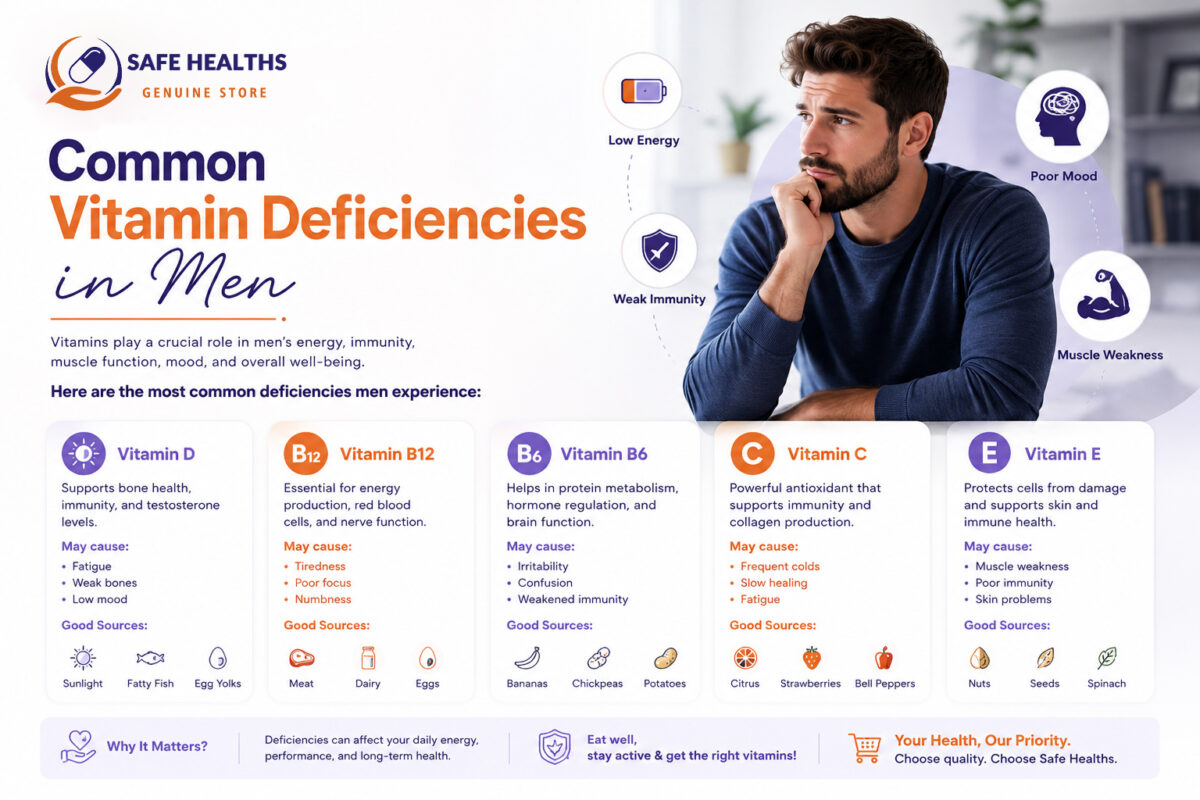
Common Vitamin Deficiencies in Men
Most men can get the vitamins and minerals they need from a varied diet, but some deficiencies are more common than people expect. Because early symptoms are vague, such as tiredness, low mood, or aching muscles, they are easy to dismiss or blame on stress and age. Left uncorrected, though, some deficiencies can affect bones, nerves, blood, immunity, and even sexual health.
This guide explains the vitamin and mineral deficiencies that are most common in men, what causes them, the symptoms to look for, how they are diagnosed, and how to correct them safely through food, sunlight, and supplements when needed.
Why Deficiencies Happen
- Limited or restricted diets: Vegetarian and vegan diets, fad diets, or eating mostly processed food.
- Low sun exposure: Working indoors, living far from the equator, or covering most skin outdoors.
- Digestive conditions: Coeliac disease, inflammatory bowel disease, and weight-loss surgery reduce absorption.
- Medicines: Metformin, acid-reducing drugs, and others can lower certain nutrients over time.
- Alcohol: Heavy drinking interferes with absorption and increases losses of several vitamins.
- Age: Absorption of some nutrients, such as B12, declines with age.
- Increased needs: Intense training, illness, or stress.
Vitamin D
Vitamin D supports bones, muscles, immunity, and mood. It is one of the most common deficiencies worldwide. Risk factors include indoor work, darker skin, northern latitudes, obesity, and older age.
Possible signs: Bone or muscle aches, weakness, frequent infections, low mood, and fatigue.
Sources: Sunlight on bare skin for short periods, oily fish, egg yolks, fortified foods, and supplements. A blood test can confirm levels.
Vitamin B12
B12 is essential for nerves, red blood cells, and DNA. Vegetarians and vegans, older men, people with digestive conditions, and men taking metformin or acid-reducing medicines long term are at higher risk.
Possible signs: Tiredness, tingling or numbness in the hands and feet, memory problems, mood changes, pale skin, and a sore tongue. Untreated deficiency can cause lasting nerve damage.
Sources: Meat, fish, eggs, dairy, and fortified foods. Some people need supplements or injections.
Magnesium
Magnesium is involved in hundreds of body processes, including muscle and nerve function, blood sugar control, and blood pressure.
Possible signs: Muscle cramps or twitching, fatigue, poor sleep, and irritability.
Sources: Nuts, seeds, whole grains, legumes, and leafy greens.
Zinc
Zinc supports immunity, wound healing, taste and smell, and normal testosterone production.
Possible signs: Slow wound healing, frequent infections, hair thinning, loss of taste or smell, and reduced libido.
Sources: Meat, shellfish, legumes, seeds, nuts, and dairy. High-dose zinc supplements can cause nausea and interfere with copper, so avoid taking more than recommended.
Iron
Men rarely become iron deficient from diet alone. Iron deficiency in a man is a red flag, because the most common cause is slow blood loss, for example from the digestive tract. It always deserves a medical check.
Possible signs: Tiredness, paleness, breathlessness, brittle nails, and restless legs.
Sources: Red meat, poultry, fish, lentils, spinach, and fortified cereals. Vitamin C improves absorption from plant sources.
Folate (Vitamin B9)
Folate helps make red blood cells and DNA. Deficiency is more likely with heavy alcohol use, poor diet, or certain medicines.
Sources: Leafy greens, legumes, citrus fruits, and fortified grains.
Vitamin C
Needed for collagen, immunity, and iron absorption. Deficiency is uncommon but can occur in people with very poor diets, heavy smoking, or heavy alcohol use.
Possible signs: Easy bruising, slow wound healing, bleeding gums, and fatigue.
Sources: Citrus fruits, guava, kiwi, peppers, tomatoes, and broccoli.
Vitamin A, E, and K
These fat-soluble vitamins are usually plentiful in a varied diet, but absorption problems can lead to deficiency. Vitamin K matters for blood clotting.
Calcium
Important for bones and muscles. Low intake over many years raises the risk of osteoporosis, which affects men too, particularly with low testosterone, heavy alcohol use, smoking, or steroid use.
Sources: Dairy, fortified plant milks, leafy greens, sardines with bones, and tofu set with calcium.
Omega-3 Fats
Not a vitamin, but commonly low. They support heart and brain health. Oily fish, walnuts, flaxseed, and chia seeds are sources.
Deficiencies and Men’s Health
- Sexual health and hormones: Low zinc and vitamin D have been linked with lower testosterone, although supplements help mainly if you are truly deficient.
- Energy and mood: B12, vitamin D, iron, and magnesium deficiency can cause fatigue and low mood.
- Heart health: Some deficiencies are associated with cardiovascular risk.
- Bones and muscles: Vitamin D, calcium, and magnesium are key.
How Are Deficiencies Diagnosed?
A doctor will ask about your diet, symptoms, medicines, and health conditions, and may order blood tests for vitamin D, B12, folate, iron studies, a full blood count, and sometimes magnesium and zinc. Do not guess. Symptoms overlap with many other conditions, such as thyroid problems, depression, and sleep apnoea.
Food First, Then Supplements
The best way to prevent deficiencies is a varied diet with vegetables, fruit, whole grains, legumes, nuts, seeds, fish, eggs, and dairy or fortified alternatives. Supplements make sense when a deficiency is confirmed, when your diet is restricted (for example B12 for vegans), or when your doctor advises.
Supplement Safety
- High doses of some vitamins can be harmful, for example vitamin A, vitamin D, and zinc.
- Supplements can interact with medicines.
- Choose reputable brands, and follow label directions or medical advice.
- More is not better.
Practical Tips
- Get some safe sun exposure, and consider vitamin D testing if you have little.
- Eat fish twice a week, and include eggs, dairy, or fortified foods.
- Include nuts, seeds, legumes, and leafy greens daily.
- Limit alcohol.
- If you follow a vegan or restrictive diet, plan for B12, iron, zinc, calcium, and omega-3.
- Review medicines with your doctor if you take them long term.
Staying Healthy at Every Age
Nutritional needs change through life. For more guidance, read men’s health after 40, the health problems young men often face, and everyday lifestyle changes that improve men’s health.
When to See a Doctor
See a doctor if you have persistent tiredness, numbness or tingling, frequent infections, bone pain, unexplained weight loss, paleness, or breathlessness. Seek advice before starting high-dose supplements, and sooner if you have a digestive condition or restricted diet.
Frequently Asked Questions
Should every man take a multivitamin?
Not necessarily. A balanced diet is usually enough, but a multivitamin may help some people with restricted diets.
Can vitamin deficiency cause low testosterone?
Severe deficiencies, such as zinc and vitamin D, can affect hormone levels, but most cases of low testosterone have other causes.
How long does it take to correct a deficiency?
It depends on the nutrient and cause. Many improve in weeks to months with treatment.
Final Thoughts
Vitamin and mineral deficiencies are common and easy to miss, but they are also straightforward to detect and treat. Eat a varied diet, get a little sunshine, review risk factors, and get tested rather than guessing. A few simple steps can improve your energy, mood, and long-term health.
This article is for general information only and is not a substitute for professional medical advice.