Natural Treatment for Erectile Dysfunction: A Science-Based Guide
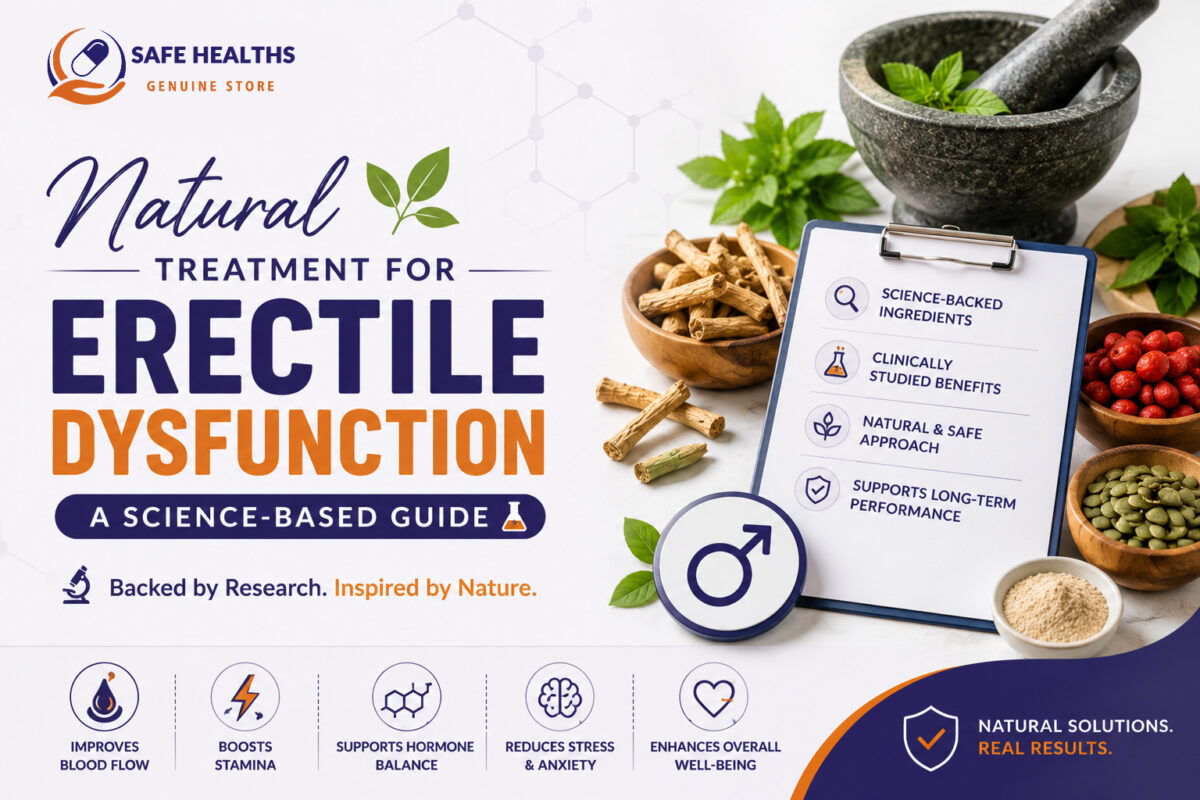
Natural Treatment for Erectile Dysfunction: A Science-Based Guide
Claims about natural treatments for erectile dysfunction (ED) range from carefully designed clinical trials to pure marketing. This guide sticks to the science. It looks at what randomised trials, systematic reviews, and clinical guidelines say about natural approaches, how strong the evidence is for each, and where uncertainty remains. It will help you tell the difference between a well-supported strategy and a hopeful claim.
A note on terms: “natural” here covers lifestyle interventions, exercise and pelvic floor training, psychological therapies, nutrition, and supplements and herbs. Evidence for each varies widely.
How Evidence Is Rated Here
- Strong: Supported by multiple randomised trials or meta-analyses, and by guidelines.
- Moderate: Supported by some randomised trials or consistent observational data.
- Limited: Small, short, or inconsistent studies.
- Weak or none: Mostly laboratory studies, anecdotes, or marketing claims.
The Biology: What Natural Treatments Try to Change
Erections depend on nitric oxide release from nerves and the blood vessel lining, which relaxes smooth muscle in the penile arteries and allows blood to enter. Risk factors such as smoking, obesity, diabetes, high blood pressure, and high cholesterol impair this by causing endothelial dysfunction, inflammation, and oxidative stress. Natural approaches aim to improve endothelial function, hormonal balance, nerve signalling, and psychological state.
Strong Evidence
Aerobic Exercise
Randomised trials and meta-analyses show that regular aerobic exercise improves erectile function, especially in men with obesity, hypertension, or metabolic syndrome. Effects tend to be moderate and are seen after about three to six months of regular training. Guidelines recommend exercise as part of ED management.
Weight Loss in Men With Overweight or Obesity
Intensive lifestyle programmes, including diet and exercise, produce improvements in erectile scores in men with obesity. A classic trial found that a third of men with obesity and ED regained normal function after two years of lifestyle change. This is among the best-known studies in the field.
Smoking Cessation
Smoking is consistently associated with ED. Evidence suggests that quitting can improve function, with the best results in younger men and those with shorter smoking histories.
Moderate Evidence
Mediterranean-Style Diet
Observational studies link this diet with lower ED risk, and trials in men with metabolic syndrome show improved erectile scores alongside better endothelial function.
Pelvic Floor Muscle Training
A widely cited randomised trial found that men who did supervised pelvic floor exercises for three months had significantly better erectile function than controls. More research is needed to confirm it in larger groups.
Cognitive Behavioural Therapy and Sex Therapy
Psychological therapies reduce performance anxiety and improve erectile function, particularly when combined with medical treatment. Evidence is strongest for psychogenic ED.
Treating Sleep Apnoea
ED is common in men with obstructive sleep apnoea, and some studies show improvement with CPAP treatment, though results are mixed.
Limiting Alcohol
Heavy drinking is linked with ED, and cutting down is advised, though high-quality trials on moderation specifically are limited.
Limited Evidence
Panax Ginseng
Systematic reviews of small trials suggest benefit versus placebo, but studies vary in dose, design, and quality, and risk of bias is considerable.
L-Arginine and L-Citrulline
Small studies show benefit in some men with mild to moderate ED, but results are inconsistent and sample sizes small. They may work best in men with low nitric oxide availability.
Pycnogenol With L-Arginine
A few small trials show improvement, but larger confirmatory studies are lacking.
Acupuncture
Some small studies report benefit, but quality is low and findings inconsistent.
Low-Intensity Shockwave Therapy
Some trials suggest improvement in men with mild vascular ED, but results are mixed, protocols differ, and it is not yet a universal standard. It is a medical procedure rather than a natural remedy.
Weak or No Good Evidence
- Tribulus, maca, fenugreek, horny goat weed: Human evidence for ED is limited or lacking.
- Yohimbe: Evidence is weak, and safety concerns are significant.
- “Male enhancement” supplements: Not reliable, and some contain hidden prescription drugs.
- Penis pumps sold as “enhancers” and enlargement products: No proven benefit and potential harm.
The Supplement Safety Problem
Regulatory analyses have repeatedly found sildenafil, tadalafil, and related analogues in products marketed as natural sexual enhancement supplements. These ingredients can cause dangerous interactions with nitrate medicines, leading to severe low blood pressure. This is why guidelines caution against unregulated products. See the best natural supplements for erectile dysfunction for a detailed review.
What Guidelines Say
The American Urological Association and the European Association of Urology both recommend addressing reversible risk factors and lifestyle changes in men with ED, and recommend that men be assessed for cardiovascular risk. They generally do not recommend herbal supplements as standard treatments. Our article on how to treat erectile dysfunction naturally: expert-backed tips turns these recommendations into practical steps.
Combining Natural and Medical Treatments
Evidence suggests that lifestyle interventions can improve the response to PDE5 inhibitor tablets in some men, and that combined approaches may outperform either alone. Natural approaches are not an “either/or” with medicines. Read what the evidence says about reversing ED.
Limitations of the Evidence
- Many studies are small, short, or lack control groups.
- Men differ in the cause and severity of ED, which affects results.
- Lifestyle trials are hard to blind, and adherence varies.
- Supplement products differ in dose and purity.
- Publication bias may overstate benefits.
How to Apply the Science
- Start with the strong evidence: Exercise, weight loss, no smoking, and a healthy diet.
- Add moderate-evidence measures: Pelvic floor training, stress management, and therapy.
- Treat sleep and medical conditions.
- Be cautious with supplements: If you try one, choose a single well-studied ingredient and speak to a doctor.
- Measure your progress: Use a validated questionnaire such as the IIEF-5 at the beginning and after three months.
- Seek medical care if you do not improve.
For a practical routine, see how diet and exercise affect erectile function.
When to See a Doctor
See a doctor if ED lasts more than a few weeks, came on suddenly, or is accompanied by chest pain, breathlessness, numbness, or leg pain on walking. Seek emergency care for an erection lasting more than four hours.
Frequently Asked Questions
What is the best-proven natural treatment?
Regular aerobic exercise, particularly with weight loss in men who are overweight, has the strongest evidence.
Do supplements work?
A few show modest benefit in small studies, but none are proven to the same standard as lifestyle interventions.
How long should I try natural treatment?
Typically three to six months, with reassessment.
Final Thoughts
The science supports a clear message: the most effective natural treatments for ED are everyday habits that improve your overall health. Exercise, weight management, no smoking, a healthy diet, good sleep, and psychological wellbeing have the strongest backing. Supplements come with limited evidence and real safety concerns. Use science as your guide, and involve your doctor.
This article is for general information only and is not a substitute for professional medical advice.