
Exercises That May Help Premature Ejaculation
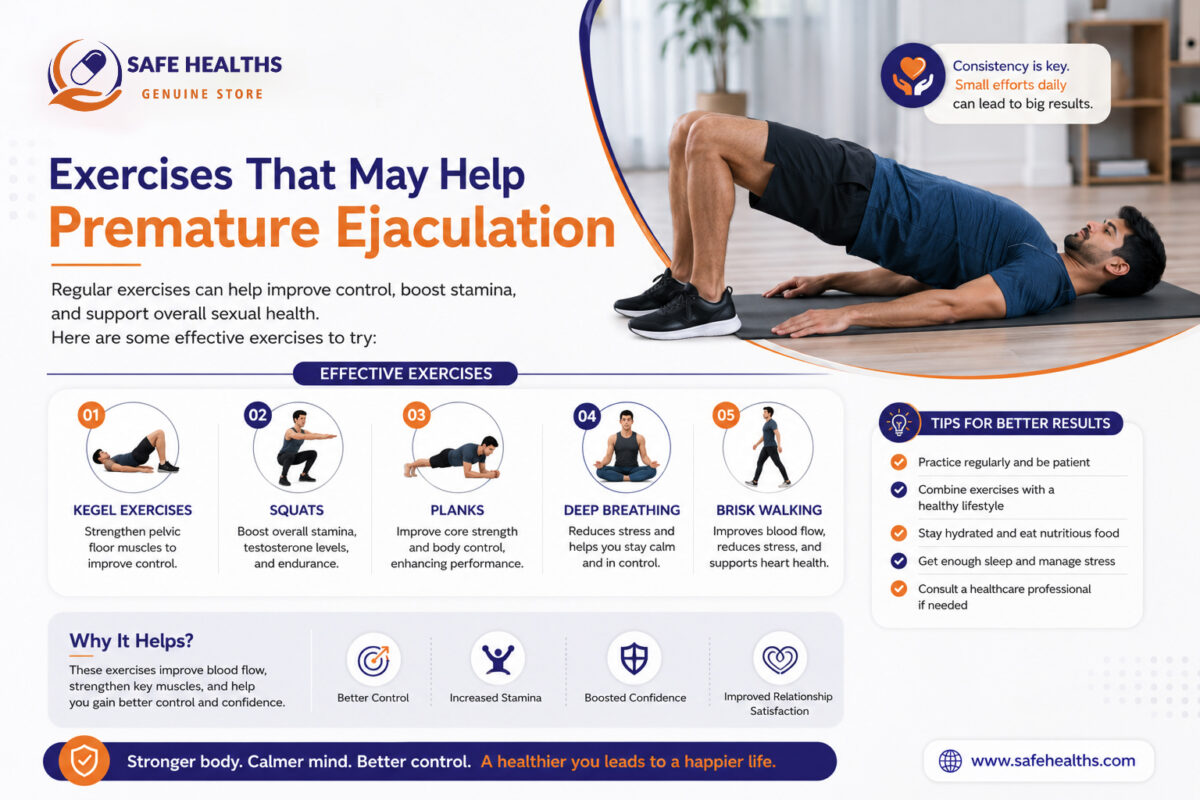
Exercises That May Help Premature Ejaculation
Premature ejaculation (PE) means ejaculating sooner than you or your partner would like, often with little sense of control and some distress afterwards. It is one of the most common sexual concerns in men, and it can affect confidence and relationships. Alongside medical treatment and therapy, certain exercises and training techniques can help many men build more control.
This guide explains how exercise and training may help, the main exercises and techniques with step-by-step instructions, how long they take to work, what else supports results, and when to get professional help.
What Is Premature Ejaculation?
Doctors diagnose PE when three things are present: ejaculation that happens very quickly (within about one minute of penetration in lifelong PE, or within about three minutes in acquired PE), difficulty or inability to delay it most of the time, and distress about it. There is no single “normal” time, and many men who think they have PE ejaculate within a typical range. For a full overview, read our complete guide to premature ejaculation.
How Can Exercise Help?
Ejaculation is a reflex controlled by the nervous system and supported by the pelvic floor muscles. Exercises may help in several ways:
- Strengthening the pelvic floor muscles that take part in ejaculation, which may improve voluntary control.
- Helping you recognise the sensations that come before the “point of no return.”
- Reducing anxiety through relaxation and breathing.
- Improving general fitness, blood flow, and stamina.
The evidence is strongest for behavioural techniques and for pelvic floor training in some men. Results vary between individuals.
1. Pelvic Floor (Kegel) Exercises
The pelvic floor muscles run from the pubic bone to the tailbone, supporting the bladder and bowel and playing a role in erection and ejaculation.
How to Find the Muscles
While urinating, try to stop the flow midstream. The muscles you use are your pelvic floor. Do this only once to identify them, as stopping urine flow regularly is not recommended. Another way is to tighten the muscles you would use to stop passing gas.
How to Do Them
- Empty your bladder and sit or lie down comfortably.
- Tighten the pelvic floor muscles and lift them upward and inward.
- Hold for three to five seconds while breathing normally.
- Relax completely for the same amount of time.
- Repeat ten times, two or three times a day.
Keep your stomach, thighs, and buttocks relaxed, and do not hold your breath. As you improve, build up to holding for ten seconds. Most men need at least six to twelve weeks of regular practice to notice a difference. More routines are in our guide to pelvic floor and other exercises for sexual health.
Common Mistakes
- Squeezing the abdomen, buttocks, or thighs instead of the pelvic floor.
- Holding your breath.
- Doing them too forcefully or for too long.
- Stopping after a couple of weeks.
2. “Reverse” Kegels and Pelvic Floor Relaxation
Some men with PE have overly tense pelvic floor muscles. Learning to relax them can help. Practise by gently “bearing down” or releasing the pelvic floor, as if you were starting to pass urine, while breathing out slowly. A pelvic floor physiotherapist can assess whether you need strengthening, relaxing, or both.
3. Diaphragmatic (Belly) Breathing
Tension speeds up ejaculation. Slow breathing activates the calming part of the nervous system.
- Place a hand on your belly.
- Breathe in slowly through your nose for four seconds, letting your belly rise.
- Breathe out slowly through your mouth for six seconds.
- Practise for five minutes a day, and use the same breathing during sex.
4. The Start-Stop Technique
This is a behavioural technique rather than an exercise, but it is often paired with them. It teaches you to recognise rising arousal and control it.
- Stimulate yourself until you feel close to ejaculating.
- Stop completely and wait until the urge fades.
- Restart stimulation.
- Repeat three or four times before allowing ejaculation.
Practise alone first, then with a partner. Over weeks, many men find that they can last longer.
5. The Squeeze Technique
When you are close to ejaculating, you or your partner gently squeeze the end of the penis, where the head meets the shaft, for several seconds until the urge subsides. Then restart. The squeeze should be firm but not painful.
6. Regular Aerobic Exercise
Walking, jogging, swimming, or cycling for 30 minutes on most days lowers stress, improves blood flow, and supports overall sexual health. Read our tips on lifestyle changes for better sexual control.
7. Strength Training and Core Work
General strength training supports confidence, fitness, and hormones. Core exercises that engage the abdomen and pelvis may support pelvic stability, though direct evidence for PE is limited.
8. Yoga and Mind-Body Exercise
Yoga, tai chi, and mindfulness practices reduce anxiety and increase body awareness, which can help with control. Some studies suggest that yoga improves sexual function in men.
A Sample Weekly Routine
- Daily: Pelvic floor exercises (two or three sets of ten) and five minutes of belly breathing.
- Three to four days: 30 minutes of brisk walking, jogging, or swimming.
- Two days: Strength training.
- One day: Yoga or stretching.
- Several times a week: Start-stop or squeeze practice, alone or with a partner.
How Long Until You Notice a Difference?
Breathing and relaxation can help within days. Behavioural techniques often show benefit after several weeks of regular practice. Pelvic floor training usually takes six to twelve weeks. Be patient and consistent.
What Else Can Help?
PE has both physical and mental causes. Anxiety, stress, and relationship worries play a large part, so it helps to understand the psychological causes of premature ejaculation. Other supportive steps include:
- Talk to your partner: Openness reduces pressure.
- Slow down: Take time with foreplay, and vary pace and position.
- Use thicker condoms, which can reduce sensitivity.
- Cut back on alcohol, and avoid smoking.
- Sleep well and manage stress.
Medical and Psychological Treatments
If exercises are not enough, doctors can offer topical anaesthetic sprays or creams, certain antidepressants (SSRIs) or dapoxetine where available, and treatment of any erection problems. Cognitive behavioural therapy and sex therapy are also effective, particularly when anxiety is a factor.
Safety and Cautions
- Do not strain or hold your breath during pelvic floor exercises.
- Stop if you feel pain.
- Avoid doing Kegels while urinating regularly.
- If you have chronic pelvic pain, prostatitis, or tight pelvic floor symptoms, see a doctor or pelvic floor physiotherapist before starting strengthening exercises.
When to See a Doctor
Speak with a doctor if PE happens most of the time, causes distress, comes on suddenly after a period of normal function, occurs with erection problems, pain, or urinary symptoms, or affects your relationship. A doctor can rule out underlying conditions and discuss other treatment options.
Frequently Asked Questions
Do Kegel exercises really work for PE?
They help some men, particularly when practised regularly for at least a few months. They work best combined with behavioural techniques.
Can women do pelvic floor exercises too?
Yes, and they have many benefits for both sexes.
Is PE permanent?
Not usually. Many men improve significantly with exercises, techniques, therapy, or medicine.
Final Thoughts
Exercises such as pelvic floor training, breathing, and the start-stop and squeeze techniques can give many men more control over ejaculation. Practise them regularly, combine them with healthy habits and open communication, and seek professional help if needed. Most men can improve with the right approach.
This article is for general information only and is not a substitute for professional medical advice.