
Psychological Causes of Premature Ejaculation
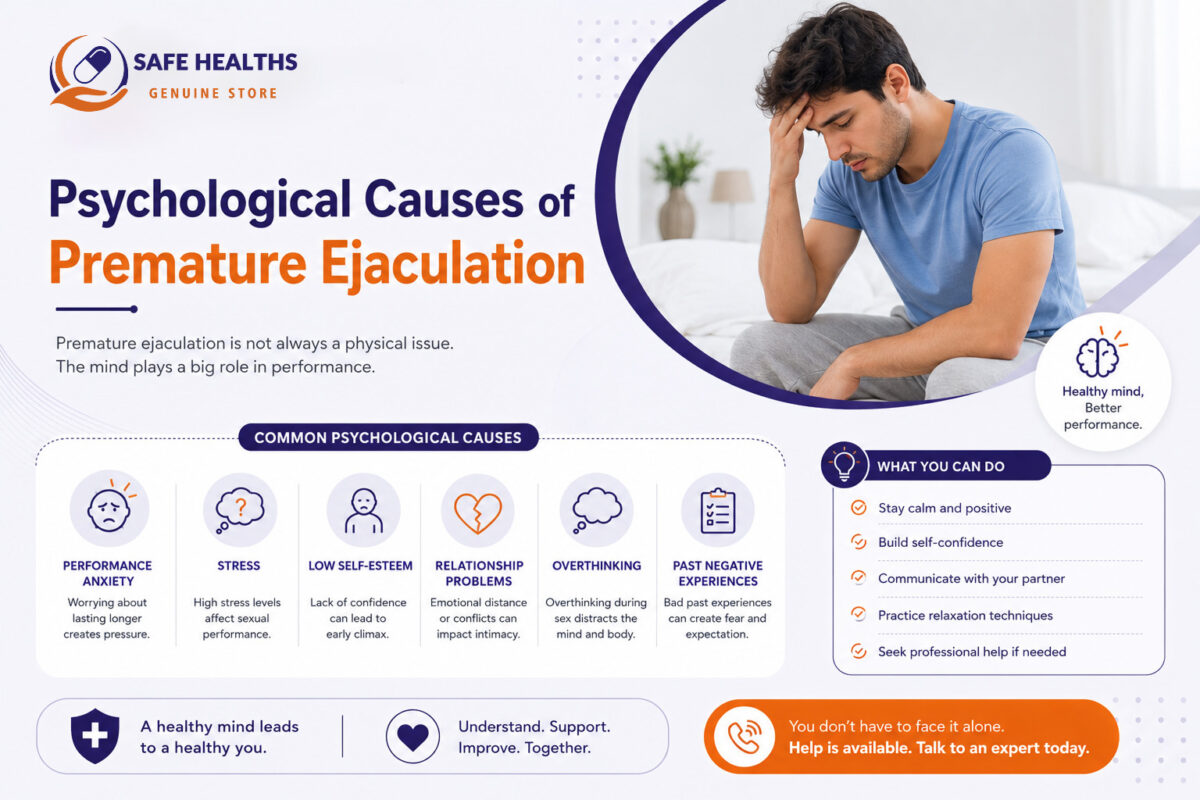
Psychological Causes of Premature Ejaculation
Premature ejaculation (PE) is often assumed to be a purely physical problem, but the mind plays a major role. For many men, especially those whose PE started after a period of normal function, psychological factors are the main driver. Even in men with a biological tendency toward early ejaculation, anxiety and stress can make it worse and keep it going.
This guide explains the psychological causes of PE, how the mind and body interact, how to recognise the pattern, and the treatments that work.
How the Mind Affects Ejaculation
Ejaculation is controlled by a reflex involving the brain, spinal cord, and nerves. The brain also decides how much to “turn up” or “turn down” this reflex. When you are anxious or tense, the sympathetic nervous system (the body’s “fight or flight” system) becomes active. This system is also responsible for triggering ejaculation, so high anxiety can speed the reflex up. Calm, relaxed arousal, on the other hand, gives more control.
Main Psychological Causes
1. Performance Anxiety
This is the most common psychological cause. Worrying about how long you will last, whether you will satisfy your partner, or whether it will happen again creates tension. That tension speeds up ejaculation, which confirms the fear and increases anxiety next time. The cycle can become self-fulfilling.
2. Stress
Work pressure, money worries, exams, caring responsibilities, or major life changes raise stress hormones, making it harder to relax during sex. Our article on the connection between premature ejaculation and mental health looks at this relationship in more detail.
3. Depression and Anxiety Disorders
Low mood, constant worry, and panic can affect sexual function, including control over ejaculation. These conditions may also reduce desire and enjoyment. Treatment can improve sexual symptoms, though some antidepressants can affect sexual function, so discuss any medicines with your doctor.
4. Relationship Problems
Conflict, unspoken resentment, poor communication, or fear of rejection can make sex feel pressured. A new relationship, or a partner’s expectations, can also create anxiety.
5. Early Sexual Experiences and Conditioning
Men whose early sexual experiences were rushed, for example because of fear of being caught, may learn to ejaculate quickly. This can become a habit that continues into adult relationships.
6. Guilt, Shame, and Cultural or Religious Beliefs
Negative beliefs about sex can create tension and make it hard to relax and enjoy the experience.
7. Body Image and Low Self-Esteem
Worries about penis size, appearance, or being “good enough” in bed increase self-monitoring and anxiety, taking attention away from sensation and arousal.
8. Unrealistic Expectations
Pornography, films, and social media often show sex lasting far longer than it does in real life. Men may compare themselves with these images and feel inadequate. Typical time to ejaculation after penetration is usually several minutes, not tens of minutes.
9. Fear About Erections
Men who worry about losing an erection may unconsciously rush to ejaculate before it fades. This is common in men who also have mild ED. Learn about the link between anxiety and erections in whether anxiety can cause erectile dysfunction.
10. Past Trauma or Negative Experiences
Previous sexual trauma, embarrassment, or a bad sexual experience can cause lasting anxiety about sex.
Signs the Cause May Be Psychological
- PE started suddenly or after a stressful period, a new relationship, or a life change.
- It happens with some partners or in some situations but not others.
- Ejaculation control is better during masturbation or when you feel relaxed.
- You feel anxious or preoccupied about sex.
- There are no other medical symptoms.
These are only clues. A doctor should rule out physical causes such as thyroid problems, prostate inflammation, or erection problems.
The Vicious Circle of PE and Anxiety
One early ejaculation leads to embarrassment and worry. Next time, you monitor yourself closely, feel tense, and ejaculate early again. Over time you may avoid sex altogether, which reduces confidence and creates distance from your partner. Understanding this loop is an important step toward breaking it.
How Psychological PE Is Treated
1. Education and Reassurance
Learning how ejaculation works, what is normal, and how common PE is can lower anxiety. Many men find it a relief to know they are not alone.
2. Cognitive Behavioural Therapy (CBT)
CBT helps identify and change unhelpful thoughts, such as “I will fail,” and reduces avoidance behaviours. It is effective for performance anxiety.
3. Sex Therapy and Couple Therapy
A trained sex therapist can teach techniques, improve communication, and reduce performance pressure. Involving your partner often improves results.
4. Behavioural Techniques
The start-stop and squeeze techniques help you recognise and control the build-up of arousal. They work best with regular practice, alone or with a partner. See the complete guide to premature ejaculation for a step-by-step explanation.
5. Mindfulness and Relaxation
Slow breathing, mindfulness, and body awareness exercises calm the nervous system and help you stay focused on sensation instead of worry.
6. Pelvic Floor Exercises
Strengthening pelvic floor muscles can improve control and confidence. Read about exercises that may help premature ejaculation.
7. Medical Support When Needed
Doctors may suggest topical anaesthetic sprays or creams, or certain antidepressants such as SSRIs, either alone or alongside therapy. Medical and psychological treatments often work best together.
Self-Help Tips
- Talk to your partner: Honest conversation reduces pressure and builds closeness.
- Shift your focus: Pay attention to sensations and enjoyment rather than timing.
- Slow down: Take more time with foreplay and vary pace and positions.
- Practise relaxation: Use slow breathing before and during sex.
- Limit alcohol and avoid drugs: They can worsen sexual function.
- Look after your lifestyle: Exercise, sleep, and healthy eating lower general stress. See our tips on lifestyle changes for better sexual control.
- Question unrealistic expectations: Real-life sex rarely resembles what is shown in media.
How Partners Can Help
Partners can reduce pressure by being understanding, avoiding blame, and focusing on intimacy beyond intercourse. Trying new ways of being close, such as touch and massage, can help both people relax.
When to See a Doctor or Therapist
Seek help if PE happens most of the time, has lasted more than six months, causes distress or affects your relationship, or you feel anxious or low. A doctor can rule out physical causes and refer you to a therapist if needed.
Frequently Asked Questions
Can PE be cured with therapy alone?
Many men improve substantially with therapy and behavioural techniques, especially when anxiety is the main factor.
Is PE a sign of a mental illness?
No. It is a common sexual problem. However, anxiety or depression can contribute to it and may need treatment too.
Does age affect psychological PE?
It can affect men of any age, though it is especially common in younger men worried about performance.
Final Thoughts
The mind is a powerful influence on ejaculation. By understanding the psychological causes, reducing anxiety, communicating openly, and using proven techniques, most men can regain control and enjoy sex more.
This article is for general information only and is not a substitute for professional medical advice.