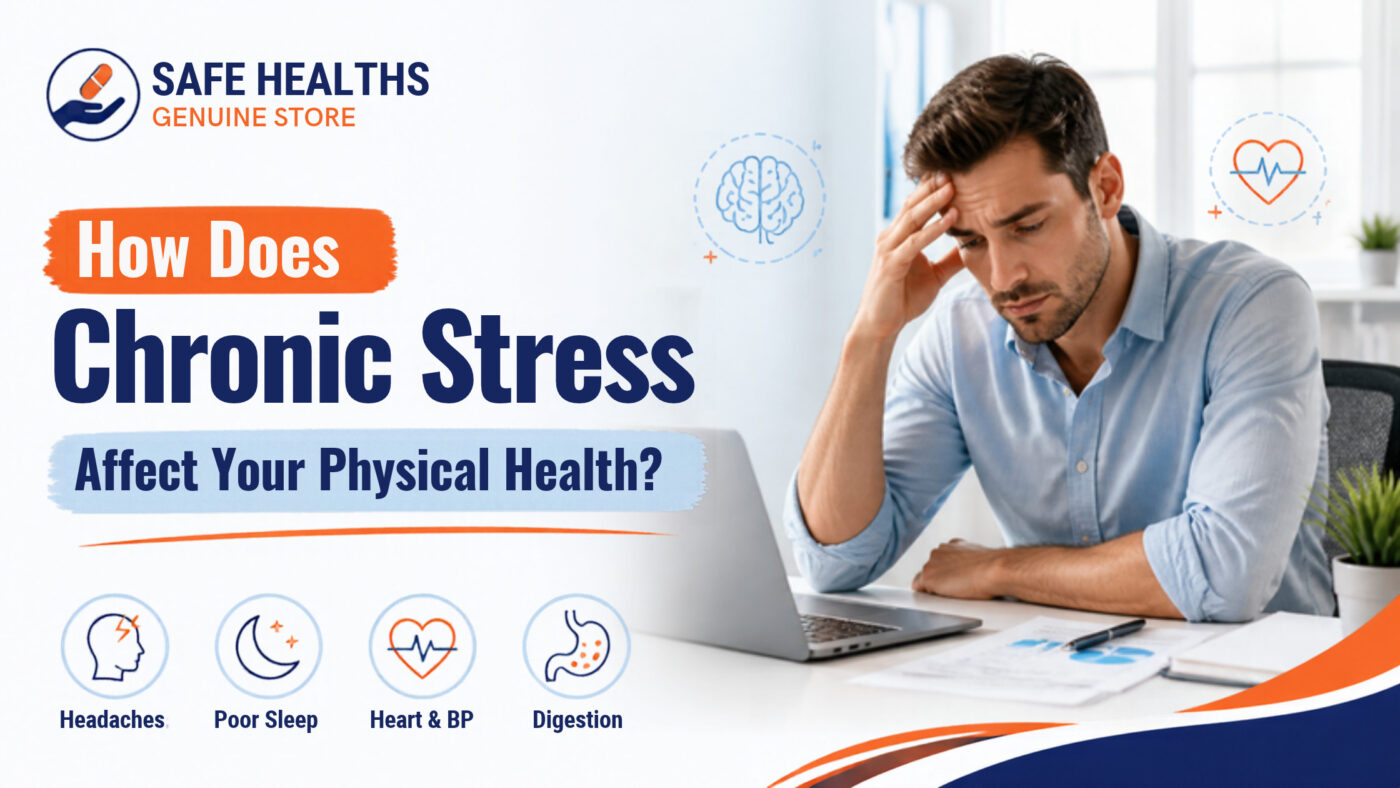
How Does Chronic Stress Affect Your Physical Health?
A deadline at work, a family argument or money worries can all make your heart race and your muscles tense. Short bursts of stress are normal and can even help you perform under pressure. The trouble starts when stress becomes constant. Chronic stress keeps your body in a state of alert for weeks or months, and over time it can affect almost every system in your body.
This article explains what happens in your body under long-term stress, the physical signs to look out for and practical ways to manage it.
What Happens in Your Body When You Are Stressed?
When you sense a threat, your brain triggers the “fight or flight” response. Your adrenal glands release adrenaline and cortisol, which speed up your heart rate, raise blood pressure and send extra energy to your muscles. This is helpful in an emergency. When the stress never switches off, these hormones stay elevated and begin to wear the body down.
How Chronic Stress Affects Your Physical Health
Headaches and muscle tension
Stress often tightens the muscles of the neck, shoulders and jaw, which can lead to tension headaches and body aches. If headaches are a frequent problem, read about the causes, symptoms and treatment of headaches.
Heart and blood pressure
Long-term stress can keep your heart rate and blood pressure elevated. It may also encourage unhealthy coping habits such as smoking, overeating or drinking more alcohol, all of which raise the risk of heart disease.
Digestive problems
Stress can cause stomach pain, nausea, bloating, heartburn, constipation or diarrhoea, and can worsen conditions such as irritable bowel syndrome.
Weakened immunity
Persistently high cortisol can weaken your immune response, so you may catch colds more often or take longer to recover.
Poor sleep and fatigue
A busy, anxious mind makes it harder to fall asleep and stay asleep, and poor sleep in turn makes stress harder to handle.
Weight changes
Some people eat more under stress, especially sugary or fatty foods, while others lose their appetite. Elevated cortisol is also linked to storing more fat around the abdomen.
Mood, focus and sexual health
Chronic stress is linked to anxiety, irritability, low mood and trouble concentrating. It can also reduce libido and affect sexual function. Read more about the link between stress and erectile dysfunction, and how performance anxiety can create a cycle of worry.
Signs You May Be Under Too Much Stress
- Frequent headaches, jaw clenching or muscle tightness
- Feeling constantly tired, restless or on edge
- Trouble sleeping or waking up unrefreshed
- Changes in appetite or digestion
- Getting sick more often than usual
- Feeling overwhelmed, irritable or unable to relax
Practical Ways to Manage Stress
- Move your body. Walking, cycling, swimming or yoga for 30 minutes most days lowers stress hormones and lifts mood.
- Practise slow breathing. Inhale for four counts and exhale for six counts for a few minutes to calm your nervous system.
- Protect your sleep. Keep a regular bedtime and limit screens and caffeine late in the day.
- Break tasks into steps. A realistic to-do list and regular breaks make workloads feel less overwhelming.
- Stay connected. Talking with friends or family can lighten the load more than you might expect.
- Limit alcohol, nicotine and excess caffeine. They may feel relaxing at first but often worsen stress and sleep.
- Make time for enjoyable activities, such as hobbies, music, time outdoors or prayer and meditation.
When to Get Professional Help
See a doctor or mental health professional if stress is affecting your work, relationships or health, if you feel anxious or low most days, or if you rely on alcohol or other substances to cope. When anxiety is a major part of the picture, a doctor may sometimes prescribe short-term medicines such as hydroxyzine, available here as Atarax 10mg, alongside therapy and lifestyle changes. If you ever feel unable to cope or have thoughts of harming yourself, contact your local emergency number or a crisis helpline right away.
The Bottom Line
Stress is a normal part of life, but constant stress takes a real toll on your body and mind. By recognising the early warning signs and building simple habits such as movement, rest and connection, you can protect your physical health and feel more in control.
This article is for general information only and is not a substitute for professional medical advice.