How Does Erectile Dysfunction Affect Intimacy?
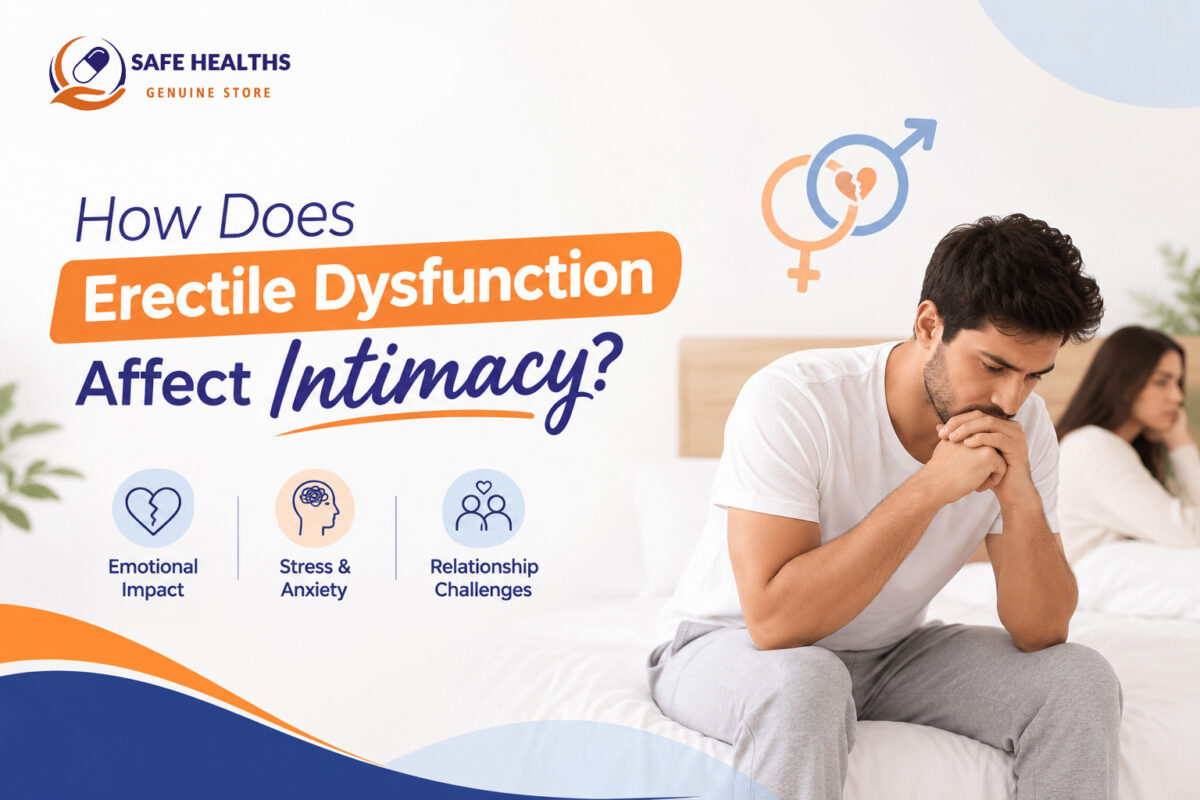
How Does Erectile Dysfunction Affect Intimacy?
Erectile dysfunction (ED) affects more than erections. It reaches into how partners feel about each other, how they communicate, and how close they stay. Many couples find that the physical problem is only part of the difficulty. The silence, avoidance, and misunderstanding that often come with it can harm intimacy more than ED itself.
This guide explains how ED affects intimacy for both partners, why it so often leads to distance, how to talk about it, practical ways to stay close, and when couples benefit from professional help.
What Do We Mean by Intimacy?
Intimacy is the sense of closeness, trust, and emotional connection between partners. It includes sexual intimacy but also touch, affection, shared time, honest conversation, and feeling safe and accepted. A couple can have a satisfying intimate relationship even when sexual function changes, and a couple can feel distant even when sex is technically working. ED tends to test the emotional side of the relationship as much as the physical.
How ED Affects the Man
Shame and Loss of Confidence
Many men tie their sense of masculinity to sexual performance. ED can bring embarrassment, self-blame, and a feeling of failure, even though it is a medical condition and not a personal failing.
Performance Anxiety
After one or two failures, a man may begin to watch himself during sex, worrying about whether the erection will last. That anxiety raises stress hormones, which make erections harder, creating a cycle. See whether anxiety can cause erectile dysfunction.
Avoidance and Withdrawal
To avoid the discomfort, some men avoid sex, intimacy, and even non-sexual touch, such as hugging, kissing, or sharing a bed, in case it leads to sex. Partners may read this as rejection.
Low Mood and Stress
ED can contribute to depression and anxiety, which in turn reduce desire and closeness. Read the connection between ED and mental health.
Secrecy
Men often hide the problem and do not discuss it with their partner or doctor, which increases isolation.
How ED Affects the Partner
Partners often have their own reactions:
- Feeling rejected or unattractive: Thinking “he no longer desires me.”
- Suspecting an affair or lost love, particularly when the problem is not discussed.
- Blaming themselves for the problem.
- Worry and helplessness: Concern about their partner’s health and not knowing how to help.
- Frustration and sexual dissatisfaction.
- Loneliness and sadness from lost closeness.
- Hesitation to initiate in case it adds pressure.
These feelings are common. Understanding that they stem from misunderstanding rather than lack of care can help both partners.
How ED Changes the Relationship
- Less physical affection: Touching, kissing, and cuddling can decline as they begin to feel like a prelude to failure.
- Silence: Neither partner raises the subject, leading to assumptions and distance.
- Tension and conflict: Unspoken frustration can emerge as irritability or arguments about unrelated things.
- Changed roles: One partner may become caretaker or the other may feel pressured.
- Reduced overall satisfaction: Studies show that ED is associated with lower relationship and sexual satisfaction for both partners.
- Stress about fertility for couples trying to conceive.
Why Communication Is the Key
Research and clinical experience agree that couples who talk openly about ED cope better, seek treatment sooner, and keep their relationship stronger. Talking helps you:
- Clear up misunderstandings, such as “you no longer find me attractive.”
- Share fears and feelings.
- Decide together how to respond.
- Reduce the pressure that worsens ED.
How to Start the Conversation
- Choose a calm, private time, not in bed or just after a failed attempt.
- Begin with care: “I want us to feel close, and I have been worried about how things have been between us.”
- Use “I” statements: “I feel anxious” instead of “You make me feel pressured.”
- Reassure each other: The man can explain that it is not about attraction. The partner can say it is not about blame.
- Listen without interrupting, and avoid jokes at each other’s expense.
- Agree on next steps, such as seeing a doctor together.
Practical Ways to Stay Close
Rebuild Non-Sexual Affection
Hug, kiss, hold hands, cuddle on the sofa, and give each other massages without the expectation of sex. This keeps closeness alive and removes the sense that every touch is a test.
Broaden Your Idea of Sex
Intimacy is not limited to penetration. Oral sex, manual stimulation, sensual massage, and other forms of touch can be satisfying for both partners.
Try Sensate Focus
This structured exercise, often taught by sex therapists, involves taking turns touching each other without any goal of intercourse or orgasm, focusing on sensation. It reduces performance pressure and builds comfort.
Make Time Together
Date nights, shared hobbies, and unhurried time keep the emotional connection strong, which supports sexual closeness.
Support Healthy Habits Together
Exercising, cooking healthy meals, and sleeping well as a team help ED and the relationship. See best daily habits to improve sexual performance.
Reduce Stress
Stress affects both erections and relationships. Learn more in how stress affects male sexual performance.
Treatment as a Team
ED is highly treatable, and treatment often improves intimacy. Partners can encourage the man to see a doctor, attend appointments if both are comfortable, and be involved in decisions. Options include lifestyle changes, counselling, tablets, devices, and others. Explore ED treatments from medicines to devices. When treatment works, some couples find that it takes time to rebuild confidence and spontaneity, and that is normal.
When Couples May Need Professional Help
- Communication has broken down or conversations always end in conflict.
- Either partner feels persistently rejected, angry, or depressed.
- Sex has stopped completely and neither knows how to restart.
- Anxiety or past trauma is involved.
- There are other relationship problems underneath.
Sex therapists and couples counsellors can help with communication, performance anxiety, and rebuilding intimacy. Individual therapy can help too.
Tips for Partners
- Do not take it personally. ED is a medical issue.
- Avoid blame, pressure, or comparisons.
- Express affection and desire in ways that are not tied to performance.
- Encourage a medical check-up, since ED can signal health conditions.
- Look after your own needs and emotions, and seek support if you need it.
Tips for Men
- Do not hide it or withdraw. Silence is often more damaging than ED itself.
- Tell your partner it is not about attraction.
- See a doctor, since many causes are treatable.
- Focus on pleasure and connection rather than performance.
- Avoid using alcohol or drugs to cope.
When to See a Doctor
See a doctor if ED lasts more than a few weeks, appeared suddenly, or comes with chest pain, breathlessness, numbness, or leg pain on walking. If ED is affecting your mood or relationship, seek help sooner. Seek emergency care for an erection lasting more than four hours.
Frequently Asked Questions
Does ED mean my partner does not find me attractive?
No. ED is a medical condition, not a measure of attraction.
Can a relationship survive ED?
Yes. Many couples grow closer by facing it together, particularly with open communication and treatment.
Should my partner come to the doctor with me?
It can help if you both feel comfortable. Partner involvement often improves outcomes.
Final Thoughts
ED affects intimacy through shame, anxiety, avoidance, and misunderstanding, but it does not have to damage the relationship. Open communication, non-sexual affection, a broader view of intimacy, effective treatment, and professional support when needed can help couples stay close and often grow stronger.
This article is for general information only and is not a substitute for professional medical advice.