How Does Stress Affect Male Sexual Performance?
How Does Stress Affect Male Sexual Performance?
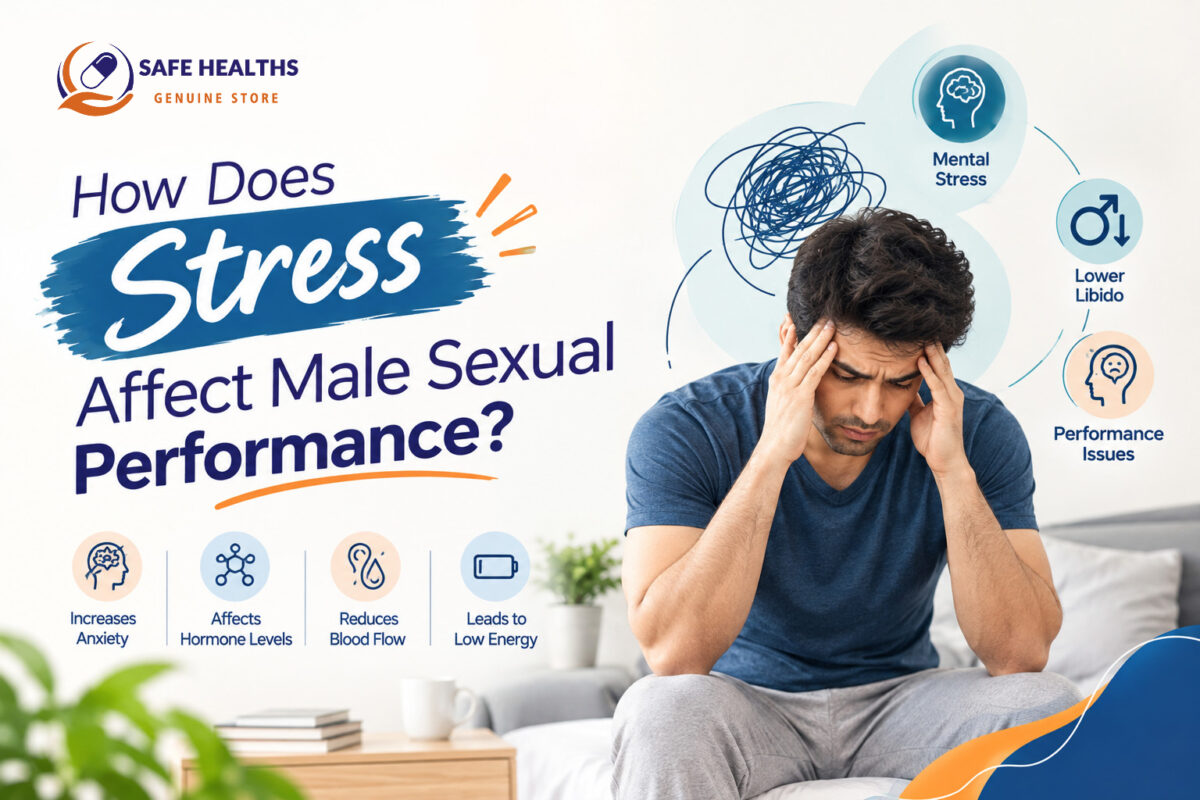
Stress affects almost every part of male sexual function: desire, arousal, erections, ejaculation, and satisfaction. Men often notice the effect first as a difficult night or two, and then, if the stress continues, as a more lasting change. Because sexual performance sits at the meeting point of the brain, hormones, nerves, and blood vessels, it is particularly sensitive to the body’s stress response.
This guide explains how stress influences each stage of the sexual response, the different kinds of stress involved, how to tell when stress is the cause, and what you can do to protect your sexual performance and your wellbeing.
The Male Sexual Response in Brief
Sexual response normally unfolds in stages:
- Desire: Interest in sex, driven by the brain, hormones such as testosterone, and context.
- Arousal: The brain signals the penis to fill with blood, producing an erection.
- Plateau: Arousal builds and the erection is maintained.
- Orgasm and ejaculation: A reflex involving nerves and muscles.
- Resolution: The body relaxes, and the erection subsides.
Stress can interfere at every stage.
How the Body Responds to Stress
When you feel stressed, the brain activates the sympathetic nervous system and releases adrenaline and cortisol. Heart rate and blood pressure rise, muscles tense, and blood is directed away from non-essential systems. This “fight or flight” state is useful in danger, but it works against sexual arousal, which depends on the relaxed, “rest and digest” parasympathetic system.
Stress and Desire
Chronic stress reduces interest in sex. It occupies mental space, causes fatigue and irritability, disrupts sleep, and raises cortisol, which can suppress testosterone. Men under heavy stress often say they “just are not in the mood.” Low mood and depression, which often accompany chronic stress, further reduce desire.
Stress and Erections
Erections require blood vessels in the penis to widen. Adrenaline constricts blood vessels, and the sympathetic system promotes loss of erection. A worried mind also distracts from arousal. The result is difficulty getting or keeping an erection. For a closer look at the mechanism, read how stress causes erectile dysfunction.
Stress and Ejaculation
Premature Ejaculation
Ejaculation is also controlled by the sympathetic nervous system. High anxiety can speed up the ejaculatory reflex, leading to premature ejaculation. Performance worry makes it more likely. See premature ejaculation and the mental health connection.
Delayed Ejaculation
In some men, stress, depression, or distraction makes it hard to reach orgasm despite adequate stimulation.
Stress and Satisfaction
Even when sex works physically, stress can reduce pleasure, make you feel disconnected, and lower satisfaction for both partners. Worry about performance turns sex into a test rather than an experience.
The Performance Anxiety Loop
One difficult experience can trigger concern. Next time, you monitor yourself closely, which raises stress hormones and creates the same difficulty. Confidence falls, and you may begin to avoid sex. Understanding that this loop is common, treatable, and not a sign of weakness is the first step to breaking it.
Types of Stress That Affect Sexual Performance
- Work stress: Long hours, deadlines, job insecurity, and burnout.
- Financial stress.
- Relationship stress: Conflict, poor communication, or fear of rejection.
- Life changes: New baby, moving, bereavement, or separation.
- Health stress: Illness or worry about ageing and performance.
- Performance stress: Pressure to satisfy a partner.
- Trauma and mental health conditions: Anxiety disorders, depression, and PTSD.
Stress Also Affects Habits That Affect Sex
Under stress, many men sleep less, drink more, smoke more, eat poorly, and exercise less. Each of these independently harms sexual function. Stress also leaves less time and energy for intimacy.
How to Tell if Stress Is the Cause
- Problems started during a stressful period.
- You still get morning erections or erections when alone.
- Difficulties vary with situation or partner.
- You feel tense, tired, or irritable.
- Sleep and mood are affected.
These suggest a stress-related cause but do not rule out physical ones. A medical check-up is sensible. See whether anxiety can cause erectile dysfunction.
What Helps
Reduce and Manage Stress
- Set boundaries around work and take proper breaks.
- Tackle practical problems step by step.
- Practise slow breathing, mindfulness, or meditation daily.
- Spend time outdoors, and do activities you enjoy.
Exercise and Sleep
Regular exercise lowers stress hormones and improves mood and circulation. Aim for seven to nine hours of sleep.
Limit Alcohol, Nicotine, and Drugs
They can seem to relax you but make performance worse.
Communicate With Your Partner
Tell your partner what is going on. Focus on closeness and pleasure instead of performance. See how erectile dysfunction affects intimacy.
Try Therapy
Cognitive behavioural therapy, sex therapy, and couples counselling help with performance anxiety and relationship stress. See the connection between ED and mental health.
Consider Medical Support
Doctors can treat anxiety and depression, review medicines, check for physical causes, and prescribe medicines for erections or ejaculation where appropriate.
Daily Habits to Protect Sexual Performance
- Take ten minutes for breathing or mindfulness each day.
- Exercise at least four days a week.
- Eat balanced meals, and drink water.
- Protect time for rest and relationships.
- Avoid late-night screens and caffeine.
- Build in time for intimacy without pressure.
For more routines, read best daily habits to improve sexual performance.
When to See a Doctor
See a doctor if sexual problems last more than a few weeks, stress feels overwhelming, you feel persistently low or anxious, or you have chest pain, numbness, or other symptoms. If you ever have thoughts of harming yourself, contact emergency services or a local crisis line immediately.
Frequently Asked Questions
Can stress alone cause sexual problems?
Yes. It is one of the most common causes, particularly in younger men.
Will my sexual performance return when stress ends?
Often, but performance anxiety can keep problems going, so it helps to address it directly.
Does stress lower testosterone?
Chronic stress can reduce testosterone through raised cortisol and poor sleep.
Final Thoughts
Stress can affect desire, erections, ejaculation, and satisfaction. Understanding how it works, reducing it where you can, building calming habits, communicating with your partner, and getting help when needed can protect your sexual performance and your wellbeing.
This article is for general information only and is not a substitute for professional medical advice. If you are in crisis, contact your local emergency services or crisis line.