
How to Build a Balanced Diet for Weight Loss
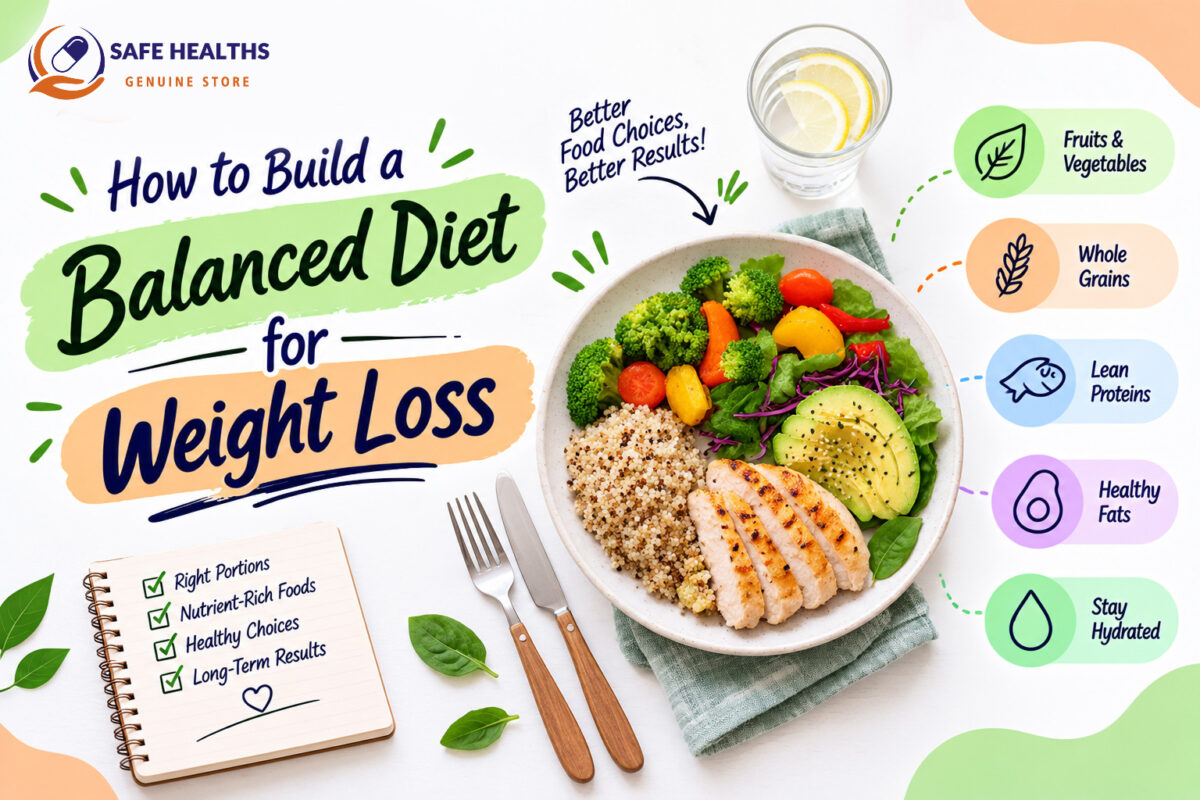
A balanced diet for weight loss does not mean starving yourself or cutting out entire food groups. It means eating a sensible mix of nutrients in the right amounts, so you lose weight steadily while still feeling energetic and satisfied. If you want the bigger picture, start with our guide to creating a healthy weight loss plan.
This step-by-step guide shows you how to build a balanced weight loss diet that fits real life, from setting up your plate to planning meals and avoiding common mistakes.
What Is a Balanced Diet for Weight Loss?
A balanced diet includes vegetables, fruit, protein, whole grains and healthy fats, with limited amounts of sugar, refined carbs and highly processed foods. For weight loss, the balance is paired with portion awareness so that you take in slightly fewer calories than you burn, without missing out on the nutrients your body needs.
Step 1: Use the Plate Method
The simplest way to build a balanced meal is to divide your plate:
- Half the plate: non-starchy vegetables such as spinach, cauliflower, cucumber, tomatoes, beans and salad greens
- One quarter: lean protein such as fish, chicken, eggs, paneer, tofu, dal or legumes
- One quarter: whole grains or complex carbs such as brown rice, oats, millets, whole wheat roti or quinoa
- A small portion: healthy fat such as a teaspoon of olive oil, a few nuts or a slice of avocado
Step 2: Put Protein in Every Meal
Protein keeps you full, supports muscle and takes more energy to digest than fat or carbs. Spread it across the day (see weight loss foods that actually work for more ideas): eggs or Greek yogurt at breakfast, dal, chicken or fish at lunch, and legumes, tofu or paneer at dinner.
Step 3: Choose Fiber-Rich Carbohydrates
Carbs are not the enemy. Choose whole and fiber-rich options such as oats, whole grains, fruit, vegetables and pulses over white bread, sugary cereals and sweets. Fiber slows digestion, helps control hunger and supports gut health.
Step 4: Include Healthy Fats in Moderation
Fats help your body absorb vitamins and keep meals satisfying, but they are calorie-dense. Favor unsaturated sources such as nuts, seeds, olive oil and fish, and keep portions small.
Step 5: Watch Your Portions
Even healthy food can stop weight loss if portions are too big. Use a smaller plate, serve food in the kitchen rather than at the table, and pay attention to hunger and fullness. Stop eating when you feel comfortably satisfied, not stuffed.
Step 6: Plan Your Meals and Snacks
Planning prevents last-minute unhealthy choices. Decide your meals for the week, shop from a list and prepare simple staples in advance, such as chopped vegetables, boiled eggs or cooked lentils. Keep easy snacks like fruit, roasted chickpeas, curd or a small handful of nuts within reach.
Step 7: Stay Hydrated
Thirst can feel like hunger. Drink water throughout the day and replace sugary drinks with water, buttermilk, lemon water or unsweetened tea.
Sample One-Day Balanced Meal Plan
- Breakfast: vegetable omelet or besan chilla with a side of fruit
- Mid-morning snack: a small bowl of curd or an apple with a few almonds
- Lunch: 1 to 2 whole wheat rotis or a small portion of brown rice, dal, a large serving of mixed vegetables and salad
- Evening snack: roasted chana or sprouts salad
- Dinner: grilled fish, chicken or paneer with sautéed vegetables and a light soup or salad
Adjust portions based on your appetite, activity level and any advice from your healthcare provider.
Common Mistakes to Avoid
- Skipping meals and then overeating later
- Cutting out carbs or fats completely
- Relying on “diet” products and processed low-fat foods
- Drinking calories through juices, soft drinks and sweet beverages
- Expecting fast results and giving up when progress slows
Tips for Sticking With It
- Make small changes one at a time instead of overhauling everything at once.
- Allow occasional treats so that you do not feel deprived.
- Track your progress through measurements, energy levels and how your clothes fit, not just the scale.
- Get enough sleep and stay active for better results.
When to Seek Medical Advice
If you have a medical condition such as diabetes, kidney disease, thyroid disorders or high blood pressure, or if you are pregnant or taking regular medication, consult your doctor or a registered dietitian before starting a weight loss diet. People with diabetes can also read about the best foods to help manage blood sugar. In some cases, doctors prescribe orlistat, available here as Slimtop 60, alongside a reduced-calorie diet, but only after a proper medical assessment.
Final Thoughts
Building a balanced diet for weight loss is about simple, repeatable habits: a colorful plate, enough protein, smart carbs, controlled portions and plenty of water. Start with one or two steps this week, and build from there. Consistency matters far more than perfection.
This article is for general information only and is not a substitute for personalized medical or nutritional advice.