
Weight Loss Foods That Actually Work
Weight Loss Foods That Actually Work
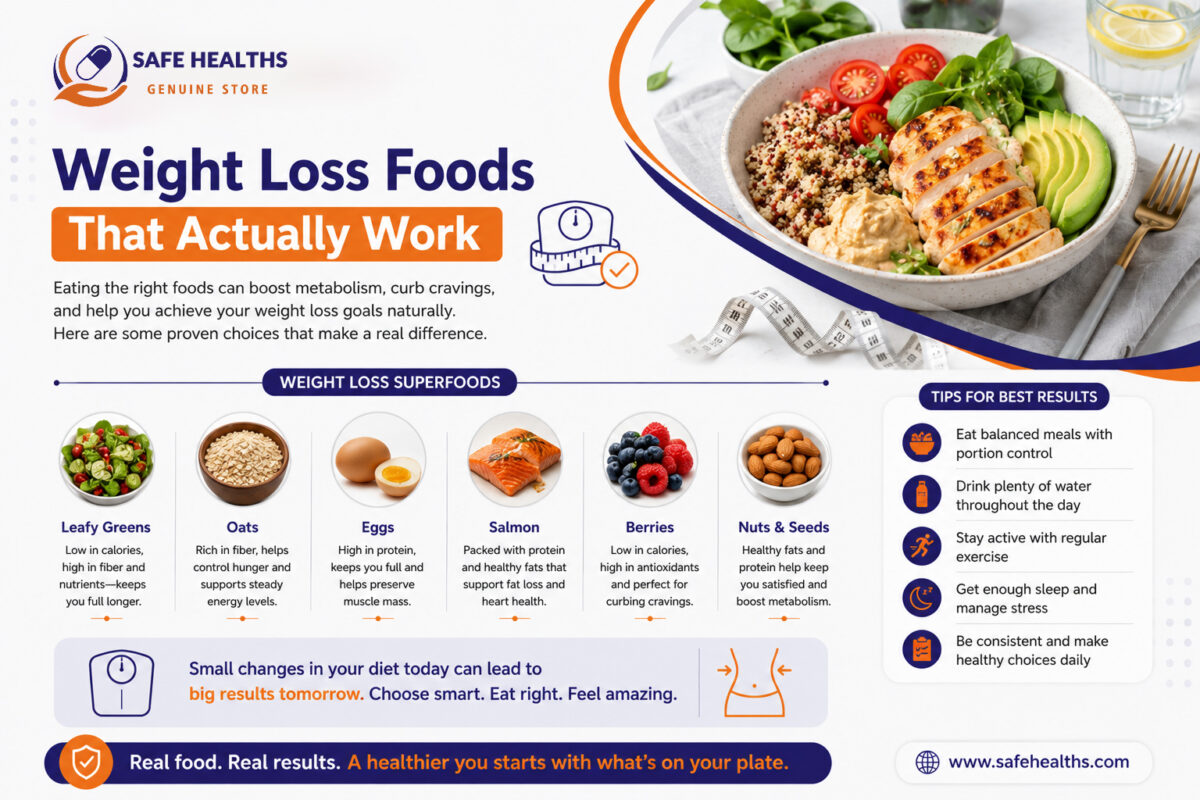
No single food melts fat. What does work is eating foods that keep you full on fewer calories, so it becomes easier to stay in a modest calorie deficit over time. The foods below do this well because they are rich in protein, fibre, or water.
High-Protein Foods
Protein is the most filling nutrient and helps you keep muscle while you lose fat. Good choices include eggs, Greek yoghurt, chicken, fish, tofu, paneer, and lentils. See our list of the best protein foods for weight loss for more ideas.
High-Fibre Foods
Fibre slows digestion and helps you feel satisfied for longer.
- Legumes: beans, chickpeas, and lentils.
- Whole grains: oats, brown rice, millet, and whole wheat.
- Vegetables: leafy greens, broccoli, cauliflower, and carrots.
- Fruit: apples, pears, berries, and oranges, which are better eaten whole than juiced.
Water-Rich Foods
Soups, salads, cucumbers, tomatoes, and watermelon add volume to a meal for few calories. Drinking enough fluid also helps with appetite control, as explained in how water intake helps weight loss.
Healthy Fats in Small Portions
Nuts, seeds, olive oil, and avocado support heart health and make meals satisfying, but they are calorie-dense. A small handful of nuts or a teaspoon or two of oil is usually enough.
Foods to Limit
Sugary drinks, sweets, deep-fried snacks, white bread, and highly processed packaged foods add calories without keeping you full. Swapping them for the foods above is often the simplest change you can make. If you get hungry between meals, try these healthy snacks for weight loss.
Making It Work
- Build each meal around a protein and a vegetable or salad.
- Eat slowly and stop when you feel comfortably full.
- Keep portions sensible, even for healthy foods.
- Combine your diet with regular activity and enough sleep.
For a structured approach, read how to create a healthy weight loss plan. If you have a medical condition or take regular medicines, check with your doctor or a dietitian before making big changes.
This article is for general information only and is not a substitute for professional medical advice.

