
Best Daily Routine for Diabetes Patients
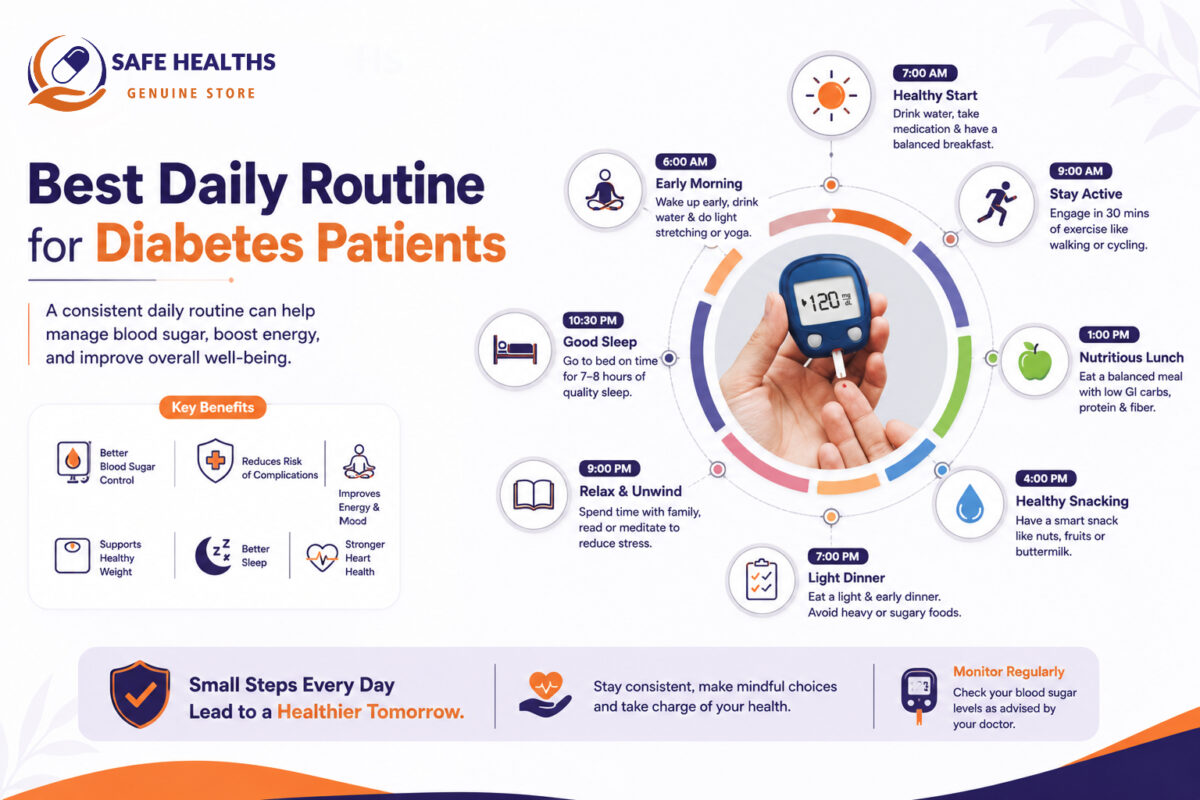
Best Daily Routine for Diabetes Patients
Living well with diabetes is largely about routine. Blood sugar responds to what you eat, how active you are, whether you take your medicines on time, how you sleep, and how stressed you feel. A predictable daily rhythm makes all of these easier to manage, lowers the risk of dangerous highs and lows, and protects your heart, kidneys, eyes, nerves, and feet over the long term.
This guide lays out a practical daily routine from morning to night, along with the key habits behind it. It is general guidance. Your own routine should be shaped by your type of diabetes, your medicines, and your doctor’s advice.
The Foundations of a Good Diabetes Routine
Whatever your schedule looks like, a good routine rests on five pillars:
- Regular monitoring: Knowing your blood sugar levels so you can act on them.
- Consistent medicine timing: Taking tablets or insulin as prescribed.
- Balanced, regular meals: Eating at similar times, with controlled portions of carbohydrates.
- Daily movement: Staying active and breaking up sitting time.
- Self-care: Sleep, stress management, foot checks, and keeping appointments.
Morning Routine
1. Check Your Blood Sugar
If you have been advised to test, check your fasting blood sugar first thing in the morning, before eating. Write it down or log it in an app. Patterns over days and weeks tell your care team far more than any single reading.
2. Take Your Medicines
Take your tablets or insulin exactly as prescribed, at the same time each day. Do not skip doses because you feel well, and do not change doses without speaking to your doctor. Use a pill organiser or phone alarm if you often forget.
3. Eat a Balanced Breakfast
Breakfast should include protein, fibre, and healthy fats alongside a controlled portion of carbohydrate. Good options include vegetable omelette with a slice of wholegrain bread, plain yoghurt with nuts and berries, or oats cooked with milk and topped with seeds. Avoid sugary cereals, pastries, and fruit juice, which can push blood sugar up quickly. Our guide to the best foods to help manage blood sugar offers more ideas.
4. Drink Water
Drink a glass of water on waking. Good hydration helps the kidneys remove excess sugar through urine.
Midday Routine
5. Move After Meals
A 10 to 15 minute walk after meals can noticeably lower the rise in blood sugar. Over a week, aim for at least 150 minutes of moderate activity such as brisk walking, cycling, or swimming, spread across most days, plus muscle-strengthening exercise on two days. Learn more about how exercise helps manage diabetes.
6. Plan a Balanced Lunch
Use the plate method as a simple guide: fill half the plate with non-starchy vegetables, one quarter with lean protein, and one quarter with whole grains or other high-fibre carbohydrate. Eat at a regular time, and avoid long gaps without food if you take insulin or medicines that can cause low blood sugar.
7. Choose Snacks Wisely
If you need a snack, choose nuts, plain yoghurt, a piece of fruit with a few almonds, roasted chickpeas, or raw vegetables with hummus. Carry a fast-acting source of sugar, such as glucose tablets or juice, in case of a low.
Afternoon and Evening Routine
8. Keep Moving
Avoid sitting for long stretches. Stand up and move for a few minutes every 30 to 60 minutes. If you exercise in the evening, check your blood sugar before and after, particularly if you take insulin.
9. Eat an Early, Lighter Dinner
Eating dinner two to three hours before bedtime helps keep overnight blood sugar steadier and supports digestion and sleep. Fill your plate with vegetables, include a lean protein such as fish, chicken, eggs, tofu, or lentils, and keep carbohydrate portions moderate. Be mindful of the foods to avoid with diabetes, such as sugary drinks, sweets, and refined flour products.
10. Be Careful With Alcohol
If you drink, do so only with food and in moderation, and check your blood sugar afterwards, because alcohol can cause delayed low blood sugar. See how alcohol affects diabetes before you decide.
Night Routine
11. Do a Daily Foot Check
Diabetes can reduce feeling and blood flow in the feet, so small injuries can go unnoticed and become serious. Every evening, look at the tops, soles, heels, and between the toes for cuts, blisters, redness, swelling, or colour changes. Wash and dry your feet carefully, moisturise (but not between the toes), and wear clean, well-fitting socks and shoes. Never walk barefoot. Seek medical advice quickly for any sore that does not heal.
12. Check Blood Sugar Before Bed if Advised
If you take insulin or have had night-time lows, your doctor may suggest testing before bed. If your reading is low, have a small snack.
13. Wind Down and Sleep Well
Poor sleep raises stress hormones and can worsen blood sugar control. Aim for seven to nine hours with a regular schedule. Avoid screens before bed, keep the room cool and dark, and speak to your doctor if you snore loudly or feel tired all day, as sleep apnoea is common in diabetes.
Managing Low Blood Sugar (Hypoglycaemia)
Low blood sugar, generally below 70 mg/dL (3.9 mmol/L), is most likely if you take insulin or certain tablets. Symptoms include shakiness, sweating, hunger, headache, fast heartbeat, irritability, and confusion. If it happens, follow the “rule of 15”: take 15 grams of fast-acting carbohydrate, such as three or four glucose tablets or half a glass of fruit juice, wait 15 minutes, recheck, and repeat if still low. Once you recover, eat a small snack. If someone is unconscious or cannot swallow, call emergency services.
Managing High Blood Sugar
High readings can come from illness, stress, missed medicines, or too many carbohydrates. Drink water, take a walk if you feel well, and follow your care plan. Seek urgent help if you have very high readings along with vomiting, abdominal pain, fruity-smelling breath, drowsiness, or fast breathing. These can be signs of a serious complication.
Sick Day Rules
When you are unwell, blood sugar can rise even if you eat less. Keep taking your medicines unless your doctor says otherwise, drink plenty of fluids, check blood sugar more often, and contact your care team if you cannot keep fluids down or readings stay high.
Weekly and Regular Check-Ups
- Every 3 to 6 months: HbA1c test, blood pressure check, and medicine review.
- Yearly: Eye examination, kidney tests (urine and blood), cholesterol, foot examination, and dental check.
- As advised: Vaccinations, including flu and pneumonia.
Stress and Emotional Wellbeing
Managing diabetes every day can be tiring, and many people experience stress or low mood, sometimes called diabetes distress. Take short breaks, practise slow breathing or meditation, stay connected with friends and family, and talk to your care team if you feel overwhelmed. Support groups can help too.
Sample Daily Schedule
- 7:00 am: Wake, drink water, check blood sugar, take medicines as prescribed.
- 7:30 am: Balanced breakfast.
- 10:30 am: Healthy snack if needed and a short walk.
- 1:00 pm: Lunch using the plate method, followed by a 10 minute walk.
- 4:30 pm: Light snack and activity such as a brisk walk or cycling.
- 7:00 pm: Early, balanced dinner.
- 9:00 pm: Foot check, wind down, and bedtime check if advised.
- 10:30 pm: Sleep.
Tips for Sticking With Your Routine
- Prepare meals ahead and keep healthy snacks available.
- Use phone alarms for medicines, meals, and blood sugar checks.
- Keep a simple log, and share it at your appointments.
- Wear medical identification stating you have diabetes.
- Make small changes one at a time, rather than all at once.
For more on staying on target, read how to maintain healthy blood sugar levels every day and our simple tips for better diabetes management.
Final Thoughts
A good diabetes routine is not about perfection. It is about steady habits that keep your blood sugar in a safe range most of the time. Work with your doctor, diabetes nurse, and dietitian to adapt this routine to your needs, and be kind to yourself on difficult days.
This article is for general information only and is not a substitute for professional medical advice. Always follow the plan agreed with your healthcare team.

