
Foods to Avoid With Diabetes
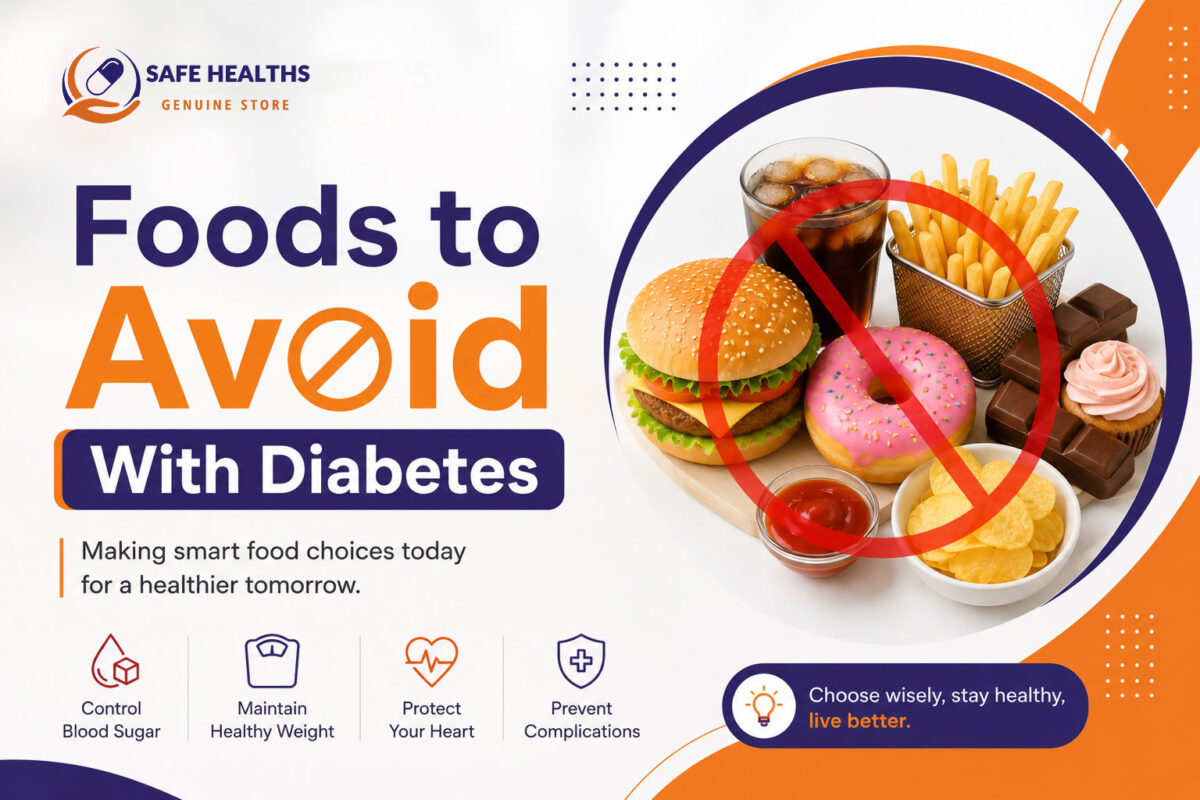
Foods to Avoid With Diabetes
If you have diabetes, what you eat has a direct effect on your blood sugar, weight, blood pressure, and long-term risk of complications. The good news is that no food is strictly forbidden for everyone. What matters is knowing which foods raise blood sugar quickly or harm your heart and which are best limited, so you can make informed choices and still enjoy your meals.
This guide explains the foods and drinks people with diabetes are usually advised to limit or avoid, why they matter, and what to eat instead.
Why Food Choices Matter in Diabetes
Carbohydrates break down into glucose, which enters the bloodstream. In diabetes, the body cannot manage that glucose properly, so large amounts of fast-digesting carbohydrates can cause sharp spikes. Over time, repeated spikes and high blood sugar damage blood vessels, nerves, kidneys, and eyes. Diabetes also raises the risk of heart disease, so foods high in unhealthy fats and salt matter too.
1. Sugary Drinks
Soft drinks, sweetened tea and coffee, energy drinks, sports drinks, flavoured milk, and sweetened lassi or milkshakes deliver sugar in liquid form that is absorbed very quickly. They cause fast spikes and add many calories without making you feel full. This is one of the most important categories to cut.
Better choices: Water, sparkling water, unsweetened tea or coffee, buttermilk without sugar, or water flavoured with lemon or mint.
2. Fruit Juice
Even 100 percent fruit juice is concentrated sugar without the fibre of whole fruit, so it raises blood sugar quickly. A small glass is sometimes used to treat low blood sugar, but it should not be a daily drink.
Better choices: Whole fruit, such as apples, pears, berries, oranges, and guavas, which have fibre that slows absorption.
3. Sweets, Desserts, and Sugary Snacks
Cakes, pastries, biscuits, ice cream, chocolate, mithai, and sweetened breakfast cereals provide a high dose of sugar and refined flour. They can cause sharp spikes and make weight control harder.
Better choices: Fresh fruit, a small piece of dark chocolate, plain yoghurt with berries, or a small portion shared occasionally.
4. Refined Carbohydrates
White bread, white rice in large portions, maida (refined flour) products, naan, pastries, noodles, and instant foods are digested quickly. They have little fibre and cause rapid rises in blood sugar.
Better choices: Whole grains such as oats, brown rice, millets, barley, whole wheat, and legumes, in sensible portions.
5. Fried and Deep-Fried Foods
French fries, samosas, pakoras, fried chicken, and packaged fried snacks are high in unhealthy fats and calories. They contribute to weight gain, insulin resistance, and heart disease, which is already a concern in diabetes.
Better choices: Baked, grilled, steamed, or air-fried foods, with small amounts of healthy oil.
6. Trans Fats and Excess Saturated Fats
Margarine with partially hydrogenated oils, some packaged baked goods, fatty cuts of meat, processed meats such as sausages and bacon, and full-fat dairy in large quantities can worsen cholesterol and heart risk.
Better choices: Olive oil, nuts, seeds, fish, lean poultry, and low-fat dairy.
7. Processed and Cured Meats
Bacon, sausages, ham, salami, and similar foods are high in salt and saturated fat and are linked to higher heart disease and some cancer risk.
8. High-Salt Foods
People with diabetes are at higher risk of high blood pressure and kidney disease. Chips, pickles, papad, instant noodles, canned soups, salty snacks, and packaged ready meals can contain a lot of sodium.
Better choices: Fresh food cooked with herbs and spices, and checking labels for sodium.
9. Sweetened Breakfast Foods and Flavoured Yoghurts
Many cereals, granola bars, flavoured yoghurts, and instant oat packets contain a surprising amount of added sugar.
Better choices: Plain oats, plain yoghurt with fruit and nuts, eggs, or vegetable omelettes.
10. Dried Fruit and Large Portions of Very Sweet Fruit
Dates, raisins, dried mango, and banana chips are very concentrated in sugar. Very ripe bananas, mangoes, grapes, and lychees are higher in sugar. They are not forbidden but should be eaten in small portions, ideally with protein such as nuts.
11. Alcohol
Alcohol can cause low blood sugar, especially with insulin or certain tablets, and sweet drinks and beer can raise blood sugar. Heavy drinking harms the liver and heart. If you drink, do so in moderation with food and check blood sugar. Read more in how alcohol affects diabetes.
12. White Potatoes and Starchy Vegetables in Large Amounts
Potatoes, especially mashed or fried, have a high glycaemic impact. Eat smaller portions, boil and cool them, and combine with protein and vegetables.
13. “Diabetic” or “Sugar-Free” Packaged Foods
These can still contain refined flour, fats, and calories, and sugar alcohols may cause digestive upset. Read labels carefully rather than trusting the claim.
14. Honey, Jaggery, and “Natural” Sugars
Honey, jaggery, agave, and coconut sugar are still sugars and raise blood sugar similarly to table sugar. Use sparingly.
Understanding Portions and Glycaemic Index
The glycaemic index (GI) ranks carbohydrate foods by how quickly they raise blood sugar. Low-GI foods, such as most vegetables, legumes, oats, and whole fruits, are generally better. But portion size matters just as much, so even a healthy food can raise blood sugar if you eat too much. The plate method helps: half non-starchy vegetables, a quarter lean protein, and a quarter whole grains or starchy foods.
What to Eat Instead
- Non-starchy vegetables: Leafy greens, broccoli, cauliflower, cucumber, tomato, and capsicum.
- Lean proteins: Fish, eggs, chicken, tofu, paneer, lentils, and beans.
- Healthy fats: Nuts, seeds, olive oil, and avocado.
- High-fibre carbohydrates: Oats, barley, millets, whole grains, and legumes.
- Whole fruit in moderation.
For detailed ideas, read our guide to the best foods to help manage blood sugar.
Smart Eating Habits for Diabetes
- Eat regular meals and avoid long gaps, especially if you take insulin.
- Pair carbohydrates with protein and fibre.
- Eat slowly and watch portions.
- Read food labels for added sugar, salt, and fat.
- Check your blood sugar to see how foods affect you personally.
- Plan ahead for eating out and festivals.
See how food fits into a daily routine for diabetes patients and how to maintain healthy blood sugar levels every day.
Do You Have to Give Up Your Favourite Foods?
Not necessarily. Many people can enjoy small portions of favourite foods occasionally, particularly if they balance them within a meal and monitor their blood sugar. A dietitian can help adapt traditional dishes to your needs.
When to Speak to a Dietitian or Doctor
Everyone’s diabetes is different. Speak to a doctor or registered dietitian if you take insulin or tablets that can cause low blood sugar, have kidney disease, are pregnant, or struggle to control your readings. Seek advice if you have repeated very high or low blood sugar.
Frequently Asked Questions
Can I ever eat sweets with diabetes?
Yes, occasionally and in small portions, as part of a balanced meal, if your blood sugar is well controlled.
Is fruit bad for diabetes?
No. Whole fruit has fibre, vitamins, and antioxidants. Watch portion sizes and avoid juice.
Is brown rice better than white rice?
Generally yes, because it has more fibre, but portions still matter.
Final Thoughts
Avoiding or limiting sugary drinks, refined carbohydrates, fried foods, processed meats, and excess salt can make a big difference to blood sugar and long-term health. Focus on what you can eat, plan balanced meals, and work with your healthcare team for a plan that suits you.
This article is for general information only and is not a substitute for professional medical advice.

