Natural Foods That Improve Blood Flow
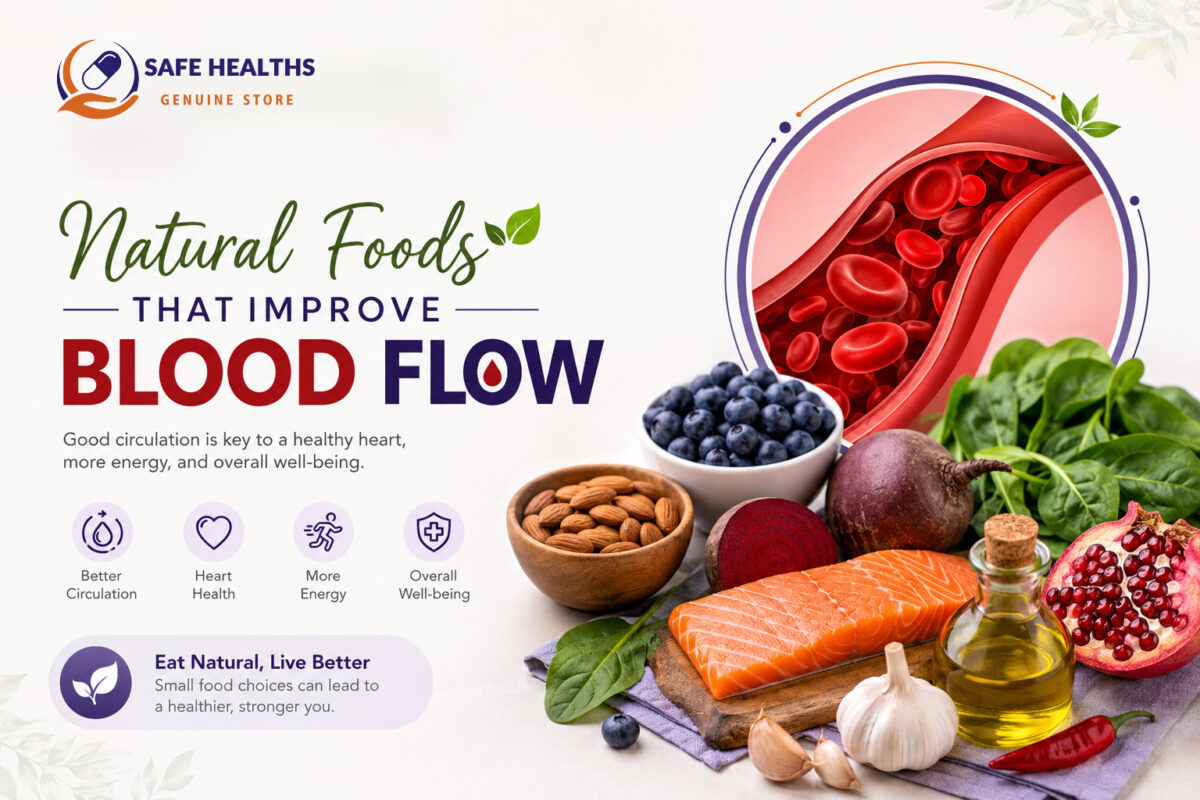
Natural Foods That Improve Blood Flow
Healthy circulation depends on flexible, clear blood vessels that can widen and narrow as the body needs. While no food works like a medicine, a diet rich in certain foods supports blood vessel health, helps keep blood pressure and cholesterol in check, and may improve circulation over time. These foods are best seen as part of an overall healthy eating pattern, alongside exercise and not smoking.
This guide explains how food influences blood flow, the best natural foods to include, which foods to limit, how to combine them in meals, and the warning signs that need medical attention rather than dietary changes.
How Food Affects Blood Flow
The inner lining of blood vessels, the endothelium, produces nitric oxide, a chemical that tells the vessel walls to relax and widen so blood can flow more easily. Poor diet, smoking, high blood sugar, and inflammation damage the endothelium and reduce nitric oxide. Certain foods help in several ways:
- Providing nitrates and amino acids that the body converts to nitric oxide.
- Supplying antioxidants and flavonoids that protect the vessel lining.
- Improving cholesterol and blood pressure.
- Reducing inflammation.
- Supporting a healthy weight and blood sugar.
Beetroot and Leafy Greens
Beets, spinach, rocket, kale, and other leafy greens are rich in dietary nitrates. The body converts nitrates to nitric oxide, which helps blood vessels relax. Studies show that beetroot juice can lower blood pressure modestly and improve exercise efficiency. Eat leafy greens daily, and include beetroot in salads, juices, or cooked dishes.
Citrus Fruits and Berries
Oranges, lemons, grapefruit, blueberries, strawberries, and other berries are rich in vitamin C and flavonoids, which support the endothelium. Large studies link higher intake of flavonoid-rich fruit with better cardiovascular health. Choose whole fruit rather than juice for the fibre. Note that grapefruit can interact with some medicines, so check with a pharmacist if you take regular tablets.
Garlic
Garlic contains sulfur compounds, including allicin, that may help blood vessels relax and may slightly lower blood pressure and cholesterol. Crush or chop fresh garlic and let it rest for a few minutes before cooking to help active compounds form. Use it regularly in cooking.
Oily Fish
Salmon, sardines, mackerel, herring, and trout provide omega-3 fats, which support heart health, lower triglycerides, and may reduce inflammation. Aim for two portions a week. Plant sources include walnuts, flaxseed, and chia seeds.
Watermelon
Watermelon contains citrulline, an amino acid that the body converts to arginine and then to nitric oxide. Small studies suggest that watermelon or citrulline may modestly improve blood vessel function. It is also hydrating and low in calories.
Pomegranate
Rich in antioxidants, pomegranate juice has been linked in small studies to improved blood flow and lower blood pressure. Choose unsweetened juice, and watch portion size because of the sugar.
Nuts and Seeds
Almonds, walnuts, pistachios, pumpkin seeds, and flaxseed provide unsaturated fats, fibre, magnesium, and arginine. Regular nut intake is associated with lower heart disease risk. A small handful a day is enough.
Whole Grains and Legumes
Oats, barley, brown rice, millet, beans, lentils, and chickpeas provide fibre that lowers cholesterol and helps control blood sugar, protecting blood vessels.
Dark Chocolate (in Moderation)
Chocolate with high cocoa content (70 percent or more) contains flavanols that may support blood vessel function. Choose small portions, because it still contains sugar and fat.
Olive Oil
Extra virgin olive oil, central to the Mediterranean diet, is linked with lower cardiovascular risk. Use it instead of butter and refined oils.
Spices and Herbs
Ginger, turmeric, cinnamon, cayenne pepper, and others have been studied for effects on circulation and inflammation. Evidence is mostly from small or laboratory studies, but they are safe and flavourful additions to food.
Green Tea and Coffee in Moderation
Green tea contains catechins that may support blood vessel health. Moderate coffee intake is associated with neutral or slightly beneficial effects for most people. Avoid excessive caffeine, which can raise blood pressure and affect sleep in some individuals.
Foods to Limit
- Excess salt: Raises blood pressure.
- Trans fats and excess saturated fat: Fried foods, processed baked goods, and fatty processed meats.
- Sugary drinks and sweets: Contribute to inflammation, weight gain, and blood sugar problems.
- Processed and cured meats.
- Heavy alcohol use.
Smoking has the same harmful effect on blood vessels, so food alone cannot make up for it.
Building Meals for Better Circulation
- Breakfast: Oats with berries, walnuts, and flaxseed.
- Lunch: A large salad with spinach, beetroot, chickpeas, and olive oil dressing.
- Snack: Watermelon or an orange, with a handful of almonds.
- Dinner: Grilled salmon or lentils with garlicky vegetables and brown rice.
- Drinks: Water, green tea, and coffee in moderation.
Food Is Only One Part
Regular exercise, a healthy weight, good sleep, stress management, and not smoking matter just as much for circulation. Circulation is also linked to sexual health, and our guide to the best foods for erectile dysfunction covers many of the same principles. You can also read about the connection between heart health and erectile dysfunction and how diet and exercise affect erectile function.
Signs of Poor Circulation
- Cold hands and feet.
- Numbness or tingling.
- Leg pain or cramping when walking that eases with rest.
- Slow-healing sores on the feet or legs.
- Swelling in the ankles.
- Changes in skin colour.
- Erection difficulties.
These can signal underlying conditions such as peripheral artery disease, diabetes, or heart disease, and need medical evaluation, not just dietary changes.
Safety Notes
- Check with your doctor before major dietary changes if you take blood thinners, blood pressure medicines, or have kidney disease.
- Vitamin K-rich leafy greens can affect warfarin, so keep your intake consistent.
- Be cautious with supplements, such as high-dose garlic or fish oil, which can increase bleeding risk.
When to See a Doctor
See a doctor for numb or cold limbs, leg pain when walking, chest pain, breathlessness, non-healing sores, or sudden changes in colour or sensation. Seek emergency care for chest pain, sudden weakness on one side, or a sudden cold, painful, pale limb.
Frequently Asked Questions
Which food improves blood flow fastest?
Nitrate-rich foods such as beetroot may affect blood pressure within hours, but lasting benefits come from consistent healthy eating.
Can food replace medicine for circulation problems?
No. Diet supports treatment but does not replace it for diagnosed conditions.
Do supplements work better than food?
Whole foods are generally safer and provide a wider range of nutrients.
Final Thoughts
Foods such as beetroot, leafy greens, citrus fruits, berries, garlic, oily fish, nuts, and whole grains support healthy blood vessels and circulation as part of a balanced lifestyle. Combine them with regular exercise, a healthy weight, and no smoking, and see a doctor for any warning signs.
This article is for general information only and is not a substitute for professional medical advice.