
How to Recover Faster From Viral Infections
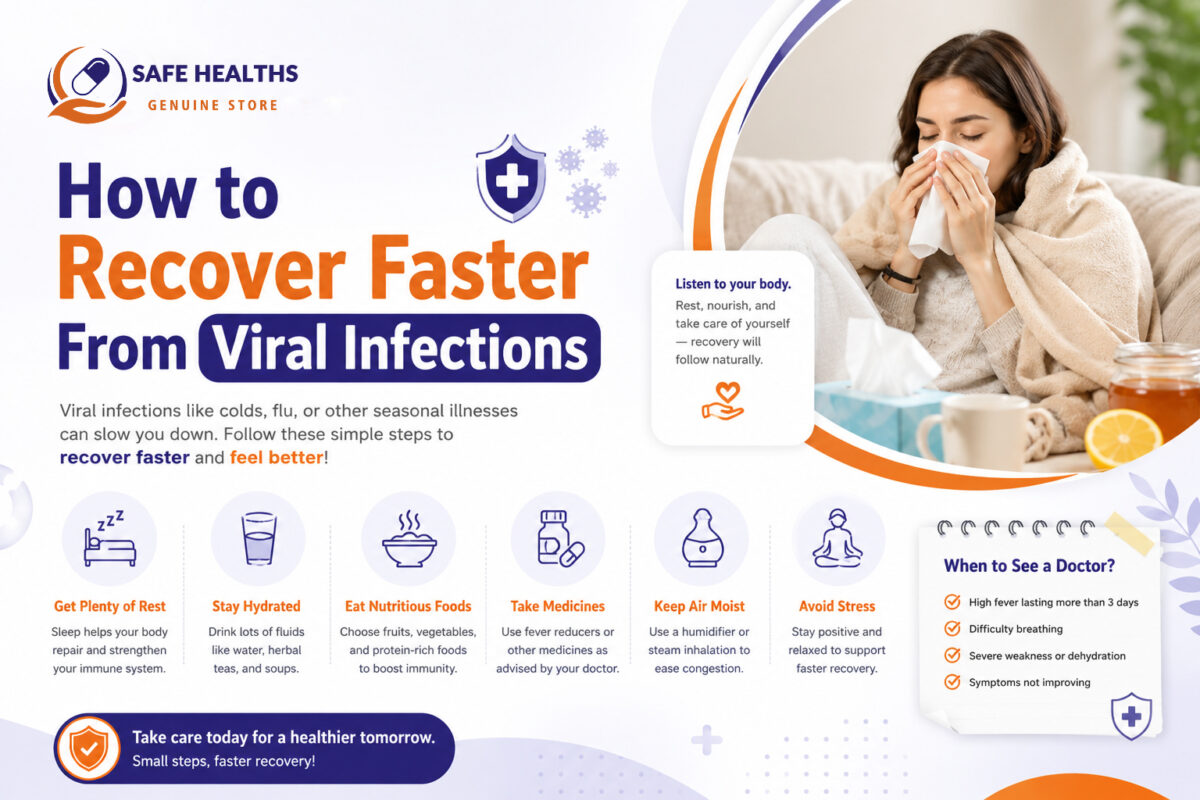
How to Recover Faster From Viral Infections
Viral infections such as colds, flu, and many cases of viral fever usually clear up on their own. There is no cure that kills the virus in most cases, but you can support your body so you feel better sooner and avoid complications.
1. Rest Properly
Your immune system works hardest when you sleep and rest. Take time off if you can, sleep as much as your body wants, and return to normal activity gradually rather than all at once.
2. Drink Plenty of Fluids
Fever, sweating, and a runny nose make you lose fluid. Water, clear soups, oral rehydration solutions, and warm drinks help prevent dehydration. Limit alcohol and very sugary drinks.
3. Eat Light, Nourishing Food
You may not feel hungry, but small, regular meals help. Choose soups, rice or porridge, fruit, vegetables, eggs, and yoghurt. Foods rich in protein, vitamin C, and zinc support recovery as part of a balanced diet.
4. Ease Your Symptoms
- Use paracetamol or another suitable pain and fever reliever, following the label or your doctor’s advice.
- Gargle with warm salt water for a sore throat.
- Use steam or a humidifier to loosen congestion.
- Check with a pharmacist before combining cold and flu products.
5. Do Not Take Antibiotics for a Virus
Antibiotics work against bacteria, not viruses, and taking them unnecessarily can cause side effects and contribute to antibiotic resistance. Read more in can antibiotics treat viral infections.
6. Protect Others
Stay home while you have a fever, cover coughs, wash your hands often, and avoid sharing cups and towels. To recognise what you may have, see the common viral infection symptoms in adults.
When to See a Doctor
Seek medical advice if you have difficulty breathing, chest pain, confusion, a stiff neck, a rash with fever, signs of dehydration, or a fever lasting more than three days. Also see a doctor if you start to improve and then get worse. Our guide to the warning signs of serious infection explains what to watch for. Babies, older adults, pregnant women, and people with long-term conditions should seek advice sooner.
This article is for general information only and is not a substitute for professional medical advice.

