
Can Antibiotics Treat Viral Infections?
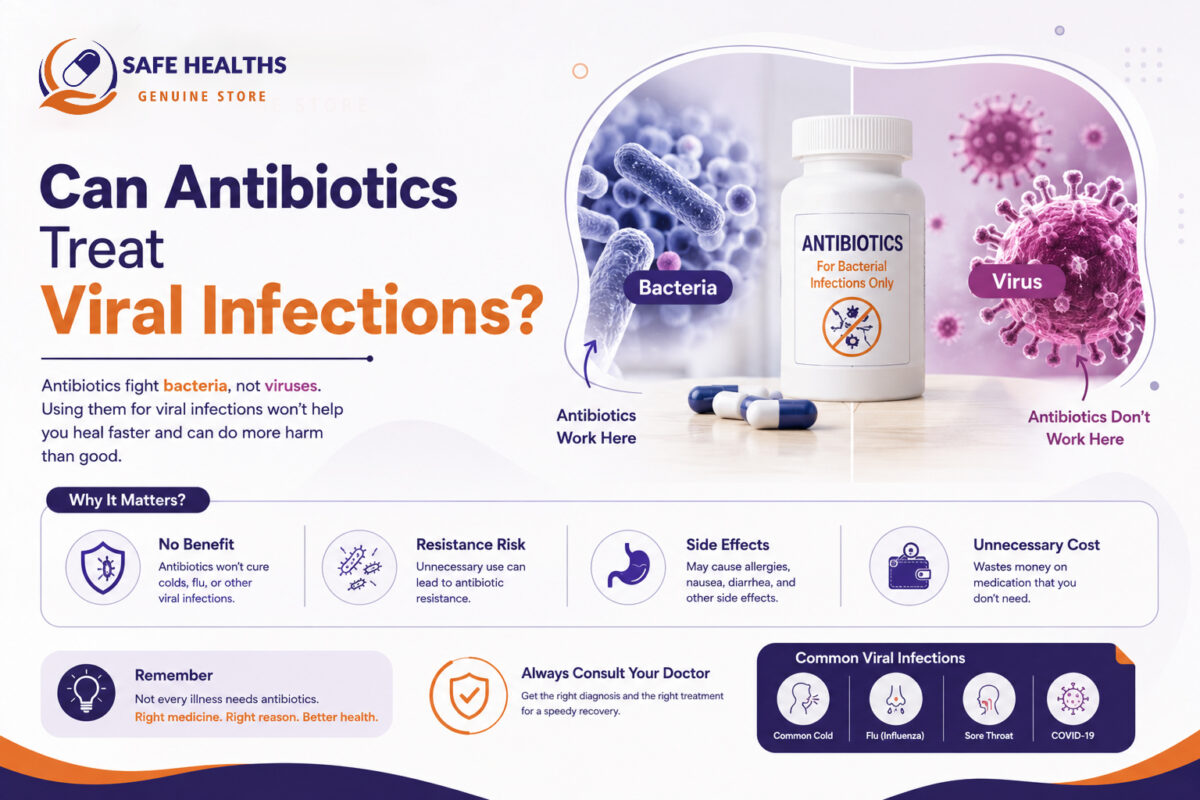
Can Antibiotics Treat Viral Infections?
The short answer is no. Antibiotics are designed to kill bacteria or stop them from multiplying. They have no effect on viruses, so they will not cure a cold, flu, most sore throats, most coughs, or viral fevers. Taking them for a viral illness will not help you recover faster, and it can cause real harm.
This guide explains why antibiotics do not work on viruses, what the risks of using them unnecessarily are, how to tell bacterial and viral infections apart, and what actually helps when you have a viral illness.
What Is the Difference Between Bacteria and Viruses?
Bacteria are single-celled living organisms. Most are harmless or even helpful, such as the bacteria in your gut, but some cause diseases like strep throat, urinary tract infections, and bacterial pneumonia. Bacteria can survive and reproduce on their own, which is why drugs can target their structures, for example the cell wall.
Viruses are much smaller and are not cells at all. They must get inside your cells and take over their machinery to reproduce. Because viruses do not have the structures that antibiotics attack, these medicines are useless against them. Viruses cause colds, influenza, COVID-19, most cases of bronchitis, many sore throats, chickenpox, measles, and many cases of diarrhoea and vomiting.
Why Antibiotics Do Not Work Against Viruses
Antibiotics work by blocking processes that are specific to bacteria, such as building their cell walls or making their proteins. Viruses do not carry out these processes. Their reproduction happens inside human cells, using human cell machinery. Treating viral illnesses requires different medicines, called antivirals, which are available only for certain viruses, such as influenza, herpes, HIV, hepatitis C, and COVID-19. For most common viral infections, treatment focuses on relieving symptoms while the immune system clears the virus.
The Risks of Taking Antibiotics When You Do Not Need Them
1. Antibiotic Resistance
Each time antibiotics are used, bacteria that survive can pass on resistance. Over time, infections become harder, and sometimes impossible, to treat with common antibiotics. Resistance is one of the biggest global health threats, and overuse in viral illnesses is a major driver.
2. Side Effects
Antibiotics can cause nausea, diarrhoea, stomach pain, rashes, yeast infections, and in some people serious allergic reactions. Some can interact with other medicines or affect the liver, kidneys, or tendons.
3. Harm to Your Good Bacteria
Antibiotics also kill helpful bacteria in the gut. This can upset digestion and, in some cases, allow a dangerous bowel infection called Clostridioides difficile (C. diff) to take hold, which causes severe diarrhoea.
4. Wasted Time and Delayed Care
Using antibiotics for a viral illness can give a false sense of treatment, delaying the right care if something more serious is developing.
How Can You Tell If an Infection Is Bacterial or Viral?
It can be hard to tell, even for doctors, without examination and sometimes tests. Some clues include:
- Viral infections usually cause widespread symptoms such as a runny nose, sneezing, body aches, tiredness, and a cough, and typically peak within a few days and improve within a week or ten days. Learn about the typical viral infection symptoms in adults.
- Bacterial infections are often more focused in one area, may cause pus or thick discharge, a persistent high fever, and symptoms that worsen after initial improvement or last longer than expected. See our guide to the signs you may have a bacterial infection.
Colour of mucus is not a reliable guide. Green or yellow phlegm is common in viral infections and does not by itself mean you need antibiotics.
Common Illnesses That Usually Do Not Need Antibiotics
- The common cold.
- Influenza (the flu).
- Most sore throats, other than strep throat.
- Most coughs and acute bronchitis in healthy adults.
- Most sinus infections, which are often viral and clear within ten days.
- Most ear infections in older children, many of which settle on their own.
- Many cases of stomach flu (gastroenteritis).
When Antibiotics Are Needed
Antibiotics are important and sometimes life-saving when a bacterial infection is confirmed or strongly suspected. Examples include strep throat, bacterial pneumonia, urinary tract infections, kidney infections, skin infections such as cellulitis, whooping cough, tuberculosis, and some severe sinus or ear infections. Your doctor decides based on your symptoms, examination, risk factors, and test results.
Secondary Bacterial Infections
Sometimes a viral illness is followed by a bacterial infection. For example, flu can lead to bacterial pneumonia, and a cold can lead to a bacterial sinus or ear infection. Warning signs include symptoms that start to improve and then suddenly worsen, a fever that returns, difficulty breathing, severe pain, or symptoms lasting longer than expected. If you notice these, see a doctor, who may prescribe antibiotics if a bacterial infection has developed.
What Actually Helps With a Viral Infection?
- Rest: Give your body time and energy to fight the virus.
- Fluids: Water, soups, and oral rehydration solutions prevent dehydration.
- Pain and fever relief: Paracetamol or ibuprofen can ease aches and fever, if suitable for you. Follow the label.
- Throat and cough relief: Warm drinks, honey (not for infants), lozenges for adults, and saltwater gargles.
- Nasal relief: Steam, saline nasal sprays, and a humidifier.
- Antivirals when relevant: For flu or COVID-19 in higher-risk people, doctors may prescribe antivirals, ideally started early.
For a full list of ways to feel better sooner, read how to recover faster from viral infections and our guide to viral fever symptoms and treatment.
Using Antibiotics Responsibly
- Take antibiotics only when prescribed for you by a doctor.
- Take them exactly as directed, with the right dose, frequency, and duration. Do not stop early unless your doctor says so.
- Never use leftover antibiotics or share them with others.
- Do not ask for antibiotics for a cold or flu, and do not be surprised if your doctor says you do not need them.
- Tell your doctor about allergies, other medicines, pregnancy, and past reactions.
- Finish the course as instructed and return if your symptoms do not improve as expected.
When to See a Doctor
See a doctor if you have a fever above 39°C or lasting more than three days, trouble breathing, chest pain, symptoms that improve and then worsen, severe throat pain with trouble swallowing, signs of dehydration, or if you are in a higher-risk group such as pregnant women, older adults, babies, or people with long-term conditions or weakened immunity. Learn more about the warning signs of serious infection.
How Long Do Infections Usually Last?
Colds usually last about 7 to 10 days, though a cough may linger for a few weeks. Flu often leaves you feeling unwell for a week or so, with tiredness lasting longer. Many bacterial infections begin to improve within two to three days of starting the right antibiotic, although some need longer courses. Our article on how long bacterial infections last gives more detail.
Frequently Asked Questions
Will antibiotics prevent a cold from turning into something worse?
No. Taking antibiotics preventively for viral illness does not reduce the chance of complications and increases the risk of side effects and resistance.
Is it harmful to take a few antibiotics “just in case”?
Yes. Partial or unnecessary courses can encourage resistant bacteria and cause avoidable side effects.
Why did my doctor prescribe antibiotics for a cough once but not another time?
The cause matters. If the doctor suspects a bacterial chest infection, for example based on your symptoms and examination, antibiotics may help. Most coughs are viral and clear on their own.
Final Thoughts
Antibiotics are powerful medicines, but they are only effective against bacteria. Using them for viral illness does not help you recover and contributes to a growing global problem. Rest, fluids, and symptom relief are the right approach for most viral infections, and your doctor can help decide when something more is needed.
This article is for general information only and is not a substitute for professional medical advice.

