How to Recover Faster From Viral Infections
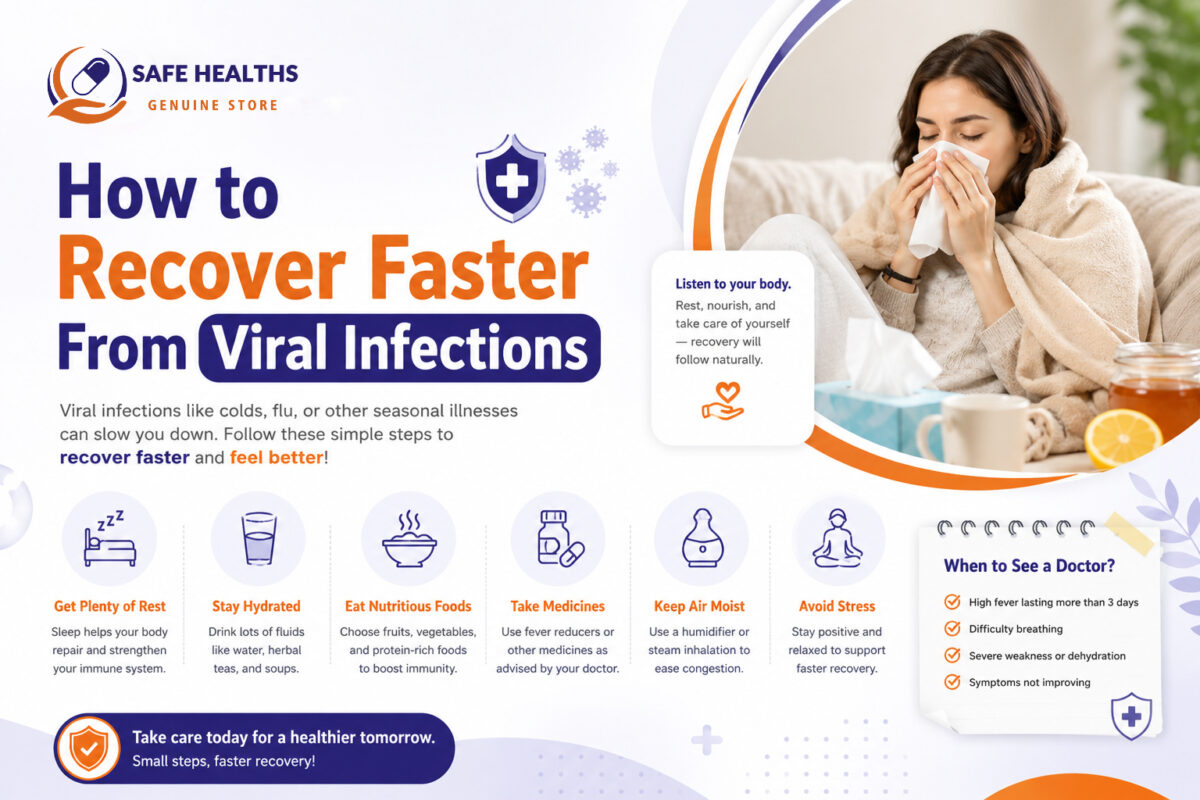
How to Recover Faster From Viral Infections
Viral infections such as colds, flu, many sore throats, and viral fevers are the most common illnesses people get. For most of them, there is no medicine that kills the virus, and your immune system does the work. But what you do while you are ill makes a real difference to how you feel, how long symptoms last, and how well you recover. The right care can help you get better sooner and avoid complications.
This guide explains what actually helps you recover faster from a viral infection, what to avoid, how to ease symptoms safely, how to support your immune system, and the warning signs that mean you should see a doctor.
What Happens When You Catch a Virus?
A virus enters your cells, uses them to multiply, and triggers your immune system to respond. Many of the symptoms you feel, such as fever, aches, tiredness, and congestion, are part of that immune response rather than direct damage from the virus. Most viral infections clear in about 7 to 10 days, though a cough and tiredness can linger for longer. Recovery depends on how well your body can fight the virus and how well you support it.
1. Rest and Sleep
Your immune system works hardest when you rest. Sleep helps the body produce infection-fighting proteins, and rest conserves energy for recovery.
- Take time off work or school if you can, particularly in the first few days or when you have a fever.
- Sleep as much as your body wants, and take naps.
- Avoid strenuous exercise until you are fever-free and feel better, then return gradually.
2. Drink Plenty of Fluids
Fever, sweating, a runny nose, vomiting, and diarrhoea all cause fluid loss. Dehydration worsens headache, dizziness, and tiredness.
- Drink water, clear soups, oral rehydration solutions, and warm herbal teas.
- Aim for pale yellow urine.
- Limit alcohol and very sugary drinks.
- If you have vomiting or diarrhoea, take small, frequent sips.
3. Eat Light, Nourishing Food
Your appetite may be low, but your body still needs energy and nutrients.
- Protein: Eggs, dal, curd, fish, chicken, paneer, tofu, and milk support immune cells and tissue repair.
- Fruits and vegetables: Citrus fruits, guava, papaya, spinach, carrots, and tomatoes provide vitamins and antioxidants.
- Whole grains: Khichdi, porridge, and rice with dal give steady energy.
- Soups and broths: Provide fluid, salt, and easy calories.
- Honey (adults and children over one year): A spoonful in warm water can soothe a sore throat and cough.
Small, frequent meals work better than large ones. See the foods that support your body while it fights infection.
4. Ease Your Symptoms Safely
Fever and Pain
Paracetamol (acetaminophen) or ibuprofen, if suitable for you, can reduce fever and relieve aches. Follow the label, do not exceed the maximum daily dose, and avoid combining several products that contain the same ingredient. Do not give aspirin to children or teenagers. If dengue is possible in your area, avoid ibuprofen and aspirin unless a doctor says they are safe.
Sore Throat
Gargle with warm salt water, drink warm fluids, suck lozenges (adults), and rest your voice.
Blocked or Runny Nose
Use saline nasal drops or sprays, steam inhalation, or a humidifier. Sleep with your head slightly raised.
Cough
Warm drinks and honey can help a dry cough. Avoid giving cough and cold medicines to young children unless advised by a doctor.
Tummy Upset
Sip fluids frequently, use oral rehydration solution, and reintroduce bland foods as you recover.
5. Do Not Take Antibiotics for a Virus
Antibiotics kill bacteria, not viruses. Taking them for a viral illness does not help you recover, can cause side effects such as diarrhoea and rashes, and contributes to antibiotic resistance. A doctor will prescribe them only if a bacterial infection is found. Read can antibiotics treat viral infections.
6. Consider Antivirals When Appropriate
For some viral infections, such as influenza and COVID-19, doctors may prescribe antiviral medicines, usually started early and mainly for people at higher risk, such as older adults, pregnant women, and those with chronic illness or weakened immunity. Ask your doctor if you are in a higher-risk group, and seek advice early.
7. Protect Others While You Recover
- Stay home while you have a fever or are very unwell.
- Cover coughs and sneezes, and wash your hands often.
- Avoid sharing cups, towels, and utensils.
- Wear a mask around others if you must go out.
- Keep your distance from higher-risk people.
Learn what to look for in the typical viral infection symptoms in adults.
8. Support Your Immune System
- Eat a balanced diet with enough protein, vitamins, and minerals.
- Get regular sleep, and manage stress.
- Avoid smoking and limit alcohol.
- Stay up to date with vaccines.
- Be active when you are well.
Supplements and Home Remedies: What Evidence Says
- Vitamin C: Regular intake does not prevent most colds, but may slightly shorten them in some people. High doses once you are sick have little proven benefit.
- Zinc lozenges: Some studies suggest that starting them within 24 hours may shorten colds slightly, though they can cause nausea and a bad taste.
- Echinacea and herbal mixes: Evidence is mixed.
- Ginger, garlic, turmeric, and honey: Safe in food, and may soothe symptoms, but they are not cures.
- Steam and saltwater gargles: Provide symptom relief.
Mistakes That Slow Recovery
- Pushing through with work or exercise while unwell.
- Not drinking enough.
- Taking unnecessary antibiotics.
- Doubling up on cold and flu products with the same ingredients.
- Drinking alcohol or smoking.
- Returning to full activity too quickly.
A Sample Recovery Day
- Morning: Water or oral rehydration solution, a light breakfast of oats or porridge, and rest.
- Mid-morning: Warm lemon and honey water, and a piece of fruit.
- Lunch: Dal, rice, and cooked vegetables, or chicken soup.
- Afternoon: A nap, followed by curd or yoghurt.
- Evening: Steam inhalation, a light walk if you feel up to it, and fluids.
- Dinner: Khichdi or a light vegetable and egg dish, then early to bed.
When to See a Doctor
Seek medical advice if you have:
- Difficulty breathing, chest pain, or fast breathing.
- A fever above 39.5°C or lasting more than three days.
- A stiff neck, severe headache, or confusion.
- Signs of dehydration, such as very dark urine, dizziness, or no urination.
- A rash with fever.
- Symptoms that improve and then get worse.
- Persistent vomiting or inability to keep fluids down.
Our guide to the warning signs of serious infection explains what needs urgent attention. Babies, older adults, pregnant women, and people with long-term conditions or weakened immunity should seek advice sooner.
Frequently Asked Questions
How long does a viral infection last?
Most last about 7 to 10 days, but cough and tiredness may linger for a couple of weeks.
Can I speed up recovery?
You cannot kill the virus quickly, but rest, fluids, nutrition, and symptom relief help your body recover and make you feel better.
When can I go back to work?
Once you have been fever-free for at least 24 hours and feel well enough.
Final Thoughts
Recovering faster from a viral infection is about supporting your body: rest, fluids, nutritious food, and sensible symptom relief, while avoiding unnecessary antibiotics. Protect others, return to activity gradually, and see a doctor if you notice warning signs or if you are in a higher-risk group.
This article is for general information only and is not a substitute for professional medical advice.