How Diet and Exercise May Affect Erectile Function
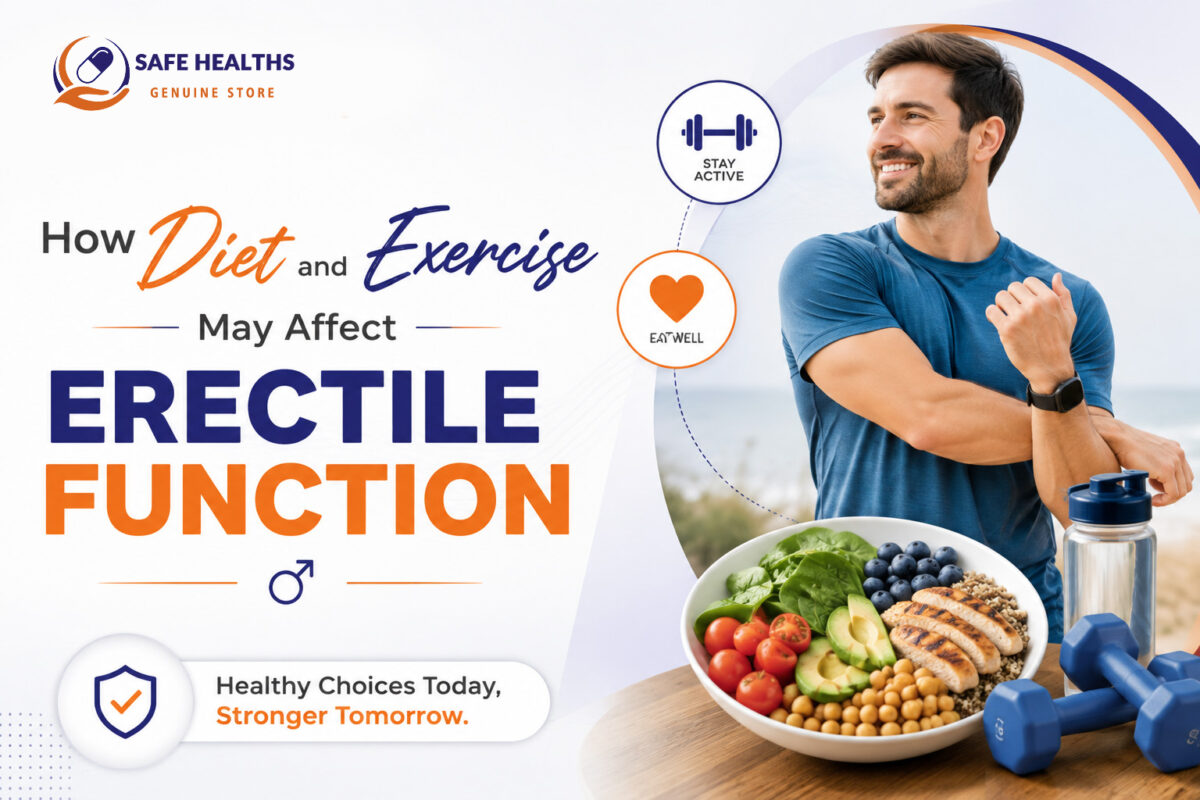
How Diet and Exercise May Affect Erectile Function
What you eat and how much you move have a direct effect on your erections. The reasons are not mysterious: an erection depends on healthy blood vessels, good circulation, balanced hormones, and a calm mind, and diet and exercise influence every one of these. Research shows that men who eat well and stay active have a lower risk of erectile dysfunction (ED), and that men who already have ED often improve when they change their habits.
This guide explains how diet and exercise affect erectile function, what the studies show, which foods and types of exercise matter most, and how to put it into practice with a simple weekly plan.
Why Diet and Exercise Matter for Erections
- Blood vessel health: A healthy diet and exercise keep the lining of blood vessels flexible and able to produce nitric oxide, which widens arteries for an erection.
- Blood pressure, cholesterol, and blood sugar: Both habits help keep these in check, protecting arteries and nerves.
- Weight control: Excess abdominal fat promotes inflammation and insulin resistance and lowers testosterone.
- Hormones: Exercise and a balanced diet support healthy testosterone.
- Mood and stress: Exercise reduces anxiety and improves sleep and confidence.
What the Research Shows
Large observational studies have found that men who follow a Mediterranean-style diet, exercise regularly, and avoid smoking have a lower risk of ED. In randomised trials, men with obesity or metabolic syndrome who adopted a Mediterranean-style diet and an exercise programme saw significant improvement in erectile function compared with men who received only general advice. Trials of aerobic exercise alone also show improvements in erectile scores, particularly in men who were inactive. The benefits typically appear after three to six months of consistent change.
Diet and Erectile Function
Foods That Help
- Vegetables, especially leafy greens and beetroot: Rich in nitrates that the body converts to nitric oxide.
- Fruit, especially berries and citrus: Provide flavonoids linked with lower ED risk in large studies.
- Whole grains and legumes: Provide fibre that helps control blood sugar and cholesterol.
- Oily fish and nuts: Supply omega-3 fats and unsaturated fats that support heart and blood vessel health.
- Olive oil: A key part of the Mediterranean pattern.
- Watermelon: Contains citrulline, an amino acid used to make nitric oxide.
- Lean protein: Eggs, poultry, tofu, and dairy support muscle and hormones.
See the best foods for erectile dysfunction and natural foods that improve blood flow for more.
Foods to Limit
- Processed and red meat.
- Refined carbohydrates and sugary drinks.
- Fried and ultra-processed foods.
- Trans fats and excess saturated fat.
- Excess salt.
- Heavy alcohol intake.
What About Coffee?
Some large studies suggest moderate caffeine intake, about two to three cups of coffee a day, is associated with a lower likelihood of ED, possibly because of effects on blood flow. This does not mean you should increase intake, and too much caffeine can worsen anxiety and sleep.
Weight Matters
Losing even 5 to 10 percent of your body weight can improve erections in men with overweight or obesity. Read whether losing weight can help with erectile dysfunction.
Exercise and Erectile Function
Aerobic Exercise
Brisk walking, jogging, cycling, and swimming improve circulation and endothelial function. Trials that used about 40 minutes of moderate to vigorous aerobic activity four times a week for six months found improvements in erectile function. A good target is at least 150 minutes a week.
Strength Training
Resistance exercise builds muscle, improves insulin sensitivity, and supports testosterone. Aim for two or three sessions a week working the major muscle groups.
Pelvic Floor Exercises
These strengthen muscles that help maintain erections. Tighten the muscles used to stop urinating for three to five seconds, relax, and repeat ten times, two or three times a day. Learn more in treating erectile dysfunction with exercise.
High-Intensity Interval Training (HIIT)
Short bursts of vigorous activity alternating with recovery can improve cardiovascular fitness efficiently. It may suit healthy, fit men, but check with a doctor first if you have heart disease or have been inactive.
Flexibility and Mind-Body Exercise
Yoga and tai chi help with stress, balance, and relaxation, which can benefit sexual function.
What About Too Much Exercise?
Extreme endurance training or overtraining, especially with low calorie intake, can lower testosterone and energy and may reduce desire. Cycling with a poorly fitted saddle can cause numbness. Balance and rest matter.
A Sample Weekly Plan
- Monday: 30 to 40 minute brisk walk or bike ride, plus pelvic floor exercises.
- Tuesday: Full-body strength session.
- Wednesday: Rest or gentle yoga.
- Thursday: 30 to 40 minutes of swimming or jogging.
- Friday: Strength session.
- Saturday: Longer activity you enjoy, such as a hike or sport.
- Sunday: Rest, stretching, and meal planning.
A Sample Day of Eating
- Breakfast: Oats with berries and nuts, or a vegetable omelette with wholegrain toast.
- Lunch: Lentil or chickpea salad with leafy greens, tomatoes, and olive oil.
- Snack: A piece of fruit, watermelon, or a handful of almonds.
- Dinner: Grilled fish or chicken with roasted vegetables and brown rice or quinoa.
- Drinks: Water, unsweetened tea, and coffee in moderation.
How Long Until You See Results?
Energy, sleep, and mood may improve within a couple of weeks. Changes in erections usually take two to six months of consistent diet and exercise. Keep track of how often you get and keep erections, and note changes in weight, waist, and blood pressure.
Combining Diet and Exercise With Medical Care
Diet and exercise are powerful but may not be enough on their own, particularly if ED is caused by advanced vascular disease, nerve damage, or medicines. They also improve the effect of ED tablets and protect your heart. Speak to a doctor to rule out underlying conditions. For a wider set of habits, read lifestyle changes that can help improve erectile dysfunction.
Safety Tips
- See a doctor before starting vigorous exercise if you have heart disease, diabetes, or have been inactive.
- Stop exercising and seek help for chest pain, dizziness, or severe breathlessness.
- Be careful with supplements and “fat burner” products, which can raise heart rate and blood pressure.
- Make changes gradually.
When to See a Doctor
See a doctor if ED lasts more than a few weeks, came on suddenly, or comes with chest pain, breathlessness, numbness, or leg pain on walking. Seek emergency care for an erection lasting more than four hours.
Frequently Asked Questions
Which matters more, diet or exercise?
Both help, and they work best together. Exercise has particularly strong evidence, and diet supports weight and blood vessel health.
Can I improve ED with diet alone?
Diet helps, especially with weight loss, but combining it with exercise tends to give better results.
How soon will I notice a difference?
Often a few weeks for energy and mood, and a few months for erections.
Final Thoughts
Diet and exercise are among the most effective, safest, and most accessible ways to support erectile function. Eat a Mediterranean-style diet, move regularly, strengthen your pelvic floor, keep a healthy weight, and be patient. These habits are good for your erections and for your whole body.
This article is for general information only and is not a substitute for professional medical advice.