Lifestyle Changes That Can Help Improve Erectile Dysfunction
Lifestyle Changes That Can Help Improve Erectile Dysfunction
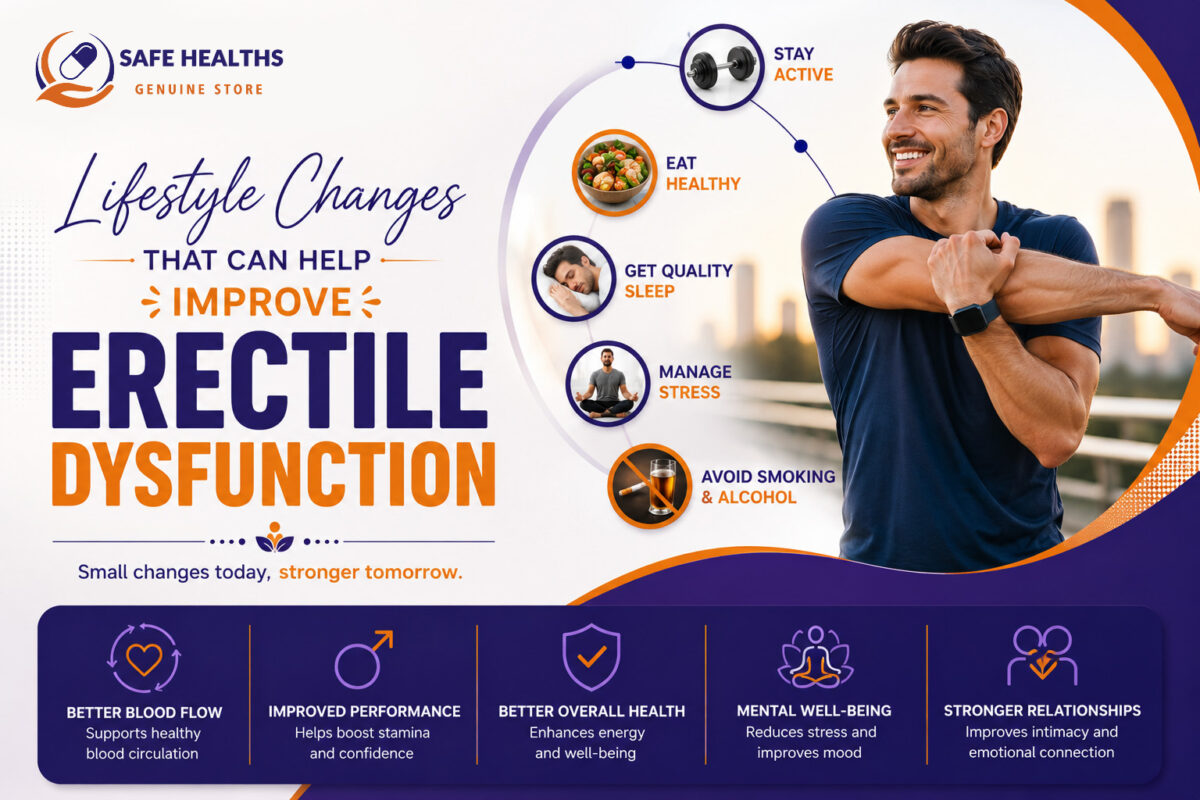
Erectile dysfunction (ED) is closely tied to how you live. Smoking, inactivity, poor diet, excess weight, heavy drinking, bad sleep, and chronic stress all damage the blood vessels, nerves, hormones, and mood that an erection depends on. The encouraging flip side is that changing these habits can improve erections, often noticeably, and the same changes lower your risk of heart disease, diabetes, and early death.
This guide covers the lifestyle changes with the best evidence for ED, how much benefit to expect, how to start, and how to stay consistent.
How Lifestyle Affects Erections
An erection requires blood to flow into the penis, which depends on healthy arteries, a healthy lining of the blood vessels (the endothelium), and nitric oxide, a chemical that relaxes blood vessel walls. It also needs working nerves, adequate testosterone, and a relaxed mind. Unhealthy habits damage these systems step by step, which is why ED often shows up alongside high blood pressure, high cholesterol, diabetes, and obesity. Healthy habits protect and sometimes restore them.
1. Move More
Regular exercise is one of the most consistently supported lifestyle treatments for ED. It improves blood vessel function, lowers blood pressure and blood sugar, supports weight loss, reduces stress, and may modestly raise testosterone in men who are overweight.
- Aim for: At least 150 minutes of moderate aerobic activity a week, such as brisk walking, cycling, or swimming.
- Add: Strength training two to three times a week.
- Include: Daily pelvic floor exercises.
- Reduce sitting: Stand and move every 30 to 60 minutes.
See treating erectile dysfunction with exercise for example routines.
2. Eat for Your Blood Vessels
Dietary patterns rich in vegetables, fruit, whole grains, legumes, nuts, olive oil, and fish, such as the Mediterranean diet, are linked to better erectile function. Aim to:
- Fill half your plate with vegetables and fruit.
- Choose whole grains over refined grains.
- Eat fish twice a week and nuts regularly.
- Use olive oil instead of butter and fried cooking.
- Reduce processed meat, sweets, sugary drinks, and ultra-processed snacks.
- Limit salt.
For specific foods, see the best foods for erectile dysfunction.
3. Lose Excess Weight
Obesity, especially a large waist, is closely linked with ED. Excess fat promotes inflammation, insulin resistance, and lower testosterone. In studies, men with obesity who lost weight through diet and exercise had better erectile function. A realistic goal is to lose 5 to 10 percent of your body weight over three to six months. Read about whether losing weight can help with erectile dysfunction.
4. Stop Smoking
Smoking damages the lining of blood vessels and reduces nitric oxide. It is a major, preventable risk factor for ED. Quitting may improve erectile function, with benefits starting within weeks to months, particularly in younger men. Use support such as nicotine replacement, medicines, and counselling to improve your chances.
5. Keep Alcohol Moderate and Avoid Drugs
A drink may relax you, but heavy or regular drinking depresses the nervous system, lowers testosterone, and worsens erections. Keep within recommended limits, with alcohol-free days. Avoid recreational drugs, including cocaine, amphetamines, and heavy cannabis use, which can impair sexual function.
6. Prioritise Sleep
Much of the body’s testosterone is produced during sleep. Chronic sleep loss is associated with lower testosterone, tiredness, and low mood. Aim for seven to nine hours with regular times. Loud snoring and daytime sleepiness may point to sleep apnoea, which is common in men and linked with ED. Treating it can help.
7. Manage Stress and Mood
Stress hormones narrow blood vessels and shift attention away from arousal. Build in daily stress relief:
- Slow breathing, mindfulness, or meditation.
- Time outdoors and regular exercise.
- Hobbies and time with friends.
- Counselling or cognitive behavioural therapy for anxiety or low mood.
Read whether stress management can improve erectile function.
8. Strengthen Your Relationship and Communication
Honest communication with your partner, spending time on closeness outside the bedroom, and focusing on pleasure rather than performance can reduce pressure and improve sexual satisfaction. Couples counselling can help when tension has built up.
9. Take Care of Your Health
- Control blood pressure, cholesterol, and blood sugar.
- Attend regular check-ups.
- Ask your doctor whether any medicines might contribute to ED.
- Do not stop prescribed medicines without advice.
10. Avoid Shortcuts
Be wary of pills and supplements marketed online with dramatic claims. Some contain undeclared prescription drugs that can be dangerous, particularly with heart medicines.
How Much Improvement Can You Expect?
Studies show meaningful improvement in many men who adopt several healthy habits, particularly those with obesity, metabolic syndrome, or sedentary lifestyles. Results vary. Men whose ED has a strong lifestyle component often benefit the most, while those with advanced vascular disease or nerve damage may need medical treatment as well. Learn more in whether erectile dysfunction can improve with lifestyle changes.
How Long Does It Take?
Energy, mood, and fitness may improve in a few weeks. Changes in erections typically take two to six months of consistent effort. Keep going, and review your progress after three months.
A Practical Starter Plan
- This week: Book a check-up. Walk 20 to 30 minutes a day and swap sugary drinks for water.
- Next two weeks: Add two strength sessions and a vegetable at every meal. Start pelvic floor exercises.
- Month 2: Aim for 150 minutes of activity weekly, cut alcohol, and set a regular bedtime.
- Month 3: Review your progress with a doctor. Consider counselling for stress or anxiety and discuss other treatments if needed.
Tips for Staying Consistent
- Start with one or two changes rather than everything at once.
- Link new habits to existing routines.
- Track progress with a simple diary.
- Find an exercise partner or support group.
- Celebrate small wins.
- Be kind to yourself after setbacks.
When Lifestyle Changes Are Not Enough
If ED persists, or if you have conditions such as advanced vascular disease or nerve damage, medical treatments are available, including prescription tablets, vacuum devices, injections, and others. Combining them with lifestyle changes often works best. See ED treatments from medicines to devices.
When to See a Doctor
See a doctor if ED lasts more than a few weeks, appeared suddenly, or occurs with chest pain, breathlessness, numbness, or leg pain when walking. Seek urgent help for an erection lasting more than four hours.
Frequently Asked Questions
Which lifestyle change helps most?
Regular exercise combined with weight loss, where needed, and quitting smoking have some of the strongest evidence.
Can I stop my tablets if I improve my lifestyle?
Some men can reduce or stop, but speak to your doctor first.
Is it too late if I have had ED for years?
No. Many men improve even after years, although earlier action usually gives better results.
Final Thoughts
Lifestyle changes are safe, low-cost, and effective for many men with ED. Move more, eat well, reach a healthy weight, stop smoking, limit alcohol, sleep, and manage stress, and see a doctor to check for underlying conditions. These steps can improve your sexual health and your overall health.
This article is for general information only and is not a substitute for professional medical advice.