
Can Medications Cause Erectile Dysfunction?
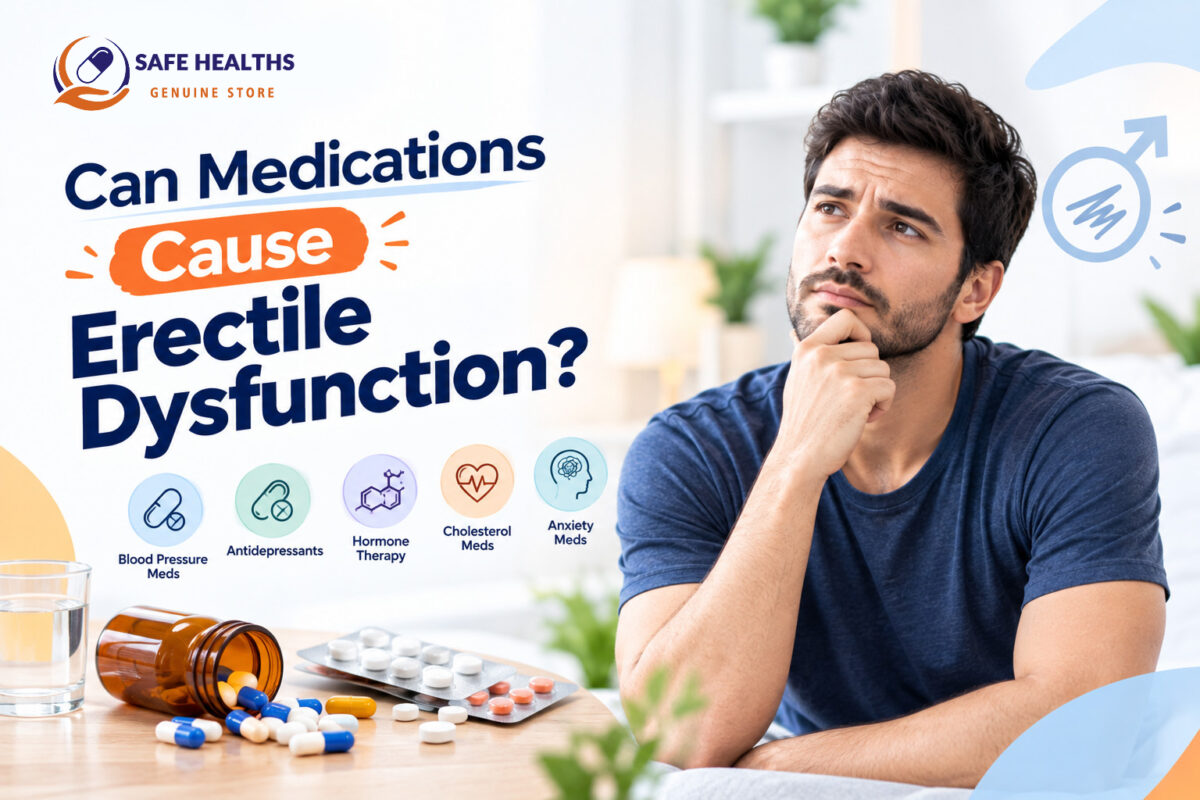
Can Medications Cause Erectile Dysfunction?
Yes. A wide range of prescription and over-the-counter medicines can cause or contribute to erectile dysfunction (ED). It is estimated that drugs play a role in a substantial minority of ED cases, and the risk rises as men take more medicines with age. The important points are that not everyone who takes these medicines will have problems, the effect is often reversible, and there are usually alternatives. You should never stop a prescribed medicine on your own.
This guide explains how medicines can affect erections, lists the main drug groups involved, describes what to do if you suspect a medicine is responsible, and gives examples of alternatives your doctor may consider.
How Can Medicines Affect Erections?
Medicines can interfere with erections in several ways:
- Reducing blood flow or blood pressure to the penis.
- Interfering with nerve signals that trigger an erection.
- Lowering testosterone or changing other hormones such as prolactin.
- Altering brain chemistry, including serotonin and dopamine, which affects desire and arousal.
- Causing sedation or fatigue, reducing interest in sex.
- Treating a condition that itself causes ED, so it can be hard to tell whether the illness or the medicine is the cause.
Blood Pressure Medicines
Some, but not all, are linked with ED.
- Thiazide diuretics (water tablets): Such as hydrochlorothiazide and chlortalidone, associated with ED in some men.
- Beta-blockers: Older, non-selective types, such as propranolol and atenolol, are more often associated than newer ones such as nebivolol, which may have a more neutral or even helpful effect.
- Spironolactone: Can lower testosterone effects and cause breast enlargement and ED.
- Centrally acting agents, such as clonidine and methyldopa.
Others, including ACE inhibitors, angiotensin receptor blockers (ARBs), and calcium channel blockers, are less likely to cause ED, and ARBs may even improve it in some men. Untreated high blood pressure itself raises ED risk, so it is important to keep treatment, not to stop it. Read about ED and heart health.
Antidepressants and Mental Health Medicines
- SSRIs and SNRIs: Such as sertraline, paroxetine, fluoxetine, citalopram, and venlafaxine. They are commonly associated with reduced desire, difficulty with erections, and delayed ejaculation.
- Tricyclic antidepressants.
- Antipsychotics: Can raise prolactin and affect sexual function.
- Benzodiazepines and sleeping tablets: May reduce arousal.
- Lithium and some mood stabilisers.
Depression itself affects sexual function, so it can be hard to separate illness and medicine. Alternatives such as bupropion and mirtazapine are less likely to cause sexual side effects. Never stop psychiatric medicines suddenly. See the connection between ED and mental health.
Prostate and Hormone-Related Medicines
- 5-alpha reductase inhibitors: Finasteride and dutasteride, used for enlarged prostate and hair loss, can reduce desire and cause ED in some men.
- Anti-androgen therapy: Used for prostate cancer, lowers testosterone and often causes ED.
- Alpha-blockers: Such as tamsulosin, are more often linked with ejaculation changes than ED.
- Testosterone-lowering medicines and some hormone treatments.
Pain Medicines
- Opioids: Such as morphine, codeine, tramadol, and oxycodone, suppress testosterone and reduce desire and erections with long-term use.
- Some anti-inflammatory medicines have been linked with ED in a few studies, though the evidence is weaker.
Stomach and Other Medicines
- Cimetidine and some acid-reducing drugs.
- Some anti-seizure medicines.
- Corticosteroids taken long term.
- Certain chemotherapy drugs.
- Some antihistamines and anticholinergics.
- Some medicines for heart rhythm and cholesterol, though evidence varies.
Recreational Substances
Alcohol, nicotine, cocaine, amphetamines, opioids, and heavy cannabis use can all impair erections. Anabolic steroids shut down the body’s own testosterone production.
Is the Medicine or the Illness to Blame?
Many conditions treated by these medicines, such as high blood pressure, depression, diabetes, and heart disease, themselves contribute to ED, so identifying the cause can be tricky. Clues that a medicine may be involved include ED starting soon after you began it or increased the dose, improvement when it is paused or changed (under medical supervision), and a known link in drug information. Your doctor can help weigh this up.
What to Do if You Suspect a Medicine
- Do not stop or change the dose yourself. Stopping blood pressure, heart, or psychiatric medicines suddenly can be dangerous.
- Note the timing: When did the erection problems begin compared with the medicine?
- Make a full list of everything you take, including over-the-counter medicines and supplements.
- Talk to your doctor or pharmacist. They can review whether a different dose, timing, or medicine would work.
- Ask about alternatives that are less likely to affect sexual function.
- Consider adding ED treatment if the medicine is essential.
Options Your Doctor May Consider
- Reducing the dose, if safe.
- Switching to a different medicine in the same class, or to another class.
- Changing the time of day of dosing.
- Adding a PDE5 inhibitor tablet, if suitable. They are used successfully in men with ED caused by antidepressants and some other medicines.
- Treating other contributing conditions.
- Lifestyle measures to support erectile function.
See ED treatments from medicines to devices for the options available.
Safety Warnings
- Never combine ED tablets with nitrate medicines for angina, since the combination can cause a dangerous fall in blood pressure.
- Take extra care when using ED tablets with alpha-blockers and some blood pressure medicines. Your doctor will advise on doses.
- Do not buy ED pills or supplements online without a prescription.
Preventing Medicine-Related ED
- Discuss sexual side effects before starting a new medicine.
- Use the lowest effective dose.
- Review all your medicines regularly with your doctor, especially as you get older.
- Keep up healthy lifestyle habits, which reduce the need for some medicines.
- Report any new sexual changes soon after starting treatment.
When to See a Doctor
See a doctor if ED began after starting or changing a medicine, if it lasts more than a few weeks, or if you have other symptoms. Seek urgent care for chest pain, or an erection lasting more than four hours. If you take essential medicines, do not stop them without medical advice. Read our guide to how doctors diagnose erectile dysfunction to know what to expect.
Frequently Asked Questions
Will my ED go away if I stop the medicine?
Often it improves, but only stop under medical supervision. Some effects take time to reverse.
Are all blood pressure tablets a problem?
No. Some are more likely than others. Alternatives exist.
Can I take ED tablets with antidepressants?
In many cases yes, with medical guidance. Ask your doctor.
Final Thoughts
Medicines can cause ED, but the effect is often manageable. Do not stop treatment on your own. Talk openly with your doctor or pharmacist, ask about alternatives, and consider additional ED treatment if needed. The goal is to protect both your health and your sexual wellbeing.
This article is for general information only and is not a substitute for professional medical advice. Do not stop prescribed medicines without medical advice.