
How Doctors Diagnose Erectile Dysfunction: A Step-by-Step Guide
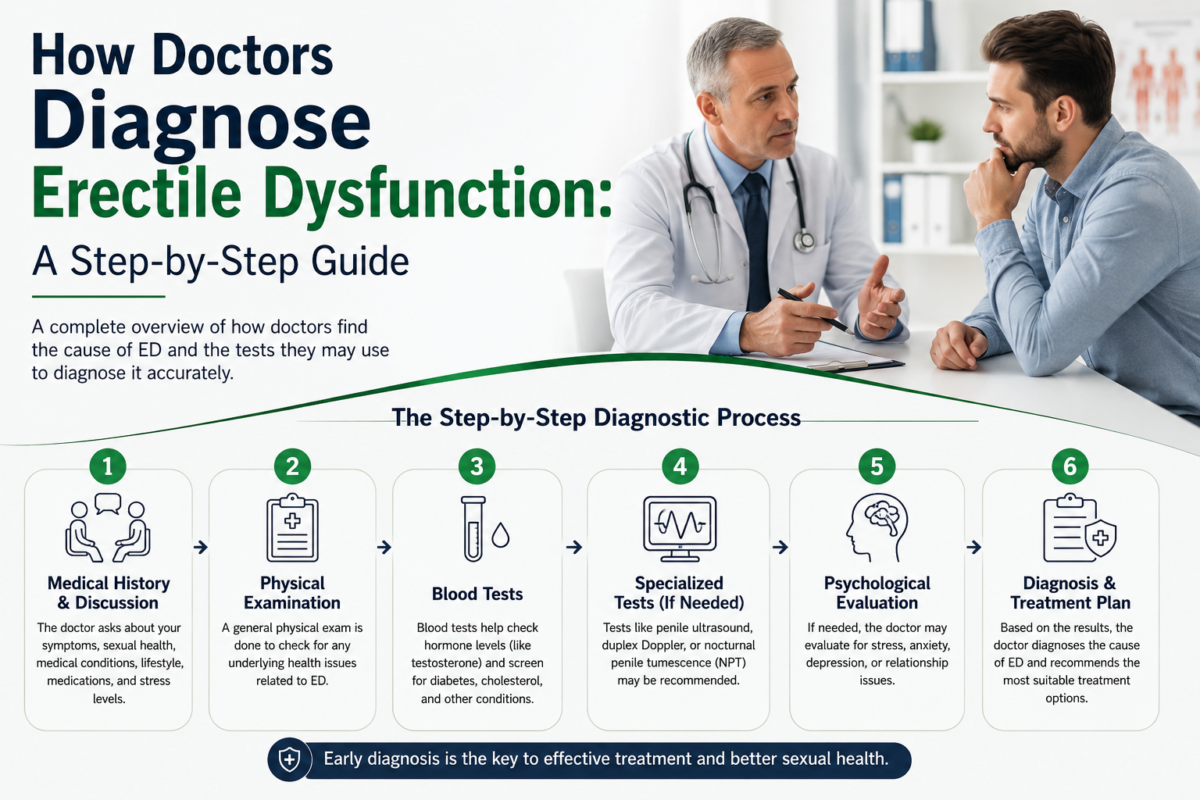
How Doctors Diagnose Erectile Dysfunction: A Step-by-Step Guide
Many men put off seeing a doctor about erectile dysfunction (ED) because they do not know what to expect and fear an embarrassing conversation or intrusive tests. In reality, diagnosing ED is usually straightforward and routine. Doctors, nurses, and urologists discuss it every day, and in most cases the process involves questions, a brief examination, and a few simple tests.
This step-by-step guide explains what happens at an ED assessment, why each step matters, which tests may be used, and how the results lead to a treatment plan. Knowing what to expect can make it much easier to book that first appointment.
Why a Proper Diagnosis Matters
ED is a symptom, not a disease. Behind it can be anything from stress or medicine side effects to heart disease, diabetes, hormone problems, or nerve damage. Finding the cause helps you get the right treatment and can detect serious conditions early. ED can appear years before a heart attack, so an assessment may protect your overall health. See how ED can be a sign of other health problems.
Who Can Diagnose ED?
Most men start with a general practitioner or family doctor. Some may see a urologist (a specialist in the urinary and male reproductive systems), an endocrinologist (for hormone problems), a cardiologist, or a psychologist or sex therapist. Telehealth services can also assess ED, although a physical examination and tests are sometimes needed.
Step 1: The Medical and Sexual History
This is the most important part of the assessment. Expect questions such as:
- When did the problem start, and did it come on suddenly or gradually?
- Is it a problem getting an erection, keeping it, or both?
- How firm are your erections, and how often does it happen?
- Do you have erections in the morning, during sleep, or when masturbating?
- Has your sex drive changed?
- Do you have problems with ejaculation or orgasm?
- Are you in a relationship, and how is it going?
- Do you feel anxious, stressed, or low?
Answers help distinguish psychological from physical causes. For example, normal morning erections but problems with a partner suggest a psychological component, though this is only a guide.
Step 2: Questionnaires
Doctors often use a short questionnaire, such as the International Index of Erectile Function (IIEF-5), also called the Sexual Health Inventory for Men (SHIM). It consists of five questions about confidence, erection firmness, ability to penetrate, maintenance, and satisfaction, and produces a score that grades ED from none to severe. It helps measure how serious the problem is and track change over time.
Step 3: Review of Your General Health
Your doctor will ask about:
- High blood pressure, high cholesterol, diabetes, heart disease, kidney disease, and neurological conditions.
- Past surgery or radiation to the pelvis, prostate, or spine, and injuries to the pelvis or genitals.
- Sleep problems, including snoring or sleep apnoea.
- Smoking, alcohol, and recreational drug use.
- Exercise, diet, and weight.
Step 4: Review of Your Medicines
Many medicines can contribute to ED, including some blood pressure tablets, antidepressants, antipsychotics, medicines for prostate enlargement, hormone treatments, and opioids. Tell your doctor about every prescription medicine, over-the-counter product, and supplement you use. Never stop a prescribed medicine without advice. Learn more in can medications cause erectile dysfunction.
Step 5: The Physical Examination
The examination is usually brief and may include:
- General check: Weight, waist measurement, and signs of hormone changes, such as breast enlargement or reduced body hair.
- Blood pressure and heart rate, and sometimes pulses in the legs.
- Genital examination: To check the penis for curvature, scarring (Peyronie’s disease), or abnormalities, and the testicles for size and any lumps.
- Prostate examination: A digital rectal exam may be offered in some men, particularly over 50 or those with urinary symptoms.
- Nerve check: Testing sensation and reflexes in the genital and pelvic area.
Step 6: Laboratory Tests
Blood tests help identify underlying causes. Depending on your history, they may include:
- Blood glucose or HbA1c: To check for diabetes or prediabetes. See diabetes and erectile dysfunction.
- Cholesterol and lipid profile: To assess cardiovascular risk.
- Testosterone: Usually a morning blood sample, repeated if low. See what role testosterone plays in erectile function.
- Thyroid function: If symptoms suggest a thyroid problem.
- Kidney and liver function.
- Prolactin, LH, and FSH: If testosterone is low.
- PSA: In some men, after discussion of its benefits and limits.
- Urine test: To check for diabetes, infection, or kidney problems.
Step 7: Cardiovascular Risk Assessment
Because ED and heart disease share risk factors, doctors often estimate your overall cardiovascular risk. In men at higher risk, they may arrange an ECG or other heart tests, and may advise on whether sexual activity is safe for your heart.
Step 8: Special Tests (Only When Needed)
Most men do not need these. They may be used if the cause is unclear, treatment fails, or surgery is being considered.
- Penile Doppler ultrasound: Uses sound waves to look at blood flow in the penis, sometimes after an injection to induce an erection.
- Nocturnal penile tumescence testing: Records erections during sleep to help distinguish physical from psychological causes.
- Neurological tests: To assess nerve function.
- Imaging or hormone imaging: Such as MRI of the pituitary if hormone tests suggest it.
- Psychological assessment: For anxiety, depression, or relationship issues.
Step 9: Putting It All Together
After the history, examination, and tests, the doctor will explain the likely cause or causes. ED can be:
- Mainly vascular: Related to blood flow.
- Mainly neurogenic: Related to nerves.
- Hormonal: Related to testosterone or other hormones.
- Psychogenic: Related to anxiety, stress, depression, or relationship issues.
- Drug-induced.
- Mixed, which is very common.
Step 10: Making a Treatment Plan
Together with you, the doctor will suggest a plan that may involve lifestyle changes, treating underlying conditions, adjusting medicines, counselling, prescription tablets, devices, injections, or other treatments. Read ED treatments from medicines to devices and our complete guide to ED diagnosis and management.
How to Prepare for Your Appointment
- Write down your symptoms, when they started, and how often they happen.
- List all medicines and supplements.
- Note any health conditions and family history.
- Consider bringing your partner if you both agree.
- Write down your questions and concerns.
- Be honest. Doctors need accurate information.
Common Worries
- “It will be embarrassing.” Doctors discuss ED routinely and will be matter-of-fact.
- “They will examine me painfully.” The examination is usually brief and not painful.
- “I will be told it is permanent.” Most men have treatable causes.
- “It is only in my head.” Many cases have physical causes, and a good doctor will investigate both.
When to Book an Appointment
See a doctor if ED lasts more than a few weeks, came on suddenly, is accompanied by chest pain, breathlessness, numbness, or leg pain on walking, or follows surgery or injury. For more on timing, read ED warning signs and when to seek medical advice. Seek emergency care for an erection lasting more than four hours.
Frequently Asked Questions
Do I need to see a specialist?
Not always. Many men are assessed and treated by a general practitioner. A specialist may be involved if the cause is complex or first treatments fail.
Will I need an examination?
A basic physical examination is usually part of the assessment.
How long does it take?
Often one or two visits, depending on tests.
Final Thoughts
Diagnosing ED is usually a simple, step-by-step process of history, examination, and a few blood tests. It can reveal treatable causes and sometimes hidden health problems. If you are putting off a visit, remember that the sooner you get assessed, the sooner you can get the help you need.
This article is for general information only and is not a substitute for professional medical advice.