
How Stress Causes Erectile Dysfunction
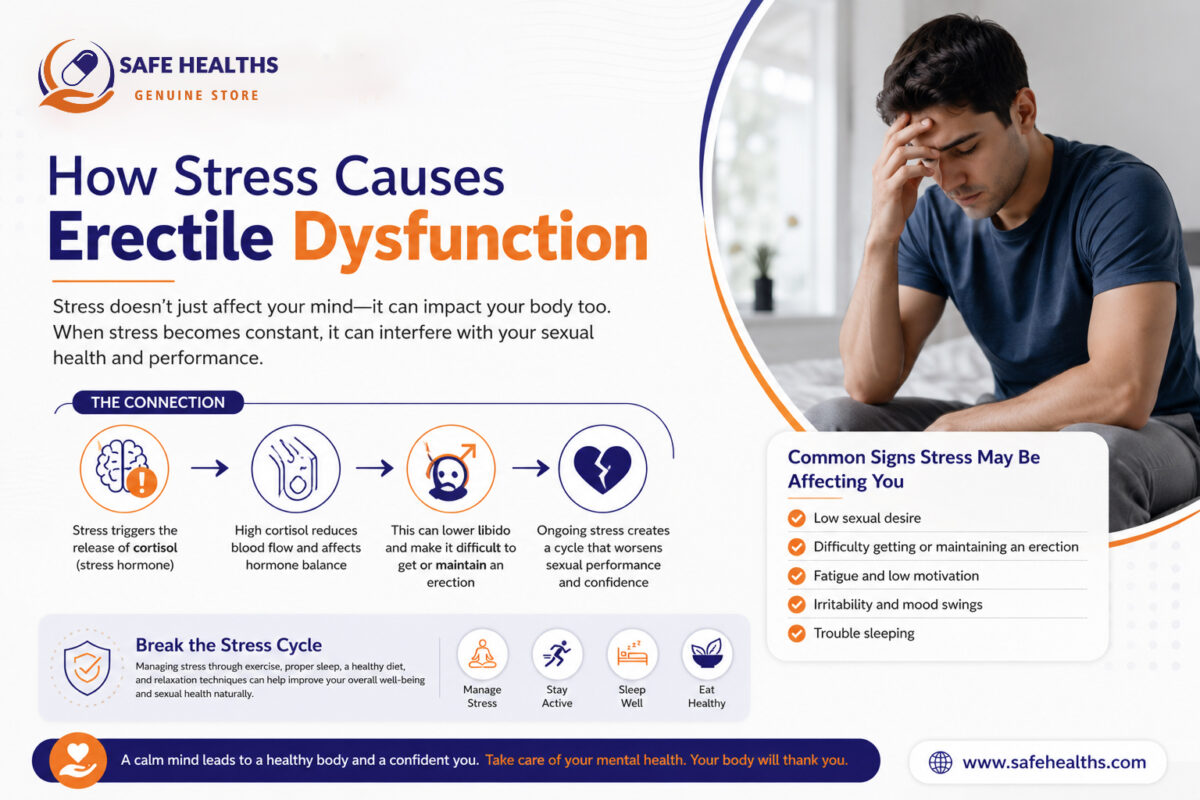
How Stress Causes Erectile Dysfunction
Stress is one of the most common reasons men have trouble with erections, especially men under 40. It can be short-lived, such as a difficult week at work, or ongoing, such as money worries or relationship strain. Understanding how stress affects your body is the first step to getting your sexual health back on track.
How an Erection Normally Works
An erection starts in the brain. When you feel relaxed and aroused, your brain sends signals through the nerves that tell the blood vessels in the penis to widen. More blood flows in, and the erection follows. Anything that interrupts these signals or limits blood flow can make an erection harder to get or keep.
What Stress Does to Your Body
- Stress hormones: Under stress your body releases adrenaline and cortisol, the “fight or flight” hormones. They narrow blood vessels and shift blood toward the large muscles, away from the penis.
- Distraction: A busy, worried mind makes it hard to become aroused or stay in the moment.
- Poor sleep: Stress often disrupts sleep, which can lower testosterone and energy levels.
- Unhealthy coping habits: More alcohol, smoking, and less exercise can add their own effect on blood flow.
The Performance Anxiety Cycle
One difficult experience can leave you worrying that it will happen again. That worry itself raises stress hormones, which makes another difficulty more likely. Over time this loop can become a problem in its own right. If this sounds familiar, our article on whether anxiety can cause erectile dysfunction explains the pattern in more detail.
Signs That Stress May Be the Cause
- ED began suddenly, around a stressful period or life event.
- You still get erections in the morning, during sleep, or when alone.
- It happens in some situations but not others.
- You feel generally tense, low, or unable to switch off.
These signs suggest a psychological cause, but they do not rule out a physical one. ED can also point to an underlying health condition such as heart disease or diabetes, so it is worth being checked.
What Can Help
- Reduce stress where you can: Daily walks, breathing exercises, mindfulness, and protected time for hobbies all help. See how stress management can improve erectile function.
- Move your body: Regular exercise lowers stress hormones and improves circulation.
- Protect your sleep: Aim for seven to eight hours a night.
- Talk to your partner: Honest conversation takes pressure off both of you.
- Consider therapy: Cognitive-behavioural therapy and sex therapy can break the anxiety cycle. Learn more about the connection between ED and mental health.
- Ask about medicines: Prescription tablets such as tadalafil are sometimes used while the underlying stress is being addressed. A doctor should confirm they are suitable for you.
When to See a Doctor
See a doctor if ED lasts more than a few weeks, keeps coming back, or comes with other symptoms such as chest pain, constant tiredness, or very low mood. Your doctor can check for physical causes and help you choose the right treatment.
This article is for general information only and is not a substitute for professional medical advice.

