What Is the Difference Between ED and Impotence?
What Is the Difference Between ED and Impotence?
You may hear the terms “erectile dysfunction” and “impotence” used as if they mean the same thing, and in everyday conversation they largely do. But the words have different histories, the medical community moved from one to the other for good reasons, and “impotence” can also have broader meanings that cause confusion. Understanding the difference helps you search for accurate information, talk to your doctor clearly, and avoid some of the stigma attached to older language.
This guide explains what each term means, why doctors stopped using “impotence,” how related terms such as low libido, premature ejaculation, and infertility differ, and what to do if you have symptoms.
What Is Erectile Dysfunction (ED)?
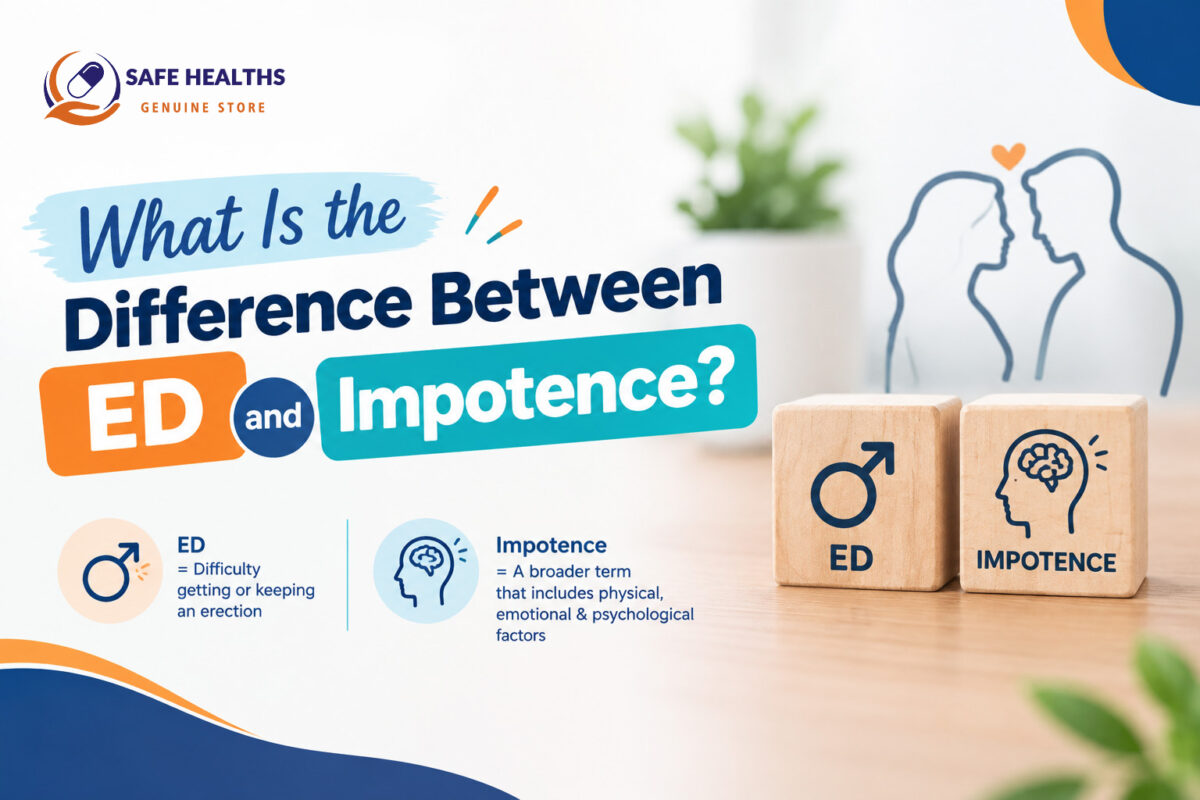
Erectile dysfunction is the medical term for the persistent inability to get or keep an erection firm enough for satisfying sexual activity. It is specific: it describes a problem with erections. It does not describe lack of desire, trouble with ejaculation or orgasm, or fertility problems, although these can occur together with ED. A man with ED may still feel sexual desire, and may be able to ejaculate or have an orgasm in some situations, but he has difficulty achieving or maintaining the erection itself. For an introduction, see what erectile dysfunction is and how it affects men.
What Is Impotence?
“Impotence” comes from the Latin for “lack of power.” It was traditionally used to describe a man’s inability to perform sexually, and it was applied loosely to several different problems:
- Inability to get or keep an erection.
- Lack of sexual desire.
- Problems with ejaculation or orgasm.
- Inability to father a child (infertility).
Because the word could refer to any of these, it was vague. It also carried a negative, judgemental tone, implying general weakness or failure as a man.
Why Doctors Switched From “Impotence” to “ED”
In the early 1990s, a US National Institutes of Health consensus panel recommended replacing “impotence” with “erectile dysfunction.” The reasons were:
- Precision: “ED” refers specifically to erection problems, not to other sexual or fertility issues.
- Reducing stigma: “Impotence” implies powerlessness and can feel shaming, while “dysfunction” is a neutral medical term.
- Better communication: A clear name encourages men to seek help and helps doctors and researchers work consistently.
Today, “ED” is the standard term in medicine, though “impotence” is still used informally and appears in older articles, in legal contexts, and in some languages.
Are ED and Impotence the Same?
In everyday usage, most people who say “impotence” mean ED. So practically, they often refer to the same problem. The difference is mostly one of precision and tone. If someone says “impotence,” it is worth clarifying which problem they mean, because the term could also cover desire, ejaculation, or fertility concerns.
Terms That Are Often Confused With ED
Low Libido (Low Sex Drive)
This means reduced interest in sex. It is about desire, not erection ability. It can be caused by low testosterone, depression, stress, relationship issues, medicines, and chronic illness. A man can have ED with normal desire, or low desire with normal erections. Read the difference between low testosterone and ED.
Premature Ejaculation (PE)
This means ejaculating sooner than wanted, with limited control. It is about timing of ejaculation, not erection. PE and ED can occur together, since worry about losing an erection may lead to rushing. See the complete guide to premature ejaculation.
Delayed Ejaculation and Anorgasmia
Difficulty reaching orgasm or ejaculating despite adequate stimulation. It can be caused by medicines, nerve problems, and psychological factors, and is separate from ED.
Infertility
The inability to conceive after a year of regular unprotected sex. Male infertility relates mostly to sperm production, quality, or delivery. A man with ED may have normal sperm, and a man with normal erections may be infertile. This is a different issue, although some men with ED have trouble fathering a child because intercourse is difficult.
Peyronie’s Disease
A condition where scar tissue causes the penis to curve, sometimes causing pain and erection difficulties.
Priapism
A painful erection that lasts more than four hours. It is the opposite problem to ED and is a medical emergency.
Quick Comparison
- ED: Trouble getting or keeping an erection.
- Impotence (older term): Often used to mean ED but can also include desire, ejaculation, or fertility problems.
- Low libido: Low sexual desire.
- PE: Ejaculating too soon.
- Infertility: Trouble conceiving.
Why the Right Word Matters
- Getting the right diagnosis: Telling a doctor exactly what is happening, rather than saying “I am impotent,” helps them ask the right questions and order the right tests.
- Finding reliable information: Searching for “erectile dysfunction” tends to lead to medical sources, while “impotence” may lead to older or less reliable material and products.
- Reducing shame: A neutral term supports openness.
- Choosing treatment: Treatments differ for erection problems, desire problems, ejaculation problems, and infertility.
How to Describe Your Problem to a Doctor
You do not have to use technical terms. Clear descriptions are better. For example:
- “I have trouble getting an erection.”
- “I get an erection, but I lose it before or during sex.”
- “My sex drive has dropped.”
- “I ejaculate too quickly.”
- “We have been trying for a baby for a year.”
Mention how long it has been happening, how often, and whether anything makes it better or worse.
What Causes ED?
ED can come from narrowed blood vessels, diabetes, high blood pressure, nerve damage, hormonal problems, medicines, stress, anxiety, depression, relationship problems, and lifestyle factors such as smoking, heavy drinking, obesity, and inactivity. Often it involves more than one cause. See common myths about erectile dysfunction to separate fact from fiction.
How Is ED Treated?
Treatment depends on the cause and may include lifestyle changes, treating underlying conditions, counselling, prescription tablets, vacuum devices, injections, and, rarely, surgery. Most men find a treatment that works.
When to See a Doctor
See a doctor if you have trouble with erections that lasts more than a few weeks, came on suddenly, or comes with chest pain, breathlessness, numbness, or leg pain on walking. Seek emergency care for an erection lasting more than four hours.
Frequently Asked Questions
Is impotence worse than ED?
No. In modern use, they usually mean the same thing. ED is just the more precise and respectful term.
Does impotence mean infertility?
Not necessarily. Erection problems and fertility are separate issues.
Which term should I use?
Either is understood by doctors, but describing your symptoms clearly matters most.
Final Thoughts
ED and impotence usually describe the same problem, but ED is the modern, precise, and less stigmatising term, and impotence can also be used more broadly. Whatever you call it, the important thing is to speak up and get help. Effective treatments are available.
This article is for general information only and is not a substitute for professional medical advice.