
Common Myths About Erectile Dysfunction
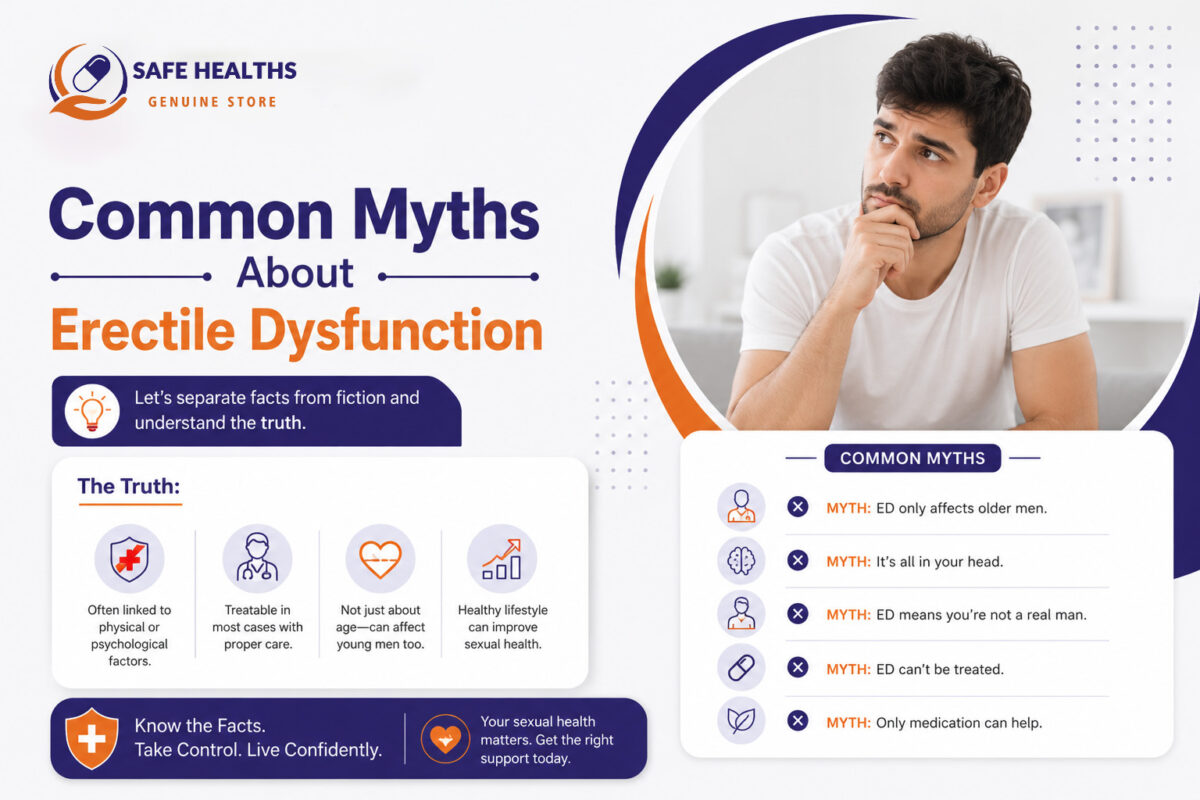
Common Myths About Erectile Dysfunction
Erectile dysfunction (ED) affects millions of men, yet it is surrounded by silence, embarrassment, and misinformation. These myths stop many men from getting help, make partners feel confused or rejected, and fuel the sale of ineffective or unsafe products.
This guide separates fact from fiction by looking at the most common myths about ED and what the evidence actually shows.
Myth 1: “ED Only Affects Older Men”
The facts: ED becomes more common with age, but it is far from limited to older men. Younger men can experience it too, often because of stress, anxiety, smoking, alcohol, drug use, obesity, or relationship issues. In younger men, the cause is more often psychological or lifestyle-related, but medical causes also occur. Read more about erectile dysfunction at a young age.
Myth 2: “ED Is Just a Part of Ageing, So Nothing Can Be Done”
The facts: Risk rises with age, mostly because conditions that affect blood vessels, nerves, and hormones become more common. But ED is not inevitable, and it is treatable at any age. Many men in their sixties, seventies, and beyond have satisfying sexual lives. Our article on ED and ageing explains what is normal and what is not.
Myth 3: “ED Is All in the Mind”
The facts: Psychological factors such as stress, anxiety, and depression can cause or worsen ED, but a large share of cases, particularly in men over 50, have physical causes. These include narrowed blood vessels, diabetes, high blood pressure, nerve damage, hormonal problems, and medicines. Often the cause is a mix of both. Saying it is “all in your head” can prevent men from seeking a proper medical assessment.
Myth 4: “ED Means a Man Is Not Attracted to His Partner”
The facts: ED is a medical symptom, not a measure of love or attraction. Many men with ED still feel desire but cannot get or keep an erection. Misunderstanding this can hurt relationships. Open, kind communication helps both partners.
Myth 5: “ED Is Just a Quality-of-Life Problem, Not a Health Concern”
The facts: ED can be an early warning sign of heart disease, diabetes, high blood pressure, and other conditions, sometimes appearing years before other symptoms. Persistent ED deserves a medical review. Learn about the connection between ED and heart disease.
Myth 6: “Low Testosterone Is the Main Cause of ED”
The facts: Low testosterone can reduce sex drive and sometimes contribute to ED, but most ED is caused by problems with blood flow, nerves, or the mind, not hormones. Taking testosterone when your levels are normal will not fix ED and can cause side effects. See the difference between low testosterone and ED.
Myth 7: “ED Pills Are Dangerous for Everyone”
The facts: Prescription medicines such as sildenafil and tadalafil are widely used and safe for most men when prescribed after a medical assessment. They must not be taken with nitrate medicines, and they need care in men with certain heart conditions or very low blood pressure. The danger lies in buying unregulated pills online, which may contain the wrong dose or hidden ingredients.
Myth 8: “ED Pills Will Boost Desire or Cure ED Permanently”
The facts: These tablets help blood flow to the penis, but they only work with sexual arousal and do not increase desire. They treat the symptom while you take them; they do not usually cure the underlying cause. Lifestyle changes and treating conditions such as diabetes often matter just as much.
Myth 9: “Natural Supplements Work as Well as Prescription Treatments”
The facts: Some ingredients, such as L-arginine, ginseng, and others, have been studied, but the evidence is limited and inconsistent. Many “male enhancement” supplements are not tested, and some have been found to contain undeclared prescription drugs. Speak to a doctor before using any supplement.
Myth 10: “Masturbation Causes ED”
The facts: There is no good evidence that normal masturbation causes ED. However, problems linked to anxiety, guilt, or very hurried habits might affect sexual performance in some men. If you are worried, a doctor or therapist can help.
Myth 11: “Pornography Always Causes ED”
The facts: Research is mixed. Some men who use pornography heavily report difficulty with arousal during real-life sex, possibly because of unrealistic expectations, anxiety, or changes in arousal patterns, but it is not proven that porn directly causes ED in most men. Reflecting on habits and addressing anxiety can help.
Myth 12: “Cycling Always Leads to ED”
The facts: Prolonged pressure on the perineum from a poorly fitted saddle can cause temporary numbness and, in some men, may contribute to ED. For most cyclists, a well-fitted, comfortable saddle and breaks reduce the risk. Cycling is otherwise good for heart health.
Myth 13: “Only Medication Can Treat ED”
The facts: Lifestyle changes can make a real difference. Exercise, weight loss, quitting smoking, limiting alcohol, better sleep, and stress management improve erections in many men. Counselling, vacuum devices, injections, and surgery are other options. See whether ED can be cured for more on what works.
Myth 14: “Talking to a Doctor About ED Is Embarrassing and Pointless”
The facts: Doctors discuss ED regularly, and it is a routine part of men’s health. Speaking up opens the door to effective treatment and may uncover a more serious condition early. Many men find the conversation easier than they expected.
Myth 15: “ED Always Gets Worse”
The facts: Without treatment, causes such as diabetes or blocked arteries can progress, but ED often improves when you address the cause. Many men see improvement with the right treatment.
Myth 16: “If ED Happens Once, I Have a Problem”
The facts: Occasional episodes are normal and often related to tiredness, stress, alcohol, or distraction. ED is diagnosed when the problem is persistent, generally for at least a few months.
Myth 17: “ED Only Affects the Man”
The facts: ED affects the couple. Partners may feel confused, rejected, or anxious. Shared understanding and counselling can help both people.
What Actually Helps
- See a doctor for a check-up, including blood pressure, blood sugar, cholesterol, and hormones when appropriate.
- Review your medicines with your doctor.
- Exercise regularly, eat a balanced diet, and maintain a healthy weight.
- Quit smoking and limit alcohol.
- Manage stress and consider counselling if anxiety or low mood is involved.
- Talk openly with your partner.
- Avoid unregulated products and consult a doctor for treatment options.
When to See a Doctor
See a doctor if you have difficulty with erections for more than a few weeks, if it began suddenly, or if you also have chest pain, shortness of breath, numbness, or leg pain when walking. Treatments are often highly effective, and getting help early gives the best results.
Final Thoughts
Myths about ED keep men from seeking help and add to shame and misunderstanding. The reality is that ED is common, often treatable, and a useful signal about overall health. Knowing the facts is the first step toward getting the right care.
This article is for general information only and is not a substitute for professional medical advice.

