
Viral Fever Symptoms and Treatment
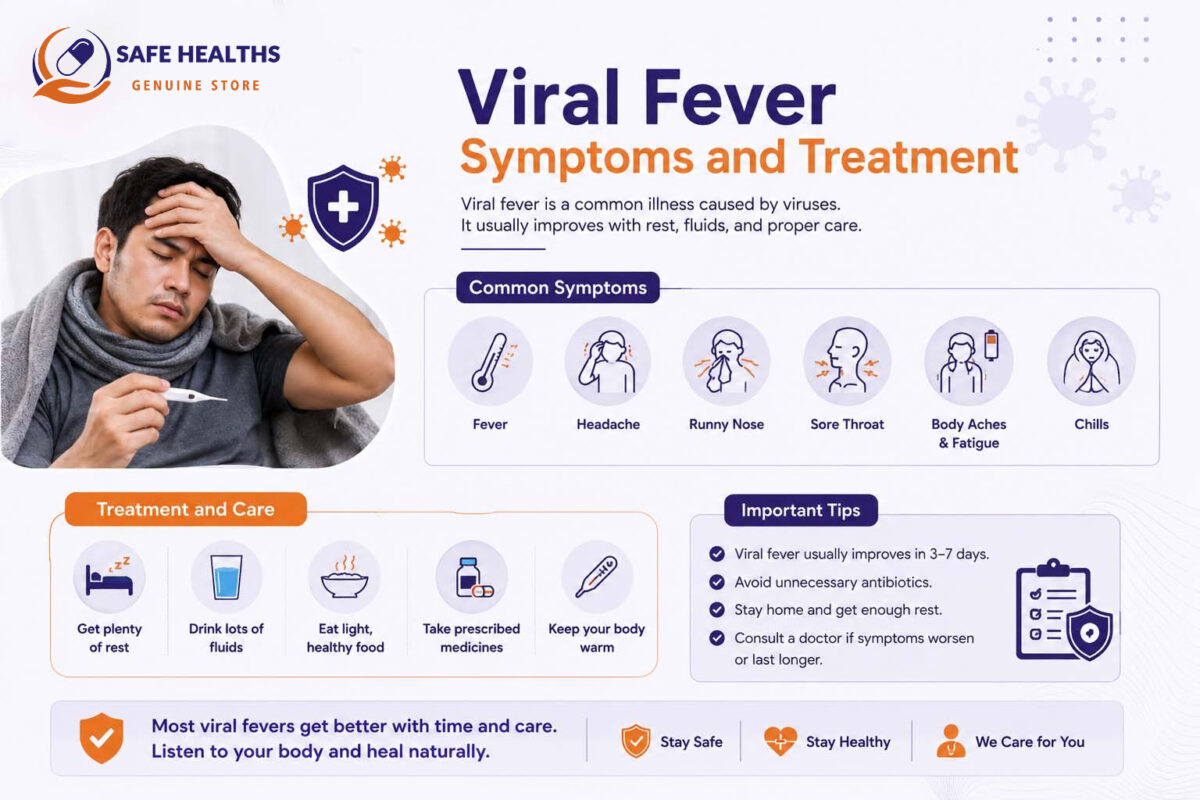
Viral Fever Symptoms and Treatment
Viral fever is one of the most common reasons people visit a doctor. It is not a single disease but a general term for fever caused by a viral infection, such as influenza, the common cold, dengue, chikungunya, or other viruses. Most viral fevers settle on their own within a week with rest, fluids, and symptom relief, but some can be serious, so it helps to know what to watch for.
This guide explains the typical symptoms, how long viral fever lasts, home treatment, the warning signs that need medical attention, and how to protect yourself and others.
What Is Viral Fever?
A fever is a rise in body temperature above the normal range, usually above 38°C (100.4°F). It is not an illness in itself but a sign that the immune system is fighting an infection. In viral fever, the cause is a virus. Because many viruses cause similar early symptoms, it can be hard to tell which one you have without tests.
Common Causes of Viral Fever
- Influenza (flu): Causes sudden high fever, aches, cough, and tiredness.
- Common cold viruses: Usually cause milder fever with runny nose and sore throat.
- Dengue: Spread by mosquitoes, with high fever, severe body pain, and sometimes a rash.
- Chikungunya: Mosquito-borne, with fever and marked joint pain.
- COVID-19 and other respiratory viruses.
- Gastroenteritis viruses: Fever with vomiting and diarrhoea.
- Childhood viral illnesses: Such as measles, chickenpox, and hand, foot, and mouth disease.
Symptoms of Viral Fever
Symptoms vary with the virus, but common ones include:
- Fever, often between 38°C and 40°C, sometimes with chills and sweating.
- Headache and pain behind the eyes.
- Body aches and muscle or joint pain.
- Tiredness and weakness.
- Sore throat, runny or blocked nose, and cough.
- Loss of appetite.
- Nausea, vomiting, or diarrhoea in some cases.
- Skin rash with some infections.
For a wider look at how viral illnesses show up in adults, see the typical viral infection symptoms in adults.
How Long Does Viral Fever Last?
Most viral fevers last three to seven days. A fever that lasts longer than three to five days, keeps returning, or comes with severe symptoms should be checked by a doctor. Tiredness and a lingering cough can continue for a week or two after the fever clears.
Viral Fever vs Bacterial Infection
Doctors often cannot tell the difference from symptoms alone. Viral fevers usually cause widespread symptoms and improve within a week. Bacterial infections often have a focus, such as pus, a painful throat with white patches, or a urinary infection, and may need antibiotics. If you are unsure, a doctor can examine you and order tests. Read more in can antibiotics treat viral infections.
Diagnosis
Most mild viral fevers are diagnosed from symptoms and examination. A doctor may order blood tests, such as a full blood count and platelet count, particularly during dengue season, or tests for flu, COVID-19, malaria, or typhoid if the fever is prolonged or severe.
Home Treatment for Viral Fever
1. Rest
Your body needs energy to fight the virus. Stay at home, sleep well, and avoid strenuous activity.
2. Drink Plenty of Fluids
Fever and sweating cause fluid loss. Drink water, oral rehydration solution (ORS), coconut water, clear soups, and fresh juices without added sugar. Aim for pale yellow urine.
3. Control the Fever and Pain
Paracetamol (acetaminophen) is the usual first choice for adults. Take it as directed on the label and do not exceed the maximum daily dose, which is generally 4 grams for healthy adults and lower if you have liver problems or drink alcohol. If dengue is possible, avoid ibuprofen, aspirin, and similar anti-inflammatory medicines unless a doctor says they are safe, because they can raise the risk of bleeding. Do not give aspirin to children or teenagers.
4. Cool the Body Safely
Wear light clothing, use a light blanket, and take a lukewarm sponge bath. Avoid ice-cold water or alcohol rubs.
5. Eat Light, Nourishing Food
Choose easy-to-digest foods such as soups, khichdi, rice with dal, porridge, bananas, curd, and fruits. Small, frequent meals work better than large ones.
6. Relieve Cold and Cough Symptoms
Warm drinks, honey in warm water for adults and children over one year, steam inhalation, saltwater gargles, and saline nasal drops can all ease symptoms.
What to Avoid
- Antibiotics without a doctor’s advice, since they do not work against viruses.
- Alcohol and smoking.
- Heavy, oily, or spicy food.
- Overusing combination cold medicines or taking multiple products with paracetamol.
- Going back to work or school while you still have a fever.
Warning Signs: When to See a Doctor
Seek medical care if you have:
- Fever above 39.5°C or lasting more than three days.
- Severe headache, stiff neck, or sensitivity to light.
- Difficulty breathing or chest pain.
- Persistent vomiting or inability to keep fluids down.
- Signs of dehydration, such as very dark urine, dry mouth, dizziness, or little urination.
- Severe abdominal pain, bleeding gums, nosebleeds, blood in vomit or stool, or tiny red spots on the skin, which can indicate dengue complications.
- Confusion, extreme drowsiness, or fainting.
- A fever that goes away and then returns, or symptoms that worsen after initial improvement.
See our guide to the warning signs of serious infection for more detail. Infants under three months with any fever need urgent medical attention.
Higher-Risk Groups
Babies, young children, older adults, pregnant women, and people with diabetes, heart or lung disease, or weakened immunity should see a doctor early, even for moderate symptoms.
Recovery After Viral Fever
Many people feel tired and weak for days after the fever settles. Return to normal activity gradually, eat well, hydrate, and sleep enough. Our tips for recovering faster from viral infections and the best recovery tips after viral fever explain how to rebuild your energy.
Prevention
- Wash your hands regularly and avoid touching your face.
- Avoid close contact with people who are sick, and stay home when you are unwell.
- Get vaccinated against flu and other recommended diseases.
- Prevent mosquito bites with repellents, nets, and by removing standing water around your home.
- Keep up good sleep, nutrition, and exercise.
Frequently Asked Questions
Is viral fever contagious?
Many are. Respiratory viruses spread through droplets and contact. Mosquito-borne viruses such as dengue are not passed directly between people.
Should I take antibiotics for viral fever?
No, unless a doctor finds a bacterial infection as well.
Can I exercise with a viral fever?
No. Rest until the fever has gone for at least 24 hours and you feel well, then return gradually.
Final Thoughts
Viral fever is usually self-limiting, and rest, fluids, and symptom relief are the mainstay of treatment. Stay alert to warning signs, avoid unnecessary medicines, and seek medical advice if the fever lasts or you feel worse.
This article is for general information only and is not a substitute for professional medical advice.

