
Best Protein Foods for Weight Loss
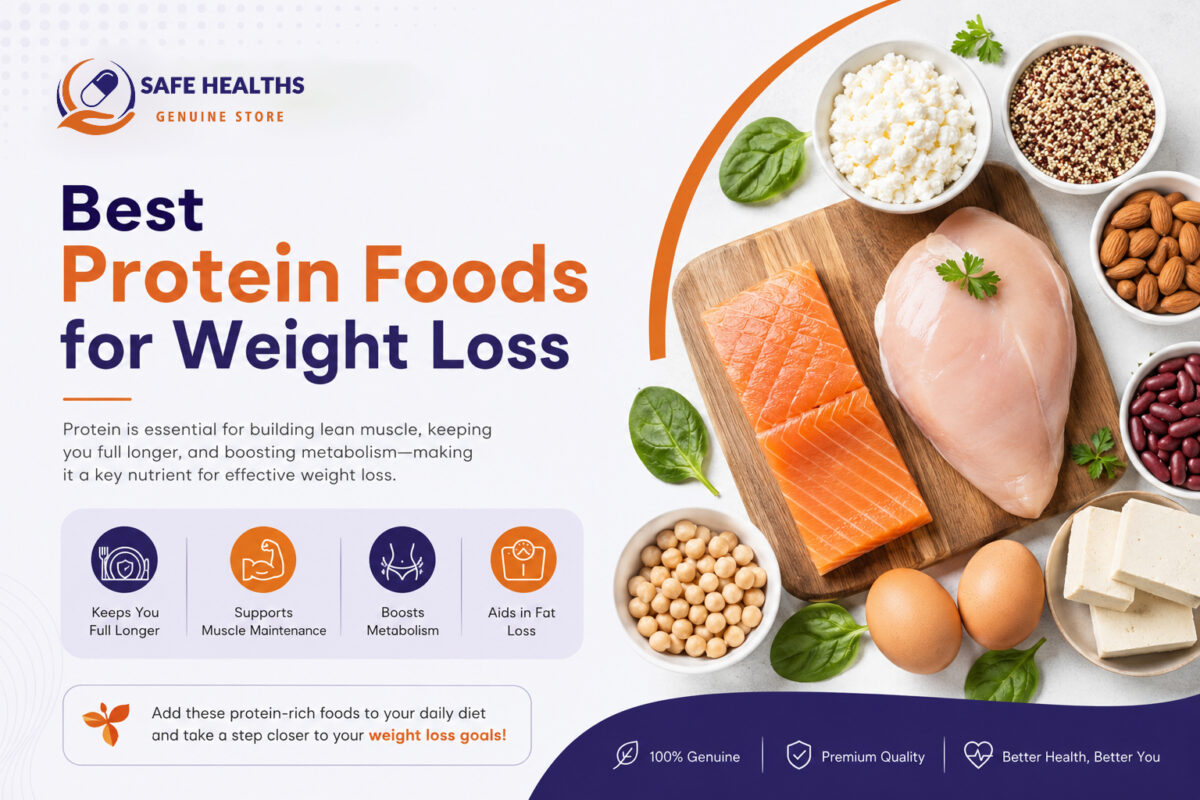
Best Protein Foods for Weight Loss
If you are trying to lose weight, protein deserves a place at the centre of your plate. It keeps you feeling full for longer, helps protect muscle while you lose fat, and takes more energy to digest than carbohydrates or fat. Studies repeatedly show that higher-protein diets help many people lose weight and keep it off.
This guide explains how protein helps with weight loss, how much you need, the best protein foods, and how to build them into everyday meals.
Why Protein Helps With Weight Loss
1. It Keeps You Full
Protein is the most satisfying of the three macronutrients. It affects hormones that control appetite, lowering hunger signals and raising fullness signals. Meals with enough protein help you avoid snacking and overeating later.
2. It Protects Muscle
When you eat fewer calories, the body can lose muscle as well as fat. Adequate protein, together with strength training, helps preserve muscle. This matters because muscle supports your metabolism and keeps you strong.
3. It Has a Higher Thermic Effect
The body uses calories to digest and process food. Protein uses roughly 20 to 30 percent of its calories this way, compared with about 5 to 10 percent for carbohydrates and 0 to 3 percent for fat. This does not make dramatic differences by itself, but it helps.
4. It Reduces Cravings
A protein-rich breakfast, for instance, has been linked with fewer cravings and less snacking later in the day for many people.
How Much Protein Do You Need?
The general recommended intake for healthy adults is about 0.8 grams per kilogram of body weight per day. During weight loss, many experts suggest a higher intake of about 1.2 to 1.6 grams per kilogram, especially if you exercise. For a 75 kg person, that means roughly 90 to 120 grams a day. Spread it across meals, aiming for around 20 to 30 grams at each main meal, rather than eating most of it at dinner.
People with kidney disease, and those on certain medicines or with other medical conditions, should speak to a doctor or dietitian before increasing protein intake.
Best Animal-Based Protein Foods
- Eggs: About 6 grams of protein each and very filling. Boiled, poached, or scrambled with vegetables works well.
- Chicken and turkey breast: About 30 grams of protein per 100 grams cooked, with little fat if the skin is removed.
- Fish and seafood: Salmon, tuna, mackerel, sardines, prawns, and white fish are high in protein. Oily fish also provide omega-3 fats.
- Greek yoghurt and curd: Greek yoghurt has around 10 grams of protein per 100 grams. Choose plain versions without added sugar.
- Cottage cheese and paneer: Cottage cheese provides about 11 grams per 100 grams, and paneer about 18 grams, though paneer is higher in fat, so portion size matters.
- Lean meat: Lean cuts of beef, lamb, and pork provide protein, iron, and zinc. Eat red meat in moderation and trim visible fat.
- Milk: About 3 to 4 grams per 100 millilitres. Low-fat versions are useful for lower calorie intake.
Best Plant-Based Protein Foods
- Lentils and dals: About 9 grams per 100 grams cooked, plus plenty of fibre.
- Chickpeas and kidney beans: Around 8 to 9 grams per 100 grams cooked.
- Tofu and tempeh: Tofu has about 8 grams per 100 grams, and tempeh around 19 grams.
- Soya chunks: Very high in protein when dry, and useful in curries and stir-fries.
- Edamame: Roughly 11 grams per 100 grams, and an easy snack.
- Quinoa: A grain with all essential amino acids, around 4 grams per 100 grams cooked.
- Nuts and seeds: Almonds, peanuts, pumpkin seeds, and chia seeds offer protein and healthy fats, but they are calorie-dense, so keep portions small.
- Peas and green vegetables: Green peas, broccoli, and spinach add smaller amounts of protein and are low in calories.
Vegetarians and vegans can meet their protein needs by combining different plant foods across the day, such as lentils with rice, or hummus with whole-wheat bread.
Protein Supplements
Whey, casein, and plant-based protein powders can be convenient for busy people, but they are not essential. Choose products without large amounts of added sugar, and use them to fill gaps rather than replace meals. People with kidney problems or milk allergies should check with a doctor first.
Easy Ways to Add More Protein to Your Day
- Breakfast: Vegetable omelette, Greek yoghurt with berries and nuts, besan chilla, moong dal cheela, or a smoothie with milk and protein.
- Lunch: Grilled chicken or fish with salad, dal with brown rice and vegetables, or a chickpea salad.
- Snacks: Boiled eggs, roasted chickpeas, a handful of nuts, paneer cubes, or sprouts. See our list of healthy snacks for weight loss for more.
- Dinner: Tofu or paneer stir-fry with vegetables, grilled fish with steamed vegetables, or lentil soup with a side salad.
A Sample High-Protein Day
- Breakfast: Two-egg vegetable omelette with a slice of wholegrain toast (around 20 grams of protein).
- Mid-morning: Greek yoghurt with a few almonds (around 12 grams).
- Lunch: Grilled chicken breast, mixed salad, and a small portion of brown rice (around 35 grams).
- Afternoon: Roasted chickpeas or a boiled egg (around 8 grams).
- Dinner: Baked fish or tofu with steamed vegetables and lentils (around 30 grams).
Common Mistakes to Avoid
- Relying only on protein: You still need vegetables, fruit, whole grains, and healthy fats for fibre and vitamins.
- Ignoring total calories: Protein does not cancel out excess calories. Fried chicken, fatty cuts, and creamy sauces can easily add up.
- Choosing processed meats: Sausages, bacon, and processed meats are high in salt and saturated fat. Limit them.
- Eating it all in one meal: Spread protein through the day.
- Skipping strength training: Protein is most effective for muscle when combined with resistance exercise.
- Neglecting fluids: Drink enough water, particularly when you increase protein and fibre.
Protein as Part of a Bigger Plan
Protein works best alongside other healthy habits. Combine it with plenty of vegetables, whole grains, regular activity, and good sleep. For a broader look at foods that support fat loss, read weight loss foods that actually work. To build a structured approach, see how to create a healthy weight loss plan, and for practical advice that suits everyone, read our weight loss tips for men and women.
Who Should Be Careful With High-Protein Diets?
- People with kidney disease, who may need to limit protein.
- Those with liver disease or certain metabolic disorders.
- People with a history of gout, who may need to limit some high-purine foods.
- Anyone with a medical condition or taking regular medicines, who should check with a doctor.
Frequently Asked Questions
Will eating more protein make me bulky?
No. Building significant muscle requires intense training and extra calories. Protein simply helps maintain and tone muscle while losing fat.
Is a high-protein diet safe long term?
For most healthy people, moderately higher protein intake is safe. Balance matters, so do not cut out other food groups.
What is the best time to eat protein?
Spreading it through the day, including at breakfast, tends to work best for fullness and muscle maintenance.
Final Thoughts
Protein helps you feel full, protect muscle, and stick with your plan. Choose lean, minimally processed sources, spread them through the day, and pair them with vegetables, fibre, and exercise for the best results.
This article is for general information only and is not a substitute for professional medical advice.

