
Erectile Dysfunction and Heart Disease Connection
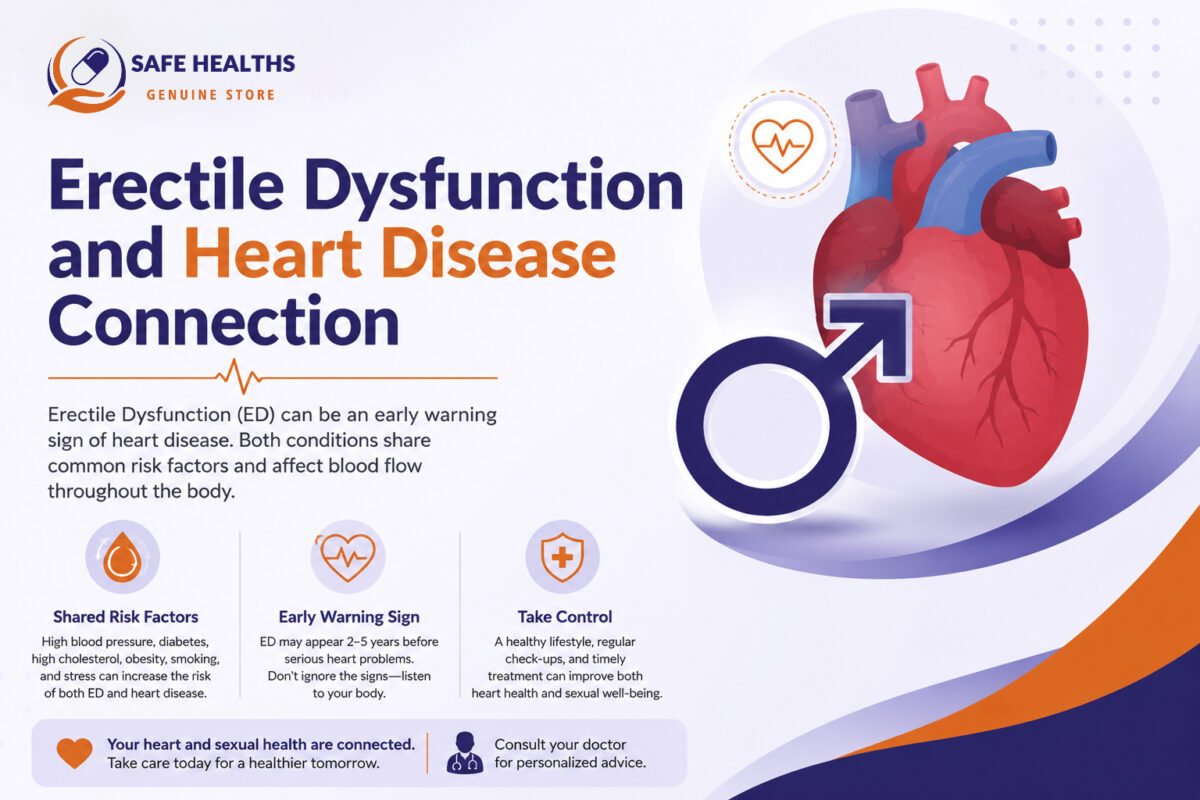
Erectile Dysfunction and Heart Disease: The Connection
Erectile dysfunction (ED) is usually thought of as a sexual issue, but doctors increasingly view it as a possible early warning sign of heart and blood vessel disease. Research has found that men with ED have a higher chance of heart attack, stroke, and other cardiovascular problems, and that ED often appears years before heart symptoms do.
This does not mean that everyone with ED has heart disease. But it does mean that persistent ED deserves a proper medical check, not just a prescription. This guide explains why the two are linked, what to watch for, and what you can do about both.
Why Are ED and Heart Disease Linked?
An erection depends on healthy blood flow. During arousal, the arteries in the penis widen and fill with blood. This process relies on the inner lining of blood vessels, called the endothelium, which releases nitric oxide to relax the vessel walls. When the endothelium is damaged, as happens in conditions that harm blood vessels, the arteries cannot widen properly.
The same process damages the vessels supplying the heart. Because the arteries in the penis are much narrower than the coronary arteries, they may show the effects of blocked or stiff vessels first. For this reason, ED can show up two to five years before symptoms such as chest pain appear.
Shared Risk Factors
ED and heart disease have many causes in common:
- High blood pressure: Damages and stiffens artery walls.
- High cholesterol: Leads to fatty plaque build-up in arteries (atherosclerosis).
- Type 2 diabetes: Harms both blood vessels and nerves. Read more about diabetes and erectile dysfunction.
- Smoking: Narrows and damages blood vessels throughout the body.
- Excess weight and a large waist: Raise the risk of diabetes, high blood pressure, and low testosterone.
- Lack of physical activity: Reduces circulation and fitness.
- Heavy alcohol use and poor diet: Contribute to many of the above.
- Chronic stress and poor sleep: Strain the cardiovascular system and can affect hormones.
How Likely Is It That ED Signals a Heart Problem?
The risk depends on your age and other health factors. ED in a man over 60 with several risk factors is more likely to be linked to vascular disease. ED in a man under 40 is more often related to psychological factors, medicines, or lifestyle, but it can still be linked to early metabolic problems. Doctors take ED seriously in men of any age as part of a broader health review. The link is explored further in our article on ED and heart health, and in how ED can be a sign of other health problems.
Symptoms to Watch Alongside ED
See a doctor sooner if ED comes with any of the following:
- Chest pain, pressure, or tightness, particularly with exertion.
- Shortness of breath that is new or worse with activity.
- Unusual tiredness, dizziness, or fainting.
- Palpitations or an irregular heartbeat.
- Swelling in the ankles or legs.
- Leg pain when walking that eases with rest.
- Cold, numb feet or slow-healing foot sores.
Chest pain that is severe, spreads to the arm, jaw, or back, or comes with sweating, nausea, or breathlessness is an emergency. Call emergency services immediately.
What Will the Doctor Check?
A typical review for ED includes your medical and sexual history, a physical examination, and tests such as:
- Blood pressure and heart rate.
- Blood tests for cholesterol, blood sugar or HbA1c, kidney function, and sometimes testosterone.
- Waist measurement and body mass index.
- An ECG or further heart tests if risk is high or symptoms are present.
Your doctor may also calculate your overall cardiovascular risk and discuss ways to lower it, which treats the cause of your ED rather than only the symptom.
Treating ED When You Have Heart Disease
Many men with heart disease can still be treated for ED, but safety comes first.
- Medicines for ED: Tablets such as sildenafil and tadalafil are widely used, but they must not be taken with nitrate medicines, which are used for angina, because the combination can cause a dangerous fall in blood pressure. Tell your doctor about every medicine you take.
- Sexual activity and the heart: Sex is similar in effort to climbing a couple of flights of stairs. Your doctor can tell you whether your heart condition is stable enough.
- Medicines that cause ED: Some blood pressure medicines can contribute to ED. Do not stop them yourself. Ask your doctor about alternatives. You can read more in our article on whether medications can cause erectile dysfunction.
Lifestyle Changes That Help Both Conditions
The most encouraging finding is that the same changes that protect the heart often improve erections.
- Exercise: Aim for at least 150 minutes of moderate activity a week. Regular exercise improves blood vessel function and can improve ED.
- Heart-healthy eating: Eat more vegetables, fruit, whole grains, fish, nuts, and olive oil, and less processed food, sugar, and salt. See how diet and exercise affect erectile function.
- Healthy weight: Losing even a modest amount of weight can lower blood pressure and improve hormones.
- Quit smoking: Blood vessel function begins to improve within weeks of stopping.
- Limit alcohol: Keep within recommended limits.
- Manage stress and sleep well: Both affect blood pressure and sexual function.
- Take prescribed medicines: Keep blood pressure, cholesterol, and diabetes under control as advised.
The Mental Side of Living With Both
ED and heart disease can both cause worry, anxiety, and low mood, which in turn can make ED worse. Talking openly with your partner and your doctor and, if needed, seeing a counsellor can make a real difference.
Frequently Asked Questions
Does ED always mean I have heart disease?
No. Many cases are caused by stress, anxiety, medicines, or lifestyle. But because ED can be an early marker, a check of your heart health is sensible, especially if you are over 40 or have risk factors.
Can treating ED lower my heart risk?
Treating the underlying causes, such as blood pressure, cholesterol, and lifestyle, lowers heart risk. Medicines that only improve erections do not by themselves treat heart disease.
Can ED improve if my heart health improves?
Often, yes. Exercise, weight loss, and better control of blood pressure and diabetes can improve erectile function in many men.
Final Thoughts
ED can be a valuable signal about your heart. If you have it, do not ignore it or treat it in isolation. Book an appointment, ask for a cardiovascular check, and use it as a prompt to improve your overall health.
This article is for general information only and is not a substitute for professional medical advice. If you have chest pain or severe symptoms, seek emergency care.