
Difference Between Type 1 and Type 2 Diabetes
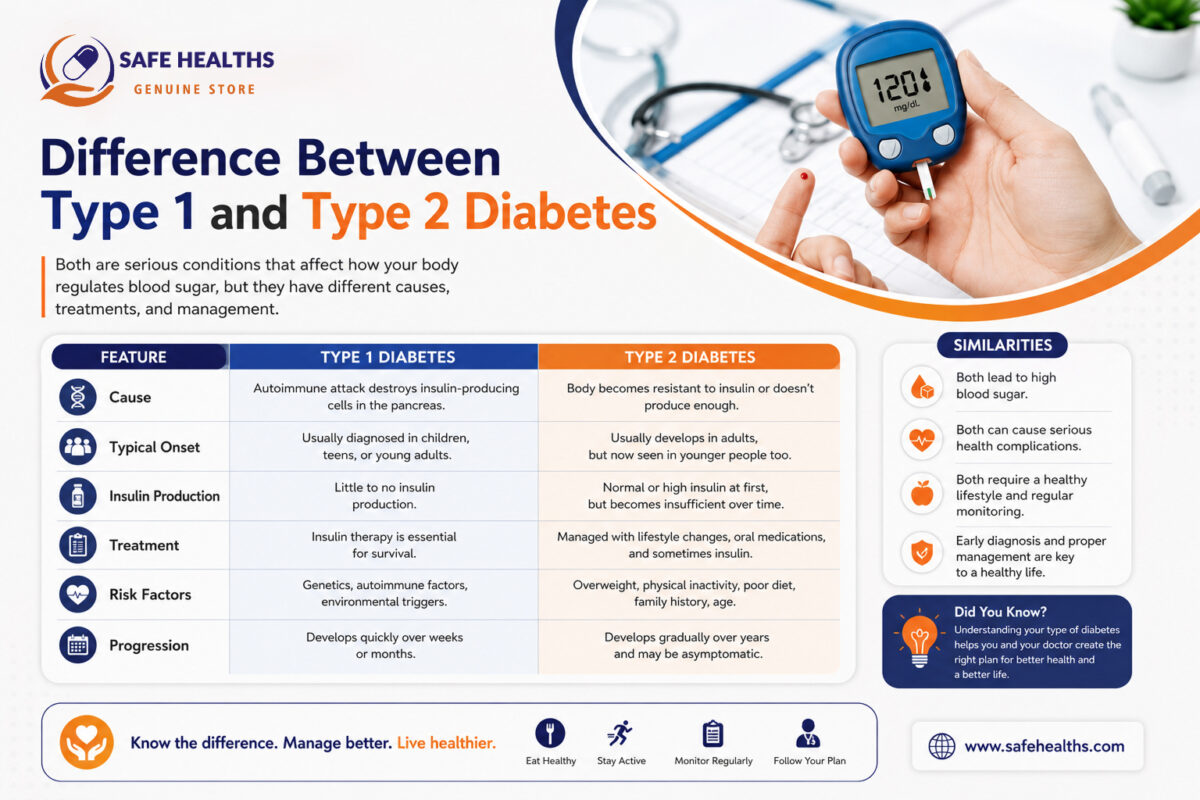
Difference Between Type 1 and Type 2 Diabetes
Diabetes is a long-term condition in which the body cannot keep blood sugar (glucose) at healthy levels. Type 1 and type 2 diabetes share many symptoms, but their causes, typical age of onset, and treatment are different. Knowing the difference helps you recognise the signs and get the right care.
What Is Type 1 Diabetes?
Type 1 diabetes is an autoimmune condition. The immune system attacks the insulin-producing cells in the pancreas, so the body makes little or no insulin. It most often appears in children, teenagers, and young adults, although it can start at any age. Symptoms usually develop quickly over days or weeks. People with type 1 diabetes need insulin for life, along with regular blood glucose monitoring.
What Is Type 2 Diabetes?
In type 2 diabetes, the body still makes insulin but the cells respond poorly to it (insulin resistance), and over time the pancreas may not keep up. It is far more common than type 1 and is linked to excess weight, inactivity, family history, and increasing age, though it is now seen in younger people too. It often develops slowly, and some people have no obvious symptoms for years.
Key Differences at a Glance
- Cause: Type 1 is autoimmune. Type 2 is mainly insulin resistance, influenced by lifestyle and genetics.
- Onset: Type 1 is usually sudden. Type 2 is usually gradual.
- Insulin: Type 1 always needs insulin. Type 2 may be managed with lifestyle changes and tablets first, and some people later need insulin.
- Prevention: Type 1 cannot currently be prevented. Type 2 can often be delayed or prevented, as covered in tips for reducing your risk of diabetes.
Symptoms They Share
Both types can cause increased thirst, frequent urination, tiredness, blurred vision, slow-healing cuts, and unexplained weight change. Read about the early warning signs of diabetes so you can spot them sooner.
Living With Diabetes
Whichever type you have, day-to-day management matters. Eating a balanced diet, staying active, checking blood sugar as advised, taking medicines on time, and attending regular check-ups reduce the risk of complications affecting the heart, kidneys, eyes, and nerves. See our simple tips for better diabetes management, and the guide to the best foods to help manage blood sugar.
When to See a Doctor
Get medical advice if you notice the symptoms above, especially persistent thirst and urination, or if you are at higher risk. Seek urgent care for vomiting, abdominal pain, fruity-smelling breath, or confusion. These can be signs of a serious complication.
This article is for general information only and is not a substitute for professional medical advice.

