
Wormentel vs. Other Deworming Medicines: Which Is Better?
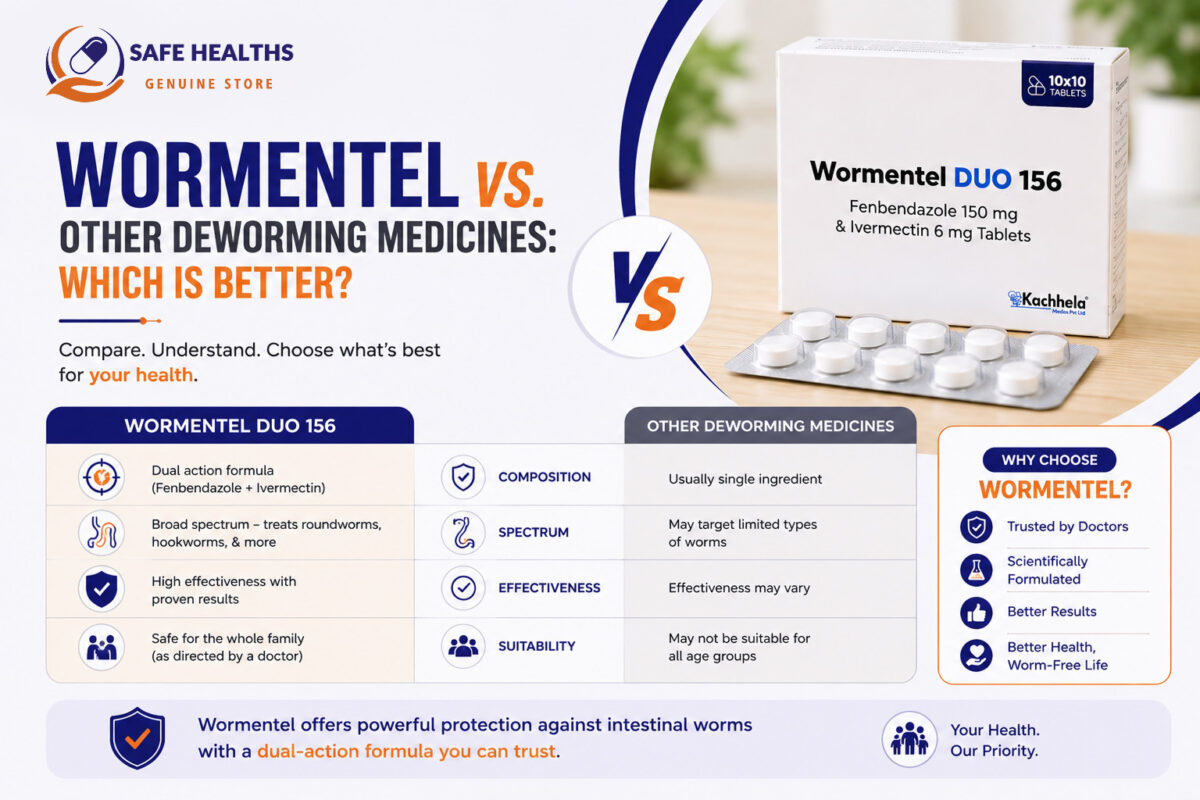
Wormentel vs. Other Deworming Medicines: Which Is Better?
If you are comparing anti-worm medicines, you will find several names: albendazole, mebendazole, ivermectin, praziquantel, pyrantel pamoate, and brands such as Wormentel. They are not interchangeable. Each works against particular parasites, has its own approvals, side effects, and precautions, and some are made for animals rather than people.
This guide compares Wormentel (fenbendazole) with the main dewormers used in human medicine, so you can understand the differences and have an informed conversation with your doctor. There is no single “best” dewormer. The right choice depends on which parasite you have.
What Is Wormentel?
Wormentel is a brand name for products containing fenbendazole, and a “Duo” version containing fenbendazole with ivermectin. Fenbendazole is a benzimidazole anthelmintic used in veterinary medicine to treat worms in animals. It is not approved by regulators such as the US FDA or the European Medicines Agency for human use, and no standard human dose has been established through clinical trials.
Comparison of Common Dewormers
Albendazole
- Class: Benzimidazole.
- Used for: Roundworm, hookworm, whipworm, pinworm, some tapeworm infections, and tissue infections such as neurocysticercosis and hydatid disease.
- Approval: Approved for human use in many countries.
- Points to note: Often taken with a fatty meal for tissue infections. Can affect the liver and blood counts with prolonged courses, so monitoring may be needed. Avoided in early pregnancy.
Mebendazole
- Class: Benzimidazole.
- Used for: Pinworm, roundworm, whipworm, and hookworm.
- Approval: Approved for human use in many countries.
- Points to note: Poorly absorbed, so it acts mainly in the gut. Pinworm treatment is usually repeated after two weeks.
Ivermectin
- Class: Macrocyclic lactone.
- Used for: Strongyloidiasis, onchocerciasis (river blindness), lymphatic filariasis, scabies, and some lice infestations.
- Approval: Approved for human use for specific parasitic infections.
- Points to note: Not effective against all intestinal worms, such as most tapeworms. Doses are weight-based.
Praziquantel
- Class: Anthelmintic for flatworms.
- Used for: Tapeworms and flukes, including schistosomiasis.
- Approval: Approved for human use.
- Points to note: Not used for roundworm or hookworm.
Pyrantel Pamoate
- Class: Nicotinic agonist.
- Used for: Pinworm and roundworm, with some activity against hookworm.
- Approval: Available in many countries, in some without prescription.
- Points to note: Poorly absorbed with few side effects.
Nitazoxanide
- Used for: Certain protozoal infections, such as giardia and cryptosporidium, and some worm infections.
- Approval: Approved in some countries.
Fenbendazole (Wormentel)
- Class: Benzimidazole.
- Used for: Worm infections in animals.
- Approval: Veterinary use only. Not approved for people.
- Points to note: Human safety data are limited. Case reports describe liver injury in people who took it. No validated human dosing exists.
Which Worm Needs Which Medicine?
- Pinworm: Mebendazole, albendazole, or pyrantel, with a repeat dose after two weeks and hygiene measures for the household.
- Roundworm, whipworm, hookworm: Albendazole or mebendazole.
- Strongyloides: Ivermectin is the usual first choice.
- Tapeworms: Praziquantel, or albendazole for certain types.
- Liver or lung flukes and schistosomiasis: Praziquantel, or specific alternatives.
- Giardia (a protozoan): Metronidazole, tinidazole, or nitazoxanide, not typical dewormers.
This shows why “which is better” depends on the parasite. A powerful medicine for one worm may do nothing for another.
Safety Comparison
Approved dewormers have been studied in human trials, and regulators have reviewed their benefits and risks. Common side effects are mild, such as nausea, abdominal pain, and headache. Some precautions apply:
- Pregnancy and breastfeeding: Many dewormers are avoided in the first trimester or require careful assessment.
- Liver disease: Albendazole and other benzimidazoles can raise liver enzymes.
- Drug interactions: Ivermectin and albendazole can interact with some other medicines.
- Children: Doses depend on age and weight, and some medicines are not suitable for very young children.
For fenbendazole, there is much less human safety information, which is the main reason doctors choose approved alternatives. Read more in Wormentel anti-worm medicine: everything you need to know.
Effectiveness
Albendazole and mebendazole are highly effective against most common intestinal worms, though cure rates differ by worm. For example, they work very well against roundworm, less reliably against whipworm, and need repeat dosing for pinworm. Ivermectin is highly effective for Strongyloides and scabies. Fenbendazole is effective against many worms in animals, but its effectiveness in people has not been proven in clinical trials.
Cost and Availability
Approved dewormers are generally inexpensive and widely available, often through public health programmes. Prescription rules vary by country. Products sold online, including veterinary medicines, may be of uncertain quality, so purchase only from reputable, licensed sources.
A Note on Combination Products
Some products combine two or more anthelmintics. Combinations may broaden coverage, but they also increase the chance of side effects and interactions. A doctor should decide whether a combination is appropriate and which doses to use.
Claims About Cancer and Other Conditions
You may see claims online that fenbendazole treats cancer or other conditions. There is no proof from completed human clinical trials, and relying on it instead of standard treatment may be dangerous. Talk to your doctor or oncologist before using any unproven product.
How to Choose the Right Approach
- Get a diagnosis: Stool tests or other investigations identify the worm.
- Ask for an approved medicine: Doctors can prescribe the right dewormer and dose.
- Treat contacts when needed, as in pinworm.
- Reinforce hygiene: Handwashing, clean bedding, and safe food and water.
- Follow up: Repeat testing if symptoms persist.
For guidance on timing and signs, read signs you need deworming, and our overview in Wormentel for deworming: a complete guide.
When to See a Doctor
See a doctor if you suspect worms, if symptoms last or return after treatment, or if you have anaemia, weight loss, or blood in stool. Seek urgent care for severe abdominal pain, repeated vomiting, or a high fever.
Frequently Asked Questions
Which dewormer is the strongest?
There is no overall “strongest.” Each is effective against specific parasites.
Can I use a pet dewormer?
Doses and safety in people are not established, so it is not advised.
Are dewormers available without a prescription?
Some, such as pyrantel or mebendazole, are in certain countries, but rules vary. Speak to a pharmacist or doctor.
Final Thoughts
Choosing a deworming medicine is not about finding a single “best” product but about matching the right treatment to the right parasite. Approved medicines such as albendazole, mebendazole, ivermectin, and praziquantel have tested doses and safety profiles for people. Fenbendazole, the ingredient in Wormentel, is a veterinary medicine. Speak to a healthcare professional before treatment.
This article is for general information only and is not a substitute for professional medical advice. Do not take anti-worm medicines without guidance from a qualified healthcare professional.

