
When Should You Take Wormentel? Signs You Need Deworming
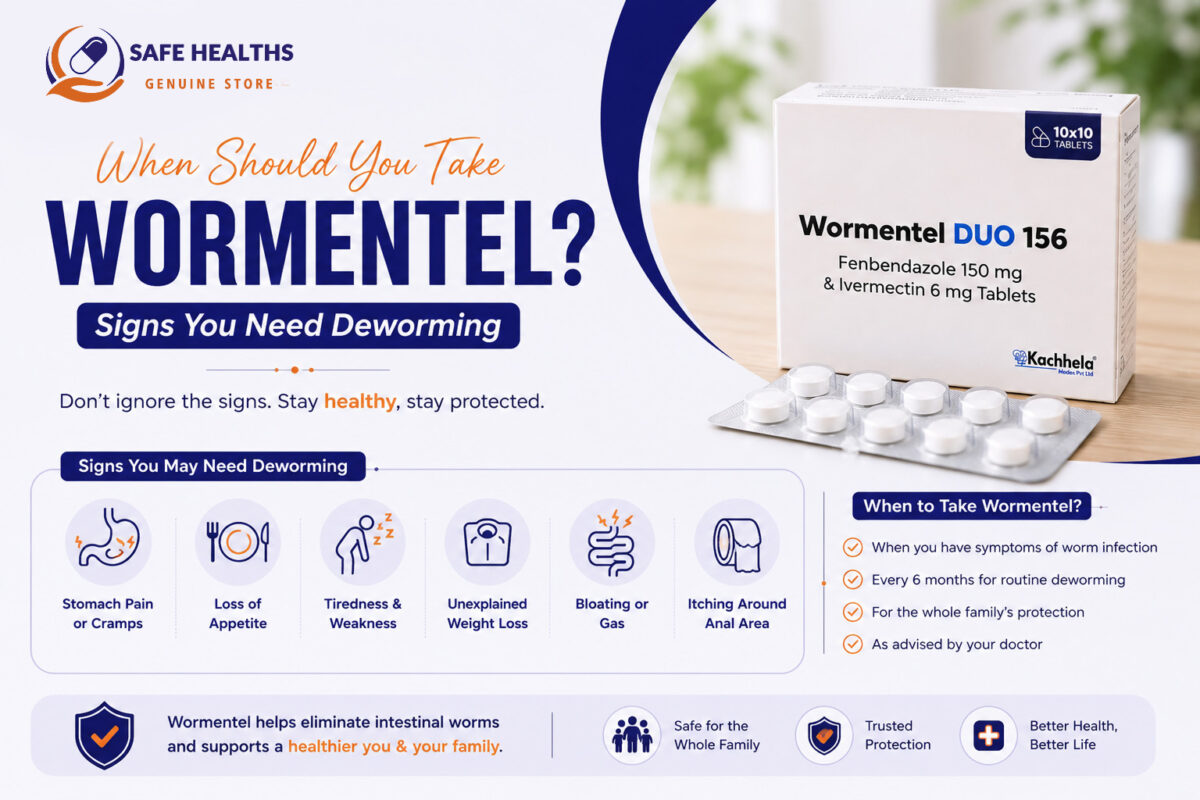
When Should You Take Wormentel? Signs You Need Deworming
“When should I deworm?” is a common question, and the honest answer is that the decision should be based on symptoms, risk, and test results, not on a fixed schedule or a product label. Worm infections are very common, yet many go unnoticed. Others cause symptoms that are easy to mistake for digestive problems, stress, or poor diet.
This guide explains the signs that may point to a worm infection, who is most at risk, what tests confirm it, and what to do before taking any anti-worm medicine, including products such as Wormentel, which contains fenbendazole, a veterinary dewormer that is not approved for human use.
First: Should You Take Wormentel at All?
Fenbendazole is licensed for animals. For people, doctors normally prescribe approved medicines such as albendazole or mebendazole, whose doses and safety have been tested. There is no established, evidence-based human dosing schedule for fenbendazole, so no general rule for “when to take” it can be given here. If you suspect worms, the right first step is to speak to a healthcare professional, who can confirm the infection and choose an approved treatment. Read how Wormentel compares with other deworming medicines to understand the differences.
Common Signs You May Need Deworming
Digestive Symptoms
- Recurring abdominal pain or cramps, especially around the navel.
- Bloating, gas, nausea, or loss of appetite.
- Persistent or recurring diarrhoea, or alternating diarrhoea and constipation.
- Blood or mucus in stool.
General Symptoms
- Unexplained weight loss, or poor weight gain and growth in children.
- Tiredness, weakness, and low energy that do not improve with rest.
- Pale skin, dizziness, shortness of breath, and brittle nails, which may reflect anaemia from blood loss, especially with hookworm.
- Increased hunger without weight gain, or sometimes a reduced appetite.
- Irritability and poor concentration, particularly in children.
Signs You Can See or Feel
- Anal itching, especially at night: The classic sign of pinworm, sometimes with restless sleep.
- Visible worms: Small white thread-like worms around the anus or in stool, or larger worms in vomit or stool.
- Rice-like segments in stool: Possible tapeworm segments.
- Skin symptoms: Itchy rash at the site where larvae entered, often on the feet, in hookworm and strongyloides.
- Teeth grinding at night: Sometimes mentioned in children, but it has many other causes and is not a reliable sign.
Other Possible Signs
- A dry cough or wheeze early in some infections, as larvae pass through the lungs.
- Recurrent allergic-type symptoms, such as hives, in some parasitic infections.
- Raised eosinophils (a type of white blood cell) on blood tests.
Remember that these symptoms are not specific. Conditions such as irritable bowel syndrome, food intolerance, coeliac disease, thyroid problems, and anaemia from other causes can look similar.
Who Is More Likely to Need Testing or Treatment?
- Children who play in soil, attend nursery or school, or share toys closely.
- Family members of someone with confirmed pinworm.
- People who recently travelled to or live in regions with high worm prevalence.
- Those with limited access to clean water and sanitation.
- People who regularly walk barefoot on soil.
- People who eat undercooked meat or fish, or unwashed produce.
- Pet owners whose pets are not regularly treated for worms.
- People with weakened immune systems.
How Doctors Confirm a Worm Infection
- Stool examination: Often repeated on several days, because worms shed eggs irregularly.
- Tape test for pinworm: Done first thing in the morning before washing.
- Blood tests: To check for anaemia and eosinophilia, and sometimes antibodies.
- Imaging or endoscopy: Rarely, when worms are suspected in other organs.
Testing is important because the right medicine depends on the worm. The overview in Wormentel for deworming: a complete guide explains the main types.
Regular Deworming: Who Actually Needs It?
Public-health programmes in regions with high rates of soil-transmitted worms recommend preventive treatment, usually once or twice a year, for school-age and pre-school children and sometimes for women of reproductive age. They use approved medicines at tested doses. In areas where infection is uncommon, routine deworming is generally not needed for healthy adults and children without symptoms or risk factors. If you are unsure about your situation, ask a doctor or local health service.
Before You Take Any Anti-Worm Medicine
- Confirm the infection first, if possible.
- Tell your doctor about pregnancy or breastfeeding, liver or kidney disease, blood disorders, allergies, and other medicines.
- Ask about dosing for children, which depends on age and weight.
- Check the source and authenticity of the product. Counterfeit and mislabelled medicines exist.
- Do not combine products without advice, particularly combinations containing ivermectin.
- Plan to treat household contacts when advised, for example in pinworm.
Warning Signs That Need Urgent Medical Care
Do not self-treat if you have:
- Severe abdominal pain, swelling, or repeated vomiting, which may indicate a blockage.
- Blood in stool or black stools.
- High fever or a yellow tinge to the skin or eyes.
- Severe weakness, fainting, or breathlessness from possible anaemia.
- Seizures, confusion, or severe headache, which can occur with certain tissue parasites.
- A persistent cough or wheeze with other symptoms.
Read about the warning signs of serious infection to know what needs prompt attention.
What If Symptoms Continue After Treatment?
If symptoms persist, return to your doctor. Possible reasons include reinfection, a different parasite, a resistant infection, an incomplete course, or an unrelated condition such as irritable bowel syndrome, lactose intolerance, or coeliac disease. A follow-up stool test can confirm whether the infection has cleared.
Reducing Your Risk Between Treatments
- Wash hands with soap after the toilet and before eating.
- Keep nails short and clean.
- Cook food thoroughly and wash produce.
- Drink safe water.
- Wear footwear outdoors.
- Clean bedding and bathrooms regularly if someone is infected.
- Keep pets treated against worms.
See our practical hygiene habits to avoid infections for a full checklist.
Frequently Asked Questions
Can I take a dewormer “just in case”?
It is better to base treatment on symptoms, risk, or testing, and to use medicines approved for people under medical guidance.
How soon do symptoms improve after treatment?
Itching and discomfort often start to ease in days. Tiredness and anaemia may take weeks to improve.
Do adults get worms too?
Yes. Children are more commonly affected, but adults can also be infected.
Final Thoughts
Knowing the signs of a worm infection helps you get tested and treated at the right time. There is no safe “one-size” rule for when to take Wormentel, because fenbendazole is not an approved human medicine. If you notice symptoms or are at risk, speak to a healthcare professional, who can confirm the diagnosis and prescribe an approved, properly dosed treatment.
This article is for general information only and is not a substitute for professional medical advice. Do not take anti-worm medicines without guidance from a qualified healthcare professional.