
Wormentel for Deworming: A Complete Guide
Wormentel for Deworming: A Complete Guide
Deworming means treating or preventing infection with intestinal parasitic worms. It is a routine public-health measure in many countries and a common personal health question. People search for deworming guidance because worm infections are widespread, often silent, and affect energy, nutrition, and growth.
This complete guide covers why deworming matters, who is at risk, how infections are diagnosed, the medicines doctors use, where Wormentel (a fenbendazole-based product) fits in, and how to prevent infection and reinfection.
Why Deworming Matters
The World Health Organization estimates that well over a billion people are infected with soil-transmitted worms, mostly in tropical and subtropical regions. Worm infections can:
- Cause iron-deficiency anaemia, especially hookworm.
- Impair growth, nutrition, and learning in children.
- Cause abdominal pain, diarrhoea, and weight loss.
- Worsen the health of pregnant women and their babies.
- Cause serious complications in heavy infection, such as bowel blockage with roundworm.
Who Is at Higher Risk?
- Children, particularly those who play in soil and have less consistent handwashing.
- People living in areas with poor sanitation or unsafe water.
- Travellers returning from endemic regions.
- People who eat raw or undercooked meat, fish, or unwashed produce.
- Farm and agricultural workers and people who walk barefoot on soil.
- Pet owners with pets that are not regularly treated.
- People with weakened immunity.
Common Types of Intestinal Worms
- Roundworm (Ascaris): Long, pale worms that can cause abdominal pain and, in heavy infection, blockage.
- Hookworm: Attaches to the gut wall and causes blood loss and anaemia.
- Whipworm: Causes diarrhoea and, in heavy infection, rectal problems.
- Pinworm: Causes anal itching, particularly at night.
- Tapeworm: May cause mild digestive symptoms and rarely serious complications if larvae spread to tissues.
- Strongyloides: Can persist for decades and become dangerous in people with weakened immunity.
Symptoms of Worm Infection
Many people have no symptoms. When present, symptoms may include abdominal pain, bloating, nausea, loss of appetite, diarrhoea, weight loss, tiredness, paleness, anal itching, sleep disturbance, and visible worms or segments in stool. In children, poor growth and irritability can be signs. See when to deworm and the signs to watch for for a detailed list.
How Is a Worm Infection Diagnosed?
- Stool tests: Examine samples for eggs or larvae. Samples from several days may be needed.
- Tape test: Used for pinworm, collected from the skin around the anus in the morning.
- Blood tests: Check for anaemia, raised eosinophils (a type of white cell), and antibodies for certain infections.
- Imaging: Rarely needed, for example when worms are suspected in the bile ducts or tissues.
Medicines Used for Deworming in People
Doctors choose a medicine based on the worm identified.
- Albendazole: Effective against roundworm, hookworm, whipworm, and pinworm, and used for some tissue infections.
- Mebendazole: Commonly used for pinworm, roundworm, whipworm, and hookworm.
- Ivermectin: First choice for strongyloidiasis, and also used for scabies.
- Praziquantel: For tapeworms and flukes.
- Pyrantel pamoate: For pinworm and roundworm.
Dosing varies depending on age, weight, parasite, and health status, which is why a prescriber’s guidance matters.
Where Does Wormentel Fit?
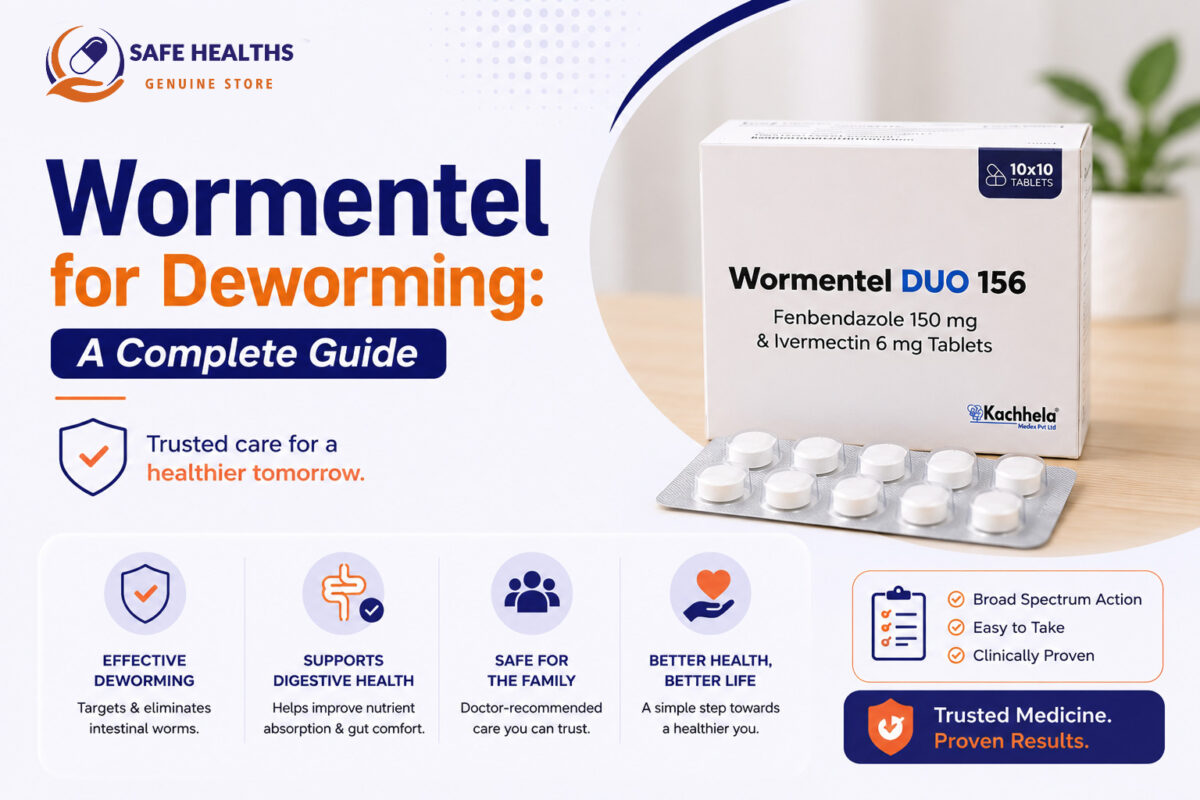
Wormentel contains fenbendazole, a benzimidazole used mostly in veterinary medicine. It is chemically related to albendazole and mebendazole, but unlike them, it is not approved for human use by major regulators, and standard, evidence-based human dosing has not been established. Because of this, doctors do not routinely prescribe it for people. If you are considering any anti-worm product, talk to a healthcare professional about whether an approved medicine would be a safer choice. See the full discussion in Wormentel anti-worm medicine: everything you need to know.
Mass Deworming Programmes
In regions where worm infections are common, public-health programmes often give a single dose of albendazole or mebendazole to school-age children, pre-school children, and sometimes women of reproductive age, once or twice a year. These programmes use approved medicines at tested doses, delivered with health education and improved sanitation. Individuals not living in such areas usually do not need routine preventive deworming unless a doctor advises it.
Deworming in Special Groups
- Children: Doses depend on age and weight, and should be given only as advised by a doctor or health programme.
- Pregnancy: Many anti-worm medicines are avoided in the first trimester. Doctors weigh benefits and risks and may treat later in pregnancy where needed.
- Breastfeeding: Advice depends on the medicine, so check with a healthcare professional.
- People with liver disease or weakened immunity: Need specialist advice.
Possible Side Effects of Anti-Worm Medicines
Most people tolerate approved anti-worm medicines well. Side effects, usually mild, include nausea, abdominal cramps, diarrhoea, headache, dizziness, and sometimes a mild rise in liver enzymes. Dying worms can sometimes trigger a temporary reaction, such as a mild fever or abdominal discomfort. Seek medical help for severe pain, persistent vomiting, rash, yellow skin or eyes, or difficulty breathing.
Preventing Worm Infection and Reinfection
Personal and Household Hygiene
- Wash hands with soap after using the toilet, changing nappies, handling pets, and before eating.
- Keep fingernails short and avoid nail-biting and thumb-sucking.
- Wash bedding, nightwear, and towels regularly in hot water.
- Clean toilets, bathrooms, and kitchen surfaces frequently.
Food and Water Safety
- Wash and peel fruits and vegetables, particularly if eaten raw.
- Cook meat and fish thoroughly.
- Drink boiled, filtered, or bottled water in places where safety is uncertain.
Environment
- Wear shoes on soil and sand.
- Use proper toilets and dispose of waste safely.
- Keep children’s play areas clean and cover sandpits.
- Treat pets with veterinary-recommended products regularly.
For a full checklist, read our guide to the best hygiene habits to avoid infections.
Nutrition and Recovery After Treatment
After a worm infection, you may need to rebuild iron and other nutrients. Eat iron-rich foods such as lentils, leafy greens, eggs, and lean meat, with vitamin C-rich foods to improve absorption. If anaemia is found, a doctor may recommend iron supplements. Read about common vitamin deficiencies to know what to watch for.
Myths About Deworming
- “Everyone should take a dewormer every few months.” Routine deworming is recommended in high-risk regions and groups, not for everyone.
- “Sugar cravings mean worms.” There is no reliable link.
- “Natural remedies like garlic or papaya seeds reliably kill worms.” Evidence is limited, and they should not replace tested treatment.
- “Pet dewormers are the same as human ones.” Some contain related ingredients, but doses and safety are not the same.
When to See a Doctor
See a doctor if you suspect worms, if symptoms persist after treatment, or if you have anaemia, weight loss, blood in stool, or severe abdominal pain. A medical visit ensures the right test, the right medicine, and the right follow-up.
Frequently Asked Questions
Can I deworm without a test?
In some public-health settings, yes, with approved medicines. For individuals, testing helps choose the right treatment.
Do I need to treat my family?
For pinworm and some other infections, doctors often recommend treating household members together.
Can I get worms from my pet?
Yes, some pet worms can infect people, so regular pet deworming and good hygiene matter.
Final Thoughts
Deworming is a simple and effective health measure when the right medicine is used for the right parasite. Choose approved treatments under medical guidance, pair them with solid hygiene and sanitation, and follow up if symptoms continue.
This article is for general information only and is not a substitute for professional medical advice.

