
10 Warning Signs of Erectile Dysfunction Every Man Should Know
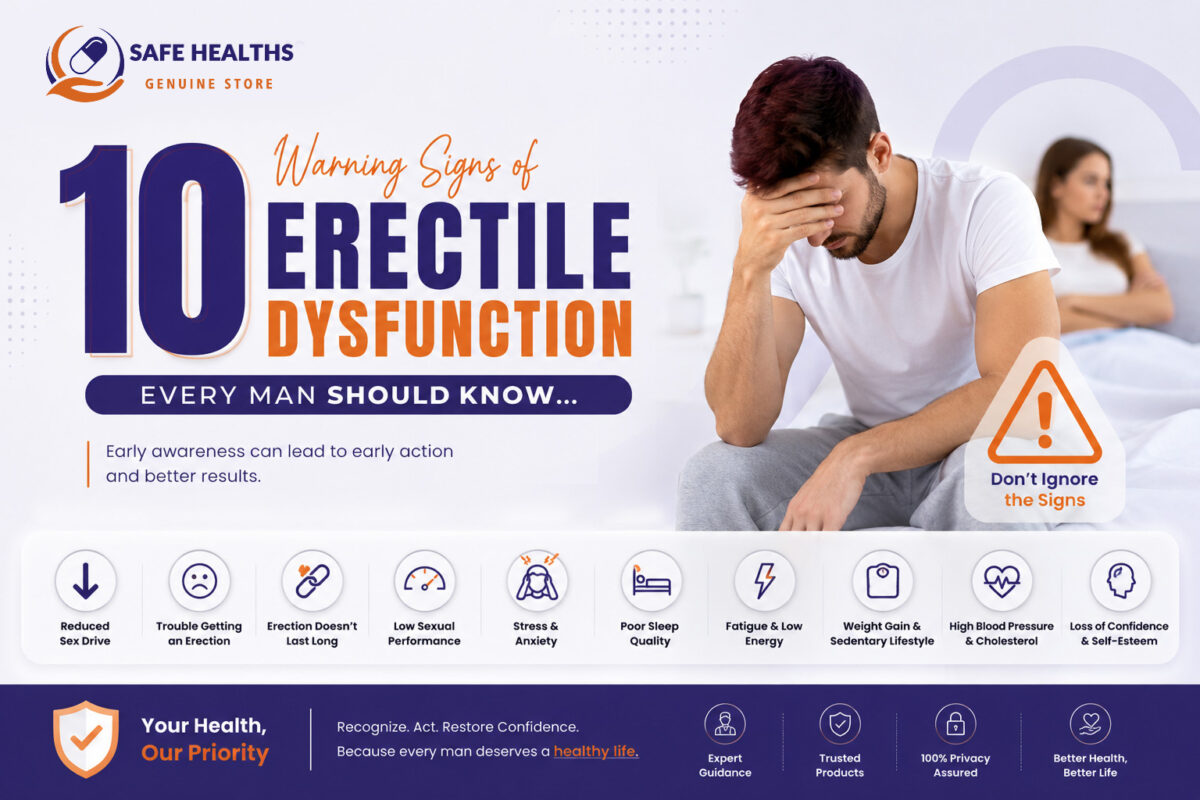
10 Warning Signs of Erectile Dysfunction Every Man Should Know
Erectile dysfunction (ED) rarely appears overnight. For most men it develops gradually, starting with small changes that are easy to explain away as stress, tiredness, or too much to drink. Yet those early changes matter. ED is common, treatable, and often a signal about your wider health, including your heart, blood sugar, hormones, and mental wellbeing.
This guide covers ten warning signs of ED, what each may mean, and when to see a doctor, so you can act early instead of waiting for the problem to get worse.
What Is Erectile Dysfunction?
ED is the persistent difficulty getting or keeping an erection firm enough for satisfying sex. Occasional problems are normal. Doctors become concerned when difficulties happen regularly, for example in more than a quarter of attempts over several months, or when they cause distress. An erection depends on healthy blood vessels, nerves, hormones, and a relaxed mind, so a change in any of these can show up as ED.
1. Difficulty Getting an Erection
Needing more time or stimulation than before, or not being able to get an erection at all despite arousal, is the most obvious sign. It may start as an occasional issue and become more frequent.
2. Difficulty Keeping an Erection
You may get an erection but lose it before or during sex. This is a very common pattern, often linked to blood flow problems, stress, or anxiety.
3. Erections That Are Softer Than Usual
Erections may still happen but feel less firm, making penetration difficult. A change in firmness over months can be an early sign of reduced blood flow.
4. Fewer Morning or Night-Time Erections
Healthy men commonly have several erections during sleep and often wake with one. A clear drop in these can suggest a physical cause such as reduced blood flow, low testosterone, or sleep problems. Retained night-time erections with difficulty during sex more often suggest a psychological cause, although this is only a guide.
5. Reduced Interest in Sex
A fall in sex drive can accompany ED, and it may point to low testosterone, depression, stress, medicine side effects, or relationship issues. See the signs of low testosterone in men if this sounds familiar.
6. Needing Stimulation You Did Not Need Before
If you now need more direct touch or more time to respond, nerve sensitivity or blood flow may be changing.
7. Worry or Anxiety About Sex
Dreading intimacy, worrying about “failing,” or avoiding sex altogether is both a sign and a cause of ED. The pattern can feed on itself. Read about how anxiety can cause erectile dysfunction.
8. Problems With Ejaculation or Orgasm
ED often appears alongside premature, delayed, or reduced ejaculation, or less intense orgasms. These changes can reflect the same underlying causes.
9. Strain in Your Relationship
Withdrawal, silence, irritability, or distance between you and your partner can follow unspoken sexual difficulties. Partners sometimes misread ED as lack of attraction.
10. Other Symptoms Elsewhere in the Body
ED sometimes comes together with signs of conditions that affect blood vessels or nerves:
- Chest pain or shortness of breath on exertion (heart disease).
- Leg pain when walking that eases with rest (peripheral artery disease).
- Increased thirst, frequent urination, or tiredness (diabetes).
- Tingling or numbness in the feet or genitals (nerve damage).
- Persistent low mood or loss of pleasure (depression).
These deserve prompt medical attention. Read more about the connection between ED and heart disease.
Why These Signs Matter
The blood vessels supplying the penis are small, so they are often affected before the larger vessels of the heart. For this reason, ED can be an early warning sign of cardiovascular disease, sometimes appearing several years before symptoms such as chest pain. It can also be an early sign of diabetes, high blood pressure, high cholesterol, and hormonal problems.
What Causes Erectile Dysfunction?
- Physical: Atherosclerosis, high blood pressure, diabetes, obesity, high cholesterol, low testosterone, nerve disease, kidney or liver disease, sleep apnoea, and Peyronie’s disease.
- Psychological: Stress, anxiety, depression, relationship problems, and past negative experiences.
- Lifestyle: Smoking, heavy alcohol use, drug use, inactivity, and poor sleep.
- Medicines and surgery: Some blood pressure tablets, antidepressants, and other medicines, as well as pelvic surgery or radiation.
When Should You See a Doctor?
Make an appointment if:
- Difficulties last for more than a few weeks or keep recurring.
- ED came on suddenly.
- You also have chest pain, breathlessness, numbness, or leg pain on walking.
- You have diabetes, heart disease, or high blood pressure and notice any sexual change.
- You are worried about your relationship or mood.
Seek urgent help for an erection that lasts more than four hours, which is an emergency. Learn when to seek medical advice for ED.
What to Expect at the Appointment
The doctor will ask about your symptoms, sexual history, health, and medicines, and examine you. Tests may include blood pressure, blood sugar, cholesterol, and testosterone. You can read what happens in how doctors diagnose erectile dysfunction. Be honest and specific, since doctors discuss this routinely.
Treatment Is Available
Most men benefit from treatment. Options include lifestyle changes, treating underlying conditions, prescription tablets, counselling, vacuum devices, injections, and surgery. See ED treatments from medicines to devices for a full overview.
What You Can Do Now
- Exercise regularly and aim for 150 minutes of moderate activity a week.
- Eat a heart-healthy diet and keep a healthy weight.
- Stop smoking and limit alcohol.
- Sleep well and manage stress.
- Talk openly with your partner.
- Avoid unregulated pills sold online.
Frequently Asked Questions
Is one bad night a sign of ED?
No. Occasional difficulty is normal and often linked to tiredness, alcohol, or stress.
Can young men get ED?
Yes. It is not limited to older men, and in younger men psychological causes are common.
Will ED go away on its own?
Sometimes, if caused by temporary stress or lifestyle factors. Persistent ED needs assessment.
Final Thoughts
Recognising the early warning signs of ED gives you the best chance of finding the cause and getting effective treatment. Do not ignore changes or wait for them to disappear. A short conversation with your doctor could help both your sexual health and your overall health.
This article is for general information only and is not a substitute for professional medical advice.

