
Signs You May Have a Bacterial Infection
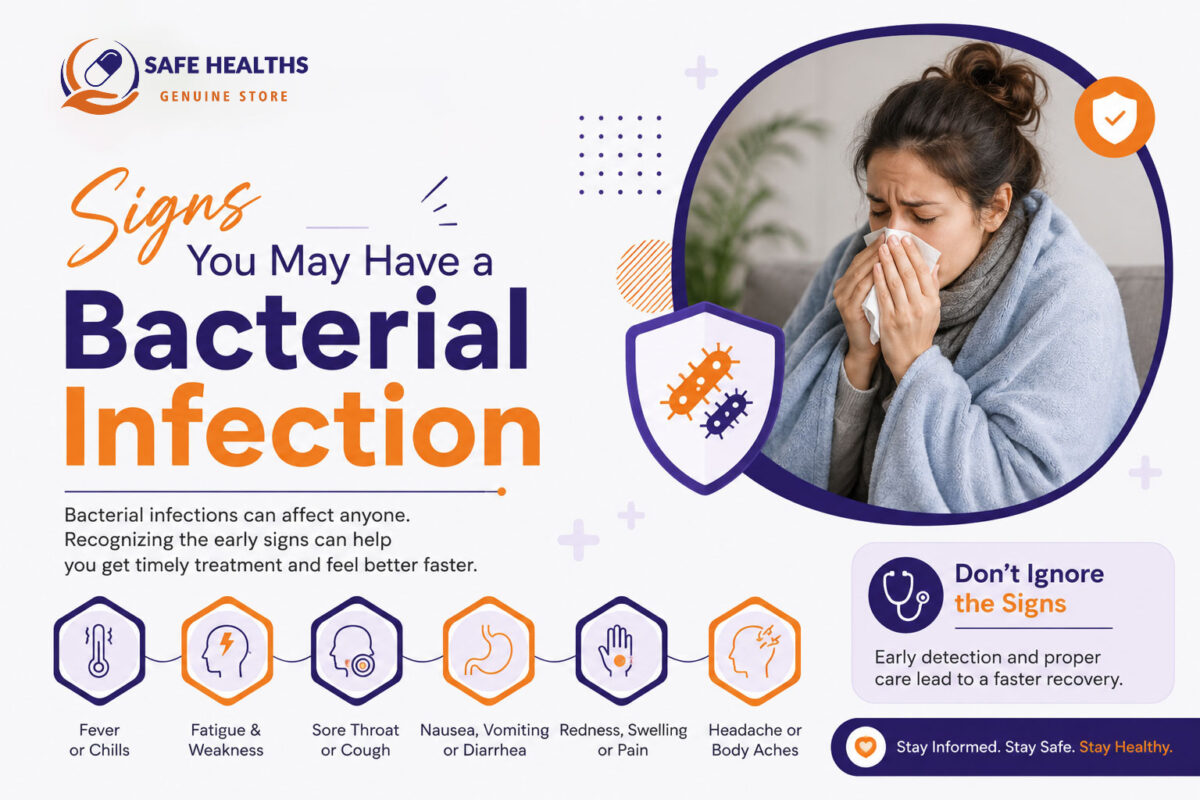
Signs You May Have a Bacterial Infection
Bacterial infections are very common, and many are easily treated. But because their early symptoms can look a lot like viral illnesses, it is not always obvious which kind you have. Knowing the typical signs of a bacterial infection helps you decide when to rest at home and when to see a doctor, since many bacterial infections need antibiotics and some can become serious if untreated.
This guide explains the common signs of bacterial infection, how they differ from viral infections, the most common types, and when to seek medical help.
What Is a Bacterial Infection?
Bacteria are single-celled microorganisms that live everywhere, including on and inside your body. Most are harmless or helpful, but some can enter the body and multiply, causing illness. They can infect the skin, throat, lungs, urinary tract, digestive system, sinuses, ears, bones, and the bloodstream. The body responds with inflammation, fever, and other symptoms as the immune system tries to clear the infection.
General Signs of a Bacterial Infection
- Fever: Often higher or longer-lasting than in viral illness, sometimes with chills and sweats.
- Symptoms that last longer than expected: Many viral illnesses improve in 7 to 10 days. Symptoms lasting longer than that, particularly if they are not improving, may suggest bacteria.
- Symptoms that get worse after initial improvement: Sometimes called “double worsening,” this can signal a secondary bacterial infection after a virus.
- Localised symptoms: Pain, redness, or swelling concentrated in one area, rather than general body aches.
- Pus or thick discharge: Yellow, green, or foul-smelling discharge from a wound, eye, ear, or nose can be a sign, although colour alone is not reliable.
- Fatigue and feeling very unwell.
- Swollen, tender lymph nodes.
- Loss of appetite and headache.
Signs by Type of Infection
Throat Infection (Strep Throat)
A very sore throat that comes on quickly, pain when swallowing, red swollen tonsils with white patches or streaks of pus, fever, tender neck glands, and often no cough or runny nose. Strep throat usually needs antibiotics.
Sinus Infection
Facial pain or pressure, thick yellow or green nasal discharge, blocked nose, reduced smell, and symptoms that last more than 10 days or worsen after initially improving. Many sinus infections are viral, so doctors consider how long symptoms last.
Ear Infection
Ear pain, a feeling of fullness, reduced hearing, fever, and sometimes discharge. In children, tugging at the ear, irritability, and poor sleep may be signs.
Chest Infection and Bacterial Pneumonia
A persistent cough with thick coloured phlegm, fever, shortness of breath, chest pain when breathing or coughing, and extreme tiredness. These symptoms need medical assessment.
Urinary Tract Infection (UTI)
Burning or pain when passing urine, needing to go often or urgently, cloudy or strong-smelling urine, lower abdominal pain, and sometimes blood in urine. A kidney infection may cause fever, back or side pain, nausea, and vomiting, and needs urgent care.
Skin Infection
Redness, warmth, swelling, and pain, boils, pus-filled bumps, or honey-coloured crusts (impetigo). Cellulitis spreads and can be serious if red streaks, fever, or severe pain develop.
Gastrointestinal Infection
Diarrhoea (sometimes bloody), stomach cramps, nausea, vomiting, and fever, often after contaminated food or water. Infections such as salmonella, E. coli, and campylobacter are bacterial causes.
Eye Infection
Redness, sticky yellow or green discharge, crusting of the eyelids, and swelling. Bacterial conjunctivitis often needs treatment.
Dental Infection
Severe toothache, swelling of the gum or face, bad taste in the mouth, and fever. A dental abscess needs prompt treatment.
Sexually Transmitted Bacterial Infections
Chlamydia, gonorrhoea, and syphilis may cause discharge, pain on urination, sores, or no symptoms at all. Testing is important.
Bacterial vs Viral Infections: How to Tell the Difference
- Viral infections: Usually cause widespread symptoms such as runny nose, cough, sneezing, and body aches. They tend to peak within a few days and improve in a week or so.
- Bacterial infections: More likely to cause focused symptoms, pus, persistent high fever, or symptoms that last longer or worsen.
The overlap is large, and doctors sometimes need tests such as swabs, urine tests, blood tests, or imaging. Learn more about whether antibiotics treat viral infections and why the difference matters.
How Are Bacterial Infections Diagnosed?
A doctor will ask about your symptoms and examine you. Depending on the situation, they may take a throat or wound swab, a urine or stool sample, a blood test, or order a chest X-ray. Cultures can identify the bacteria and which antibiotics will work.
How Are They Treated?
- Antibiotics: Prescribed for confirmed or strongly suspected bacterial infections. Take them exactly as directed, and do not stop early unless your doctor says so.
- Pain and fever relief: Paracetamol or ibuprofen if suitable.
- Rest and fluids.
- Drainage or minor procedures: For abscesses.
- Hospital treatment: For severe infections needing intravenous antibiotics.
Some mild bacterial infections clear without antibiotics, so a doctor will decide the best approach. Learn how long bacterial infections last to know what to expect.
Supporting Your Recovery
- Get plenty of rest and sleep.
- Drink fluids and eat nourishing food. See our list of foods that help fight bacterial infections.
- Avoid alcohol and smoking.
- Complete the antibiotic course.
- Avoid spreading infection by washing your hands and not sharing towels.
Complications if Left Untreated
Untreated bacterial infections can spread to deeper tissues or the bloodstream, causing abscesses, kidney damage, rheumatic fever (after strep throat), meningitis, or sepsis. Early treatment reduces these risks.
When to See a Doctor
See a doctor if you have:
- A fever above 39°C, or lasting more than three days.
- Symptoms lasting more than 10 days without improvement, or getting worse after initial improvement.
- A sore throat with white patches and fever, without a cough.
- Painful urination with fever or back pain.
- A wound with spreading redness, warmth, swelling, or pus.
- Blood in stool or urine.
- Severe headache, stiff neck, or confusion.
Get urgent care for difficulty breathing, rapid heartbeat, fainting, severe pain, or signs of sepsis. Read about the warning signs of serious infection.
Higher-Risk Groups
Babies, older adults, pregnant women, and people with diabetes, weakened immunity, or chronic illness should seek medical advice earlier.
Preventing Bacterial Infections
- Wash hands regularly and before eating or preparing food.
- Clean and cover cuts and wounds.
- Keep up to date with vaccinations, such as pneumococcal, whooping cough, and tetanus.
- Cook food thoroughly and store it safely.
- Practise good dental hygiene.
- Use condoms and get tested for STIs when relevant.
Frequently Asked Questions
Does green mucus mean a bacterial infection?
Not necessarily. Colour changes occur in viral infections too.
Can I treat a bacterial infection without antibiotics?
Some mild infections resolve on their own, but many need antibiotics. Do not self-treat serious symptoms.
How soon should I feel better on antibiotics?
Often within two to three days, but finish the course as prescribed. See your doctor if you are not improving.
Final Thoughts
Recognising the signs of a bacterial infection, such as localised pain, pus, persistent or worsening fever, and symptoms that last too long, helps you seek treatment at the right time. When in doubt, speak to a doctor.
This article is for general information only and is not a substitute for professional medical advice.

