
How Poor Immunity Increases Infection Risk
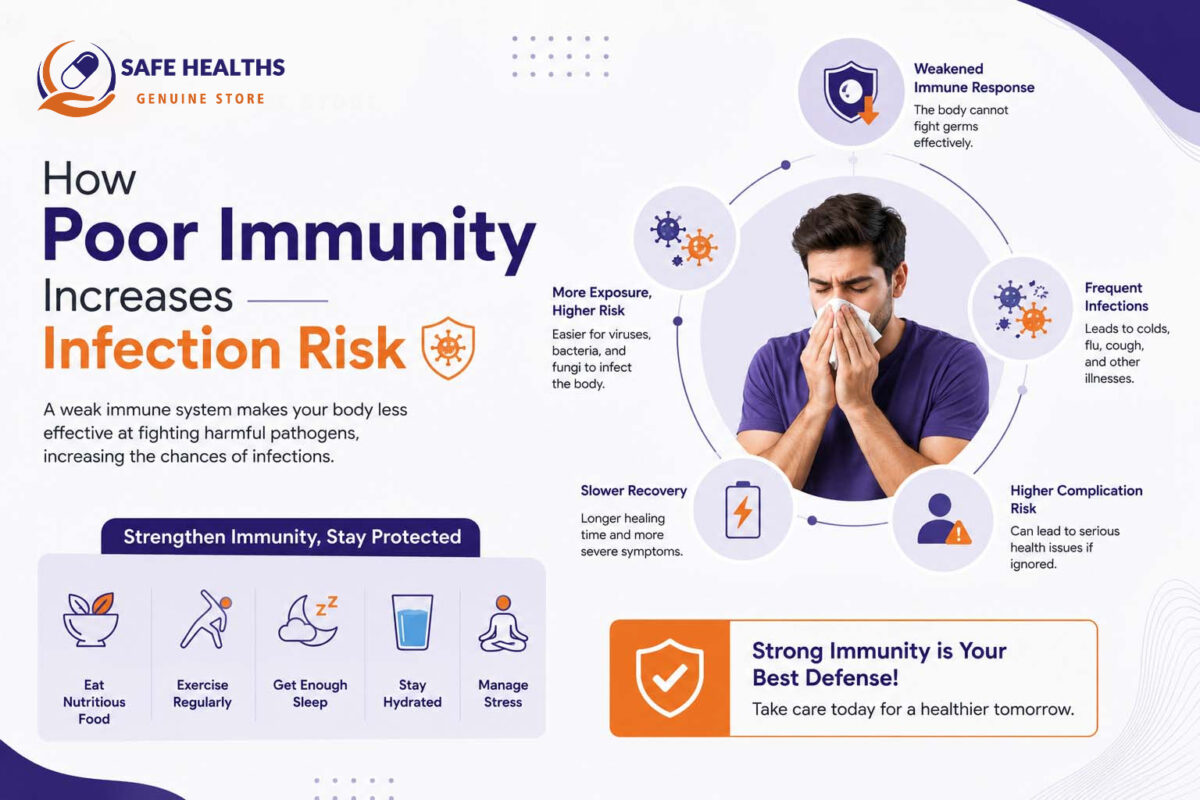
How Poor Immunity Increases Infection Risk
Your immune system is the body’s defence force. It recognises harmful germs such as bacteria, viruses, fungi, and parasites and removes them before they can cause serious illness. When the immune system is weakened, this defence is less effective, so infections happen more easily, last longer, are more severe, and sometimes return again and again.
This guide explains how the immune system works, why poor immunity raises infection risk, the signs that your defences may be weak, the most common causes, and what you can do to protect yourself.
How a Healthy Immune System Works
The immune system has several layers:
- Physical barriers: Skin, mucus, stomach acid, and the lining of the airways keep many germs out.
- Innate immunity: White blood cells such as neutrophils and macrophages react within minutes to hours, attacking invaders and triggering inflammation.
- Adaptive immunity: T cells and B cells recognise specific germs, produce antibodies, and create memory so the body responds faster next time. Vaccines work by training this part.
- Supporting organs: The bone marrow, thymus, spleen, and lymph nodes make and house immune cells.
How Poor Immunity Leads to More Infections
If any part of this system is not working properly, germs find it easier to take hold:
- Fewer or less effective immune cells: The body cannot recognise or destroy invaders quickly.
- Low antibody levels: Germs are not neutralised efficiently.
- Damaged barriers: Dry, broken, or poorly healing skin and airway damage give germs an entry point.
- Slow response: Infections spread before the immune system can contain them.
The result is infections that happen more often, are more serious, last longer, respond less well to treatment, or are caused by germs that rarely affect healthy people (called opportunistic infections).
Signs of a Weak Immune System
Everyone catches colds, and healthy adults typically get two to three a year. Possible signs of poor immunity include:
- Frequent infections, such as repeated colds, sinus infections, ear infections, or chest infections.
- Infections that are unusually severe, such as pneumonia more than once, or that need hospital care.
- Infections that take longer than usual to clear or need repeated antibiotic courses.
- Infections in unusual places, such as deep skin abscesses or organ infections.
- Persistent fungal infections, such as oral thrush or nail infections.
- Slow wound healing.
- Ongoing tiredness and low energy.
- Frequent digestive problems, such as repeated diarrhoea or poor absorption of food.
- Swollen lymph nodes that persist, and recurring fevers.
These signs do not prove that you have a problem with your immune system, because other conditions can cause them. But if you have several, or they are severe, it is worth discussing with a doctor.
Common Causes of Poor Immunity
Temporary and Lifestyle-Related Factors
- Poor sleep: Chronic lack of sleep reduces the body’s production of infection-fighting proteins and antibodies.
- Chronic stress: Raised cortisol levels suppress some immune responses.
- Poor nutrition: Shortages of protein, vitamins A, C, D, E, B6, B12, folate, iron, zinc, and selenium weaken immune function. Read about common vitamin deficiencies in men.
- Excess alcohol and smoking: Both damage the immune cells and the lining of the airways.
- Obesity and inactivity: Linked with chronic low-grade inflammation and reduced immune response.
- Dehydration and gut problems: Poor gut health can affect immunity.
Medical Conditions
- Diabetes: High blood sugar impairs immune cells and wound healing.
- HIV/AIDS: Directly attacks immune cells, especially CD4 T cells.
- Cancers of the blood and bone marrow: Such as leukaemia and lymphoma.
- Chronic kidney, liver, or lung disease.
- Autoimmune diseases: Which may affect immunity directly or through their treatment.
- Absent or damaged spleen: The spleen helps filter bacteria from the blood.
- Malnutrition: Including in people with eating disorders or malabsorption.
Medicines and Treatments
- Corticosteroids taken long term.
- Chemotherapy and radiotherapy.
- Immunosuppressant drugs after organ transplant or for autoimmune conditions.
- Biologic therapies.
Age and Genetics
- Older age: Immune function gradually declines, a process called immunosenescence, and infections are more serious.
- Young children: Their immune systems are still developing.
- Primary immunodeficiencies: Rare inherited conditions in which parts of the immune system do not work properly. They often start in childhood but can be diagnosed in adults.
Types of Infections More Likely With Poor Immunity
- Respiratory infections: Colds, flu, bronchitis, pneumonia, and sinusitis.
- Skin infections: Boils, cellulitis, fungal infections, and slow-healing sores.
- Urinary tract infections.
- Gut infections: Repeated diarrhoea and food poisoning.
- Mouth and genital yeast infections.
- Reactivation of viruses: Such as shingles or cold sores.
- Opportunistic infections: By germs that normally do not cause illness in healthy people.
Why Infections Can Become Dangerous
When the immune system is weak, an infection that starts locally can spread to the bloodstream and cause sepsis, a life-threatening reaction. People with poor immunity may have fewer typical signs, such as a lower fever, so a serious infection can be missed. Learn about the warning signs of serious infection so you can act in time.
How Is Poor Immunity Diagnosed?
A doctor will review your history of infections, medicines, and general health, and examine you. Tests may include a full blood count, blood tests for HIV, diabetes, and nutrient levels, immunoglobulin (antibody) levels, tests of how well you respond to vaccines, and sometimes specialist immune tests. If a primary immunodeficiency is suspected, you may be referred to an immunologist.
How to Protect Yourself From Infection
Practise Good Hygiene
Wash your hands often, clean cuts promptly, avoid close contact with people who are ill, and handle food safely. See our guide to the best hygiene habits to avoid infections.
Stay Up to Date With Vaccinations
Vaccines are especially important for people with weakened immunity. Ask your doctor which vaccines are right for you, since some live vaccines may not be suitable if your immunity is very low.
Support Your Immune System Through Lifestyle
- Sleep seven to nine hours a night.
- Eat a varied diet rich in vegetables, fruit, protein, and whole grains.
- Exercise regularly at a moderate intensity.
- Manage stress.
- Avoid smoking and limit alcohol.
For practical advice, read our article on natural ways to improve immune health.
Manage Underlying Conditions
Keeping diabetes, kidney disease, and other long-term conditions well controlled lowers infection risk.
Treat Infections Promptly
If you are at higher risk, see a doctor early when you develop signs of infection rather than waiting. Quick treatment can prevent complications. Knowing how to recover faster from viral infections can also help you support your body when you do get ill.
Treatment for Weakened Immunity
Treatment depends on the cause. Options may include treating the underlying condition, adjusting medicines that suppress immunity (under specialist supervision), nutritional support, antimicrobial prophylaxis for high-risk patients, and, for some primary immunodeficiencies, immunoglobulin replacement therapy. Do not stop prescribed medicines without medical advice.
Immune “Boosters”: What to Watch Out For
Many products promise to “boost” immunity, but most have little proof. The immune system needs balance rather than constant stimulation, and some supplements can interact with medicines. Focus on proven habits and talk to your doctor before taking supplements, especially if you are being treated for a medical condition.
When to See a Doctor
Speak to a doctor if you have repeated or severe infections, infections that do not clear with standard treatment, infections in unusual places, persistent fevers, unexplained weight loss, or night sweats. Seek urgent care if you have a high fever, confusion, difficulty breathing, severe pain, or a rapidly spreading rash, particularly if you have a known immune problem.
Frequently Asked Questions
How many infections a year are normal?
Adults often have two to three colds a year, and children may have more. It is the pattern, severity, and complications that matter.
Can stress alone cause poor immunity?
Long-term stress can weaken immune responses and make infections more likely, but it rarely causes serious immunodeficiency on its own.
Can a weak immune system be strengthened?
If the weakness is due to lifestyle, nutrition, or a treatable condition, yes. For inherited or medicine-related causes, your doctor can advise on management.
Final Thoughts
Poor immunity makes you more vulnerable to infections and to complications from them. Recognising the signs, understanding the causes, protecting yourself with good hygiene, vaccines, and healthy habits, and getting medical advice when something seems wrong can reduce your risk and help you stay well.
This article is for general information only and is not a substitute for professional medical advice.

