
What Are the Early Warning Signs of Erectile Dysfunction?
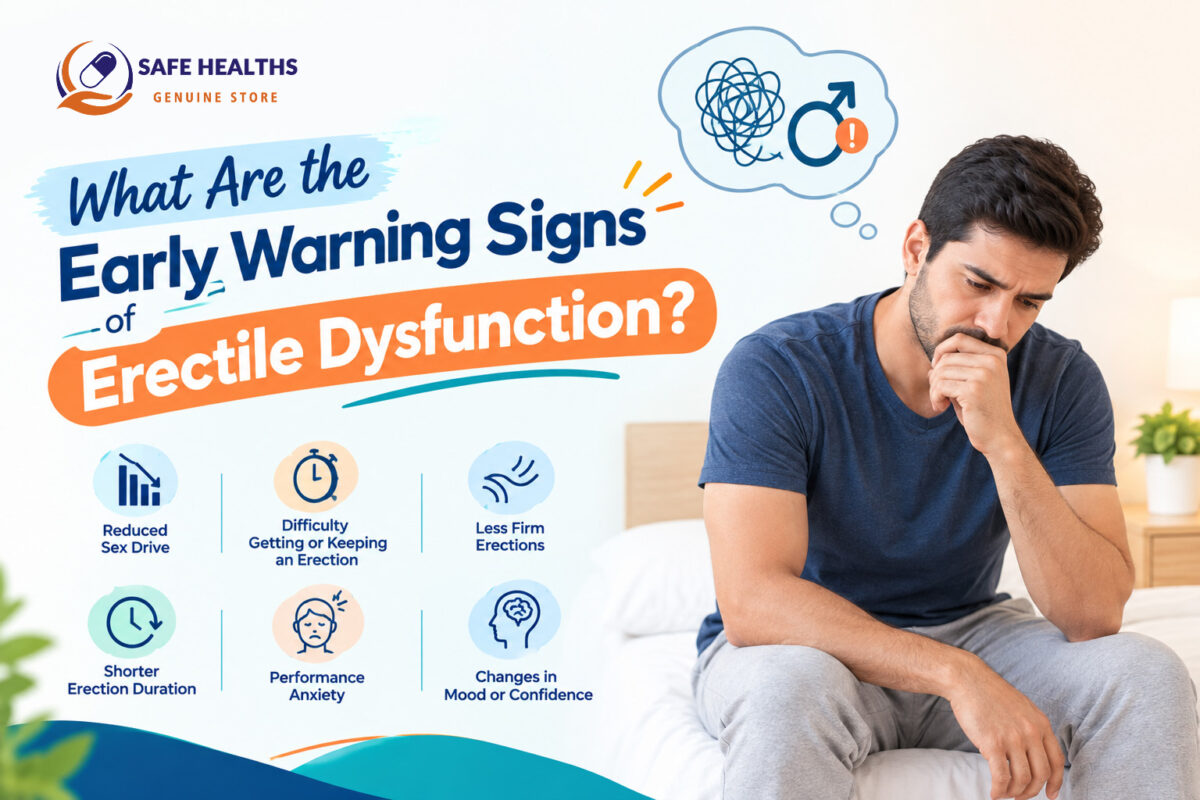
What Are the Early Warning Signs of Erectile Dysfunction?
Erectile dysfunction (ED) rarely appears out of nowhere. For most men, it develops gradually, starting with small changes that are easy to explain away as tiredness, stress, or a few drinks too many. Recognising those early signals matters, because the sooner you spot them, the easier it is to find the cause, protect your health, and treat the problem before it affects your confidence and relationship.
This guide explains how to recognise the early warning signs of ED, how to tell them from normal variation, which accompanying symptoms deserve attention, how to track changes, and what to do if you notice them.
Normal Variation vs Early ED
Erections naturally vary from day to day. Tiredness, stress, alcohol, illness, and distraction can all make an erection less firm or harder to keep, without meaning anything is wrong. ED is generally suspected when difficulties become a pattern, for example happening in about a quarter or more of attempts over a few months, or when they begin to worry you. The signs below are the earliest changes that may signal a developing problem.
Early Warning Signs in the Erection Itself
1. Taking Longer to Get an Erection
You may need more time, more direct touch, or more stimulation than before, and visual or mental stimulation alone is less effective.
2. Erections That Are Less Firm
Erections may be present but softer, so that penetration is harder or needs help.
3. Difficulty Keeping an Erection
You get an erection but lose it before or during sex, or you have to focus to maintain it.
4. Fewer Morning and Night-Time Erections
Healthy men usually have several erections during sleep and often wake with one. A noticeable decline can point to a physical cause such as reduced blood flow, low testosterone, or sleep problems.
5. Variable Reliability
Erections work some days but not others, with no clear explanation.
Early Warning Signs in Desire and Experience
6. Reduced Interest in Sex
A fall in sex drive often goes with ED. It can be linked to low testosterone, depression, stress, or relationship problems. See the signs of low testosterone in men.
7. Changes in Ejaculation or Orgasm
Premature, delayed, or less intense ejaculation can occur alongside ED.
8. Less Satisfaction
Sex feels less pleasurable, or you feel less connected to it.
Early Warning Signs in Thoughts and Behaviour
9. Anxiety About Performance
Worrying before sex about whether you will “perform,” and monitoring yourself during sex, can be an early sign and a cause of ED. See whether anxiety can cause erectile dysfunction.
10. Avoiding Sex or Intimacy
Making excuses, going to bed at different times, or avoiding touching in case it leads to sex.
11. Relying on Alcohol or Substances Before Sex
Using alcohol to relax or to “get in the mood” may signal underlying anxiety or difficulty.
12. Secrecy and Embarrassment
Hiding the problem, avoiding the topic, or not discussing it with a partner or doctor.
Accompanying Symptoms That Matter
ED can be an early sign of other health conditions. Pay attention if early changes come with:
- Chest pain, tightness, or breathlessness on exertion: Possible heart disease.
- Leg pain when walking that eases with rest: Possible peripheral artery disease.
- Increased thirst, frequent urination, tiredness, or blurred vision: Possible diabetes.
- Numbness or tingling in the feet, genitals, or thighs: Possible nerve damage.
- Persistent tiredness, low mood, and low drive: Possible low testosterone or depression.
- Loud snoring, pauses in breathing, daytime sleepiness: Possible sleep apnoea.
- New medicines: Some can affect erections.
Read how ED can be a sign of other health problems for details.
Who Should Be Especially Alert?
- Men over 40.
- Men with diabetes, high blood pressure, high cholesterol, or heart disease.
- Men who smoke, drink heavily, or use drugs.
- Men with obesity or inactive lifestyles.
- Men who have had pelvic or prostate surgery, radiation, or injury.
- Men taking medicines that can affect erections.
- Men with depression, anxiety, or high stress.
How to Track Changes
- Keep a simple note for a few weeks of how often erections work, how firm they are, and any triggers such as stress, alcohol, or tiredness.
- Note morning erections.
- Use the IIEF-5 questionnaire, which a doctor can provide, or find online, to score erectile function.
- Record other symptoms and medicines.
This gives your doctor a clear picture.
What to Do if You Notice the Signs
- Do not panic or ignore it. Early recognition is helpful.
- Talk to your partner, and reassure them that it is not about attraction.
- Check your lifestyle: Smoking, alcohol, sleep, stress, exercise, diet, and weight.
- See a doctor if signs persist for more than a few weeks, or sooner if you have other symptoms.
- Avoid buying pills online without assessment.
For what happens at the appointment, see how doctors diagnose erectile dysfunction.
Why Acting Early Helps
- Underlying conditions such as heart disease and diabetes are easier to treat early.
- Lifestyle changes work better before problems become entrenched.
- Anxiety and avoidance have less time to build.
- Relationships are protected by communication.
Prevention Starts Now
- Exercise regularly.
- Eat a heart-healthy diet.
- Maintain a healthy weight.
- Do not smoke, and drink moderately.
- Sleep well and manage stress.
- Keep up with check-ups.
See also the 10 warning signs of erectile dysfunction and when to seek medical advice for ED.
When to See a Doctor
See a doctor if changes in erections last more than a few weeks, come on suddenly, or occur with other symptoms. Seek emergency care for chest pain or an erection lasting more than four hours.
Frequently Asked Questions
Is one bad night a sign of ED?
No. Occasional difficulty is normal. Look for patterns.
Can early ED be reversed?
Often, yes. Early action gives the best chance.
Should young men worry about early signs?
They can occur at any age and are often related to stress or lifestyle, but a check-up is still sensible.
Final Thoughts
The early signs of ED are subtle: slower, softer, or less reliable erections, fewer morning erections, changing desire, and worry about performance. Notice them, track them, take care of your health, and talk to a doctor. Acting early gives you the best chance of an easy, effective solution.
This article is for general information only and is not a substitute for professional medical advice.