
Erectile Dysfunction in Men: Early Signs and Treatment Options
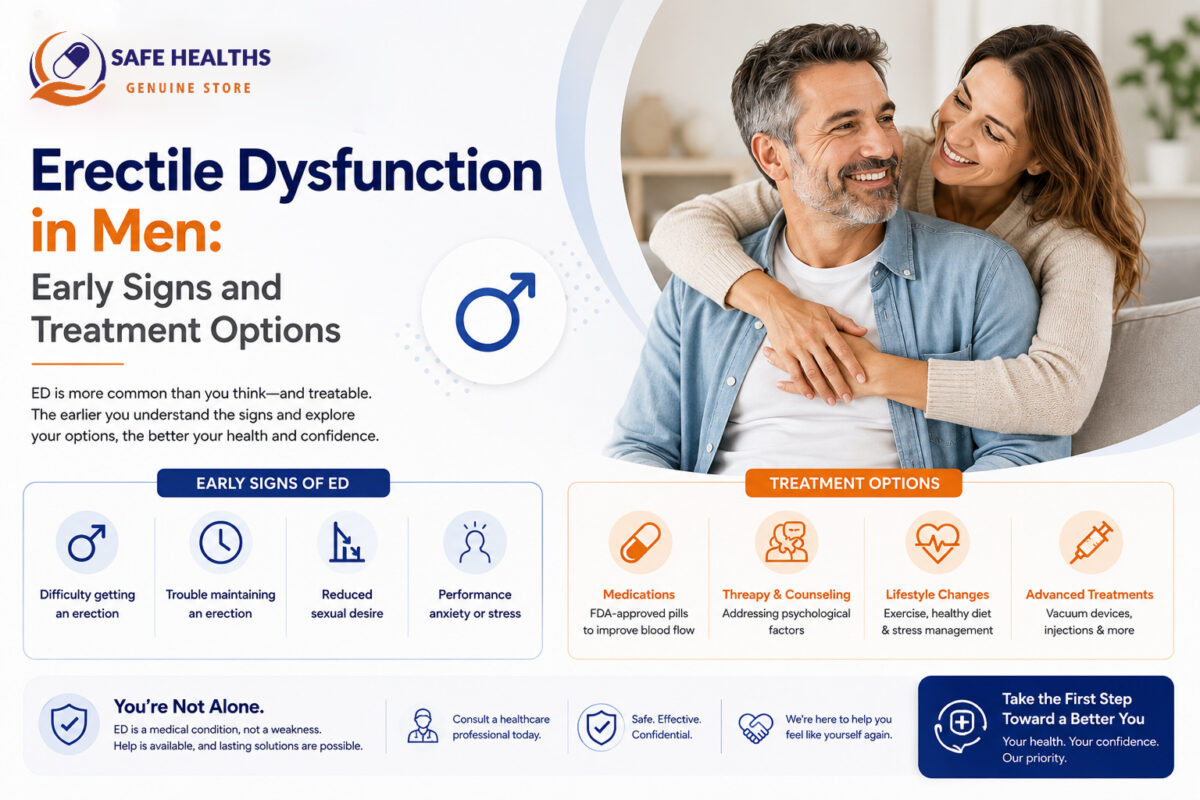
Erectile Dysfunction in Men: Early Signs and Treatment Options
Erectile dysfunction (ED) means regularly having trouble getting or keeping an erection firm enough for sex. It is common, and it becomes more likely with age, but it is not something men simply have to live with. Spotting the early signs and getting advice sooner usually leads to better results.
Early Signs of Erectile Dysfunction
ED often develops gradually. Early signs can be easy to dismiss, so it helps to know what to look for:
- Needing more time or stimulation to get an erection than before.
- Erections that are softer than usual or do not last long enough for sex.
- Losing an erection partway through sex.
- Fewer morning or spontaneous erections.
- A lower interest in sex, or growing worry about sexual performance.
One occasional difficulty is normal and often linked to tiredness, stress, or alcohol. It is the pattern that matters. If it keeps happening over several weeks or months, see ten common warning signs of erectile dysfunction to understand what to watch for.
Why ED Can Be an Early Warning Sign
Erections depend on healthy blood vessels, nerves, hormones, and a settled mind. Because of this, ED can appear before other conditions are diagnosed, including heart disease, high blood pressure, and type 2 diabetes. Stress, anxiety, low mood, certain medicines, smoking, and heavy alcohol use can also play a part.
When to See a Doctor
Make an appointment if ED lasts more than a few weeks, appears suddenly, or comes with other symptoms such as chest pain, tiredness, or increased thirst. A doctor can look for underlying causes and suggest suitable tests. You can read more about when to seek medical advice for ED.
Treatment Options for ED
The right treatment depends on the cause, your general health, and your preferences. Common options include:
- Lifestyle changes: Regular exercise, a heart-healthy diet, a healthy weight, quitting smoking, cutting back on alcohol, and better sleep often make a real difference.
- Prescription medicines: Tablets such as sildenafil, tadalafil, and vardenafil are widely used. They need a doctor’s assessment first, especially if you have heart conditions or take nitrate medicines.
- Counselling or therapy: Helpful when stress, anxiety, depression, or relationship worries are involved.
- Other treatments: Vacuum devices, injections, and surgical options are available when tablets are unsuitable or ineffective. Our guide to ED treatments from medicines to devices explains each one.
Takeaway
ED is common, treatable, and often a useful signal about your overall health. Noticing the early signs and talking to a doctor is the most direct route to finding a treatment that works for you.
This article is for general information only and is not a substitute for professional medical advice.

