
Warning Signs of Serious Infection
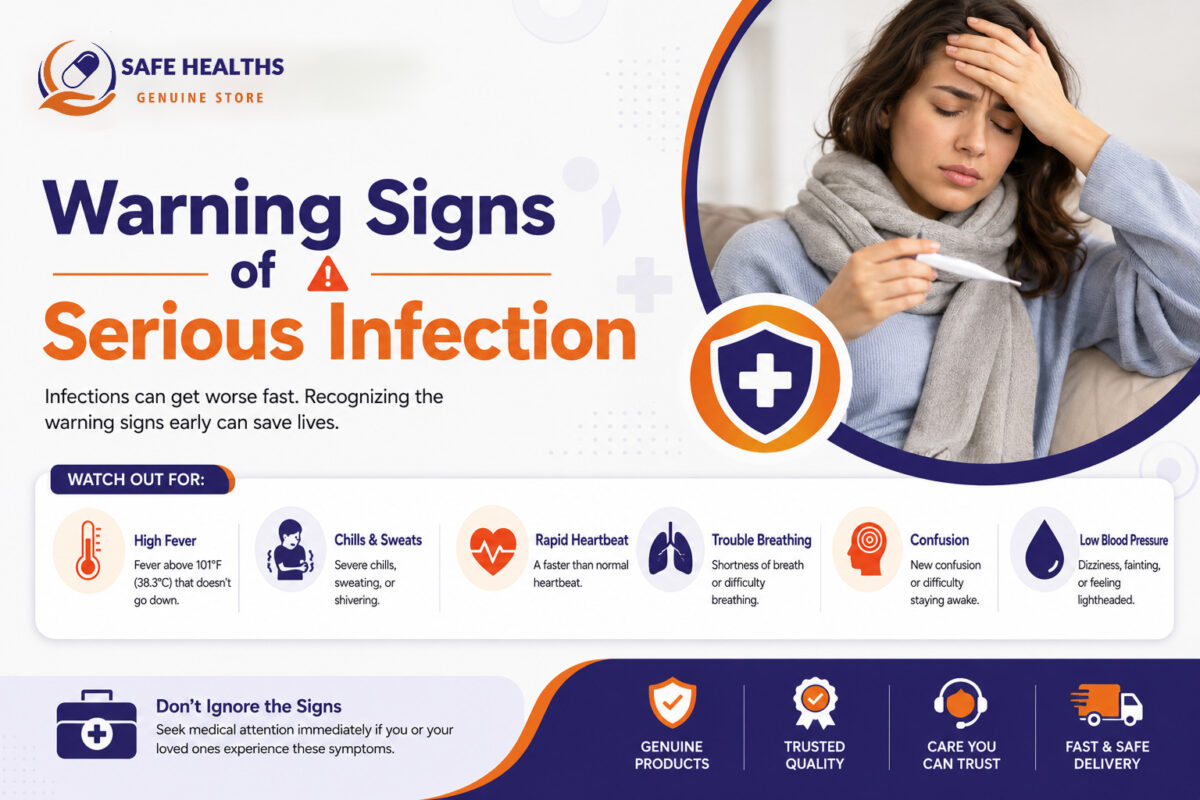
Warning Signs of Serious Infection
Most infections are mild. A cold, a small skin cut that gets a little sore, or a short stomach upset usually clears up with rest and basic care. But some infections spread, overwhelm the body’s defences, or damage vital organs, and these can become dangerous very quickly. Knowing the warning signs of a serious infection can help you act early, and in some cases it can save a life.
This guide explains what makes an infection serious, the specific warning signs to look for in different parts of the body, who is at higher risk, and exactly when to get urgent medical help.
What Makes an Infection “Serious”?
An infection happens when bacteria, viruses, fungi, or parasites enter the body and multiply. The immune system normally fights them off. An infection becomes serious when it:
- Spreads beyond the original site, for example from a small wound into the surrounding skin, the bloodstream, or deeper tissues.
- Affects a vital organ such as the lungs, kidneys, brain, or heart.
- Triggers an extreme whole-body reaction known as sepsis.
- Does not improve, or keeps getting worse, despite rest, fluids, and basic treatment.
The type of germ matters less than how your body is coping. Both bacterial and viral infections can become severe, which is why symptoms deserve attention even when they seem to start small.
General Warning Signs That Need Prompt Attention
Some signs suggest that an infection is more than a minor illness, wherever it started:
- A high or persistent fever: A temperature of 39°C (102°F) or above, or any fever lasting more than three days, needs a medical review. In adults, shaking chills with a high fever are particularly concerning.
- A very low body temperature: A temperature below 36°C (96.8°F) with feeling very unwell can also be a warning sign, especially in older adults and babies.
- Fast heart rate or rapid breathing: Feeling your heart pounding, or breathing quickly while at rest, can mean the body is under severe strain.
- Confusion or unusual drowsiness: New confusion, difficulty staying awake, slurred speech, or acting out of character are red flags.
- Severe or worsening pain: Pain that is much worse than you would expect from how the area looks.
- Symptoms that improve and then suddenly worsen: This can mean a second infection or a complication.
- Extreme weakness: Feeling too weak to stand, or unable to carry out normal tasks.
Sepsis: The Most Dangerous Complication
Sepsis occurs when the body’s response to an infection starts damaging its own tissues and organs. It can follow any infection, including pneumonia, urinary infections, skin infections, and abdominal infections. It is a medical emergency, and the earlier it is treated, the better the outcome.
Warning signs of sepsis include:
- Fever, or an unusually low temperature, with shivering.
- A fast heartbeat and fast, shallow breathing.
- Confusion, disorientation, or extreme sleepiness.
- Severe muscle pain or feeling like you are about to die.
- Cold, clammy, pale, mottled, or bluish skin.
- Passing very little or no urine in a day.
- Dizziness or fainting when you stand up, which can point to low blood pressure.
If you suspect sepsis, go to the nearest emergency department or call emergency services immediately. Do not wait to see whether it improves overnight.
Warning Signs by Body Area
Skin and Wounds
Skin infections such as cellulitis can spread quickly. Seek care if you notice redness that is spreading, red streaks running from the wound, a hot, swollen, and very painful area, pus or foul-smelling discharge, blisters, or skin that looks dusky or turns black. Pain that seems out of proportion to the wound, especially with fever, needs emergency assessment.
Lungs and Breathing
A chest infection becomes serious when you have difficulty breathing, breathlessness while resting, chest pain when breathing in, blue or grey lips, coughing up blood, or a cough that brings up thick green or rust-coloured phlegm with high fever. Confusion in an older adult with a chest infection can also be an early sign of pneumonia.
Urinary Tract and Kidneys
A simple bladder infection causes burning and frequent urination. A kidney infection is more serious and may cause fever, chills, back or side pain, nausea, vomiting, and blood in the urine. Men with urinary infections, and anyone with these symptoms plus fever, should be seen promptly.
Stomach and Bowel
Stomach infections usually settle in a few days. Get help if you have severe abdominal pain, repeated vomiting that stops you keeping fluids down, blood in your stool, diarrhoea lasting more than a few days, signs of dehydration such as very dark urine, dizziness, dry mouth, and no urination, or a high fever.
Brain and Nervous System
Meningitis and encephalitis are rare but life-threatening. Warning signs include a severe headache, stiff neck, sensitivity to bright light, vomiting, sudden confusion, seizures, or a rash that does not fade when pressed with a glass. These need emergency care at once.
Ears, Sinuses, Throat, and Mouth
See a doctor quickly for severe throat pain with difficulty swallowing or breathing, drooling, a swollen face or neck, swelling around the eye, or a severe headache with facial pain and fever. A dental abscess with facial swelling and fever can also spread and needs urgent attention.
Bones and Joints
A hot, swollen, red joint with fever, or bone pain with fever after an injury or surgery, may indicate a joint or bone infection. Being unable to put weight on the limb is another warning sign.
Who Is at Higher Risk?
Some people can become seriously ill from infections much faster and should have a lower threshold for seeking care:
- Babies and young children, and adults over 65.
- People with diabetes, whose healing and immune response can be reduced.
- People with heart, lung, liver, or kidney disease.
- Anyone with a weakened immune system, for example from cancer treatment, HIV, steroids, or other immune-suppressing medicines.
- Pregnant women and those who have recently given birth.
- People who have had recent surgery, have a catheter or other medical device, or have deep wounds.
To understand why some people are more vulnerable, read about how poor immunity increases infection risk.
Is It Bacterial or Viral?
It is not always possible to tell without a doctor’s assessment and sometimes tests. Bacterial infections often cause symptoms that get worse after several days, are localised to one area, or come with pus. Viral infections tend to cause body-wide symptoms such as aches and a runny nose, and often improve within a week or so. You can compare typical patterns in our guides to the signs of a bacterial infection and viral infection symptoms in adults. Knowing how long bacterial infections usually last can also help you spot when something is not following the expected course.
When to Seek Emergency Care
Call emergency services or go to the nearest emergency department if you or someone else has:
- Trouble breathing, or blue lips.
- Sudden confusion, severe drowsiness, or a seizure.
- A stiff neck with fever and severe headache, or a non-fading rash.
- Signs of sepsis, such as a very fast heartbeat, mottled skin, fainting, and very little urine.
- Severe pain that is rapidly getting worse, or a wound with spreading redness and a high fever.
- A high fever in a baby under three months old.
What to Do While You Arrange Care
- Do not ignore worsening symptoms in the hope they will pass.
- Note when the symptoms began, your temperature readings, and any medicines taken. This helps the doctor.
- Drink fluids if you can, and avoid alcohol.
- Do not take leftover antibiotics or someone else’s medicines. The wrong treatment can delay the right one.
- Follow any antibiotic course exactly as prescribed, and finish it unless your doctor tells you otherwise.
How to Lower Your Risk
You cannot prevent every infection, but sensible habits reduce the risk a great deal. Wash your hands regularly, clean and cover cuts, keep vaccinations up to date, and look after chronic conditions such as diabetes. See our practical list of the best hygiene habits to avoid infections.
Frequently Asked Questions
Can a mild infection suddenly become serious?
Yes. Most do not, but a small wound, a urinary infection, or a chest infection can worsen quickly, especially in higher-risk people. That is why changes in your condition matter more than the starting symptoms.
How high should a fever be before I worry?
The number is not the only factor. A fever above 39°C, one that lasts more than three days, or any fever with confusion, breathing difficulty, severe pain, or a rash needs prompt assessment.
Do I always need antibiotics?
No. Antibiotics only treat bacterial infections. A doctor will decide based on your symptoms, examination, and sometimes tests.
Final Thoughts
Trust your instincts. If you feel that something is seriously wrong, or someone you care for is much sicker than the symptoms suggest, seek medical help rather than waiting. Early treatment of serious infections improves recovery and lowers the risk of complications.
This article is for general information only and is not a substitute for professional medical advice, diagnosis, or treatment. In an emergency, contact your local emergency services.